Biological diversity: It’s a big concept
Today, May 22, is International Day for Biological Diversity. Biodiversity is defined on the World Wildlife Fund's website as 'life, the world, the variation of life for the entire globe'.
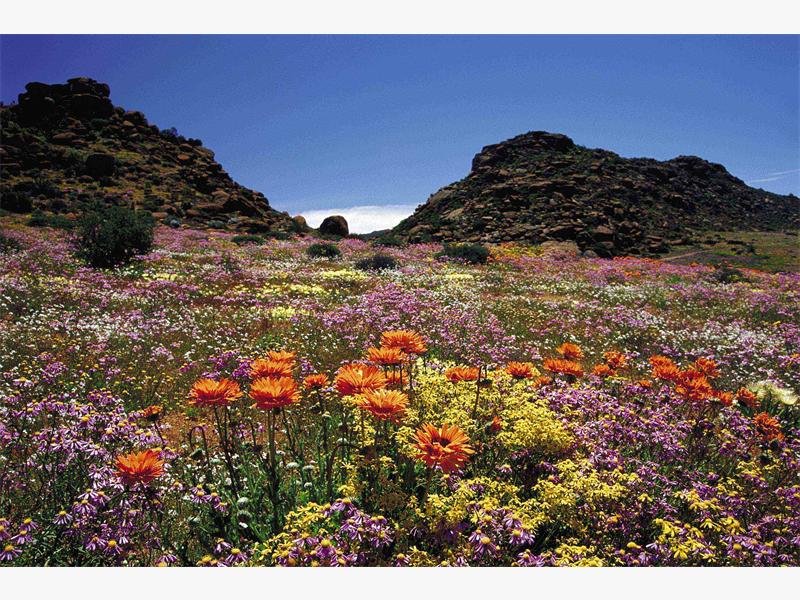
BIODIVERSITY encompasses many millions of distinct biological species, the product of four billion years of evolution, though the word itself was coined as recently as 1985 as a contraction of ‘biological diversity’.
The world has begun, relatively recently, to lose species and habitats at an ever-increasing and alarming rate. And it’s the fault of the human race.
Biodiversity describes the variety of life in an area, including the number of different species, the genetic wealth within each species, the interrelationships between them and the natural areas where they occur.
An immensely rich species diversity is found in South Africa. With a land surface area of 1,1 million square kilometres, representing just one percent of the earth’s total land surface, South Africa contains almost 10 percent of the world’s total known bird, fish and plant species and over six percent of the world’s mammal and reptile species.
This comes about because South Africa has a wide range of climatic conditions and many variations in topography. This gives rise to broad vegetation zones – the Karoo, fynbos, forest, grassland and savanna biomes. Each of these supports its own collection of plant and animal species.
More than 20 300 species of flowering plants occur in South Africa. One of the six most significant concentrations of plants in the world is the Cape Floral Kingdom, with its distinctive fynbos vegetation. Most of South Africa’s 2 000 threatened plants are found in fynbos.
In total 243 mammals are found in the region. There are 17 threatened species in South Africa, including the black rhino, pangolin and giant golden mole. Of the more than 800 bird species, 26 are threatened, of which five are endangered.
In total 370 reptiles and amphibians occur in the region, of which 21 are threatened. Six of these are endangered.
Of the 220 freshwater fishes which occur, 21 are threatened. There are more than 2 000 marine fish species. Eighty thousand insects are known to occur, many of which are endemic.
Unfortunately this immense natural wealth is under extreme pressure, resulting from human demands placed on the environment. Invasive alien vegetation and the trade in wildlife also contribute to the problem.