Third Oribi vulture electrocuted
Researchers say 60 percent of their study birds have fallen victim to power lines within 18 months of fledging.
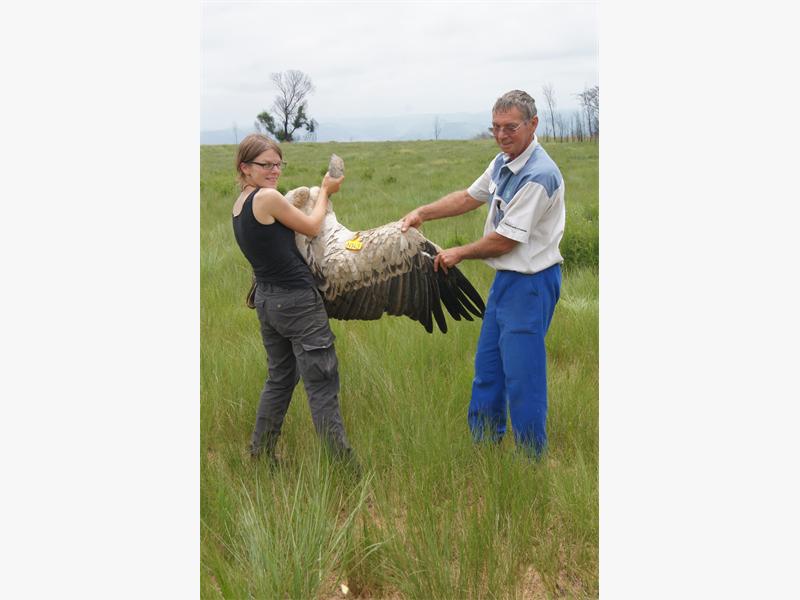
RESEARCHERS involved in the Oribi Gorge Cape vulture project were devastated last week when they heard another of the five juvenile Cape vultures they had been tracking had been electrocuted.
Two of the five birds, fitted with radio transmitters at the beginning of last year as part of the study, have already fallen victim to power lines. Postdoctorate fellow, Dr Dana Berens from Marburg University in Germany, is heading the study and Mike Neethling, who maintains a vulture restaurant for the Oribi colony, is facilitating it. When Dana suspected that a third bird had been killed she asked Stormberg raptor rehabilitator consultant Kate Webster to investigate and to retrieve the transmitter.
Kate found the third power line victim, Sasha, beneath 400kv lines between Burgersdorp and Molteno in the Eastern Cape. There were extensive burns to the vulture’s chest and the transmitter harness had been burnt. Kate said evidence showed the bird could have approached the lines from the nearby Waaipoort roost, without seeing them. She pointed out there were no warning ‘pig tails’ on that section of the line.
“Sadly, the bird stood no chance and is yet another statistic under the power line problem we face. Although this is a transmission line, I do have concerns about this particular part of this 400kV line as this is not the only case I have had regarding fatalities on it,” she said.

In her report on the electrocution incident that took Sasha’s life Kate said she had done previous reports on two vultures and a blue crane that had been killed on the same transmission line.
“It’s a chilling fact that we have lost 60 percent of our study birds to electrocution within 18 months of them fledging,” said Mike. However, as sad as Sasha’s death has left researchers, she might not have died in vain.
As Mike pointed out, the results of the Oribi Cape vulture study were not what they had expected but the value of the study was becoming truly evident.
“This data is priceless in proving the effect of electrocution on our vultures and, dare I say, other large raptor numbers,” he said.
After the second of the five had been electrocuted within the first year of the study, Mike received good news. Eskom had committed itself to redesigning the type of power line that had led to the death of the birds and, eventually, to replacing the existing lines with this safer option.
It is hoped the death of the third bird will strengthen Eskom’s resolve.
Also involved in the Oribi Cape vulture project are experts from Ezemvelo KZN Wildlife, The University of KwaZulu-Natal, Vulpro and the Endangered Wildlife Trust. As well as fitting the five juveniles with radio transmitters, researchers have ringed 35 of the Oribi colony birds.The distances the far ranging juveniles have travelled since being fitted with the transmitters have amazed researchers.