Raptor talk draws the crowds
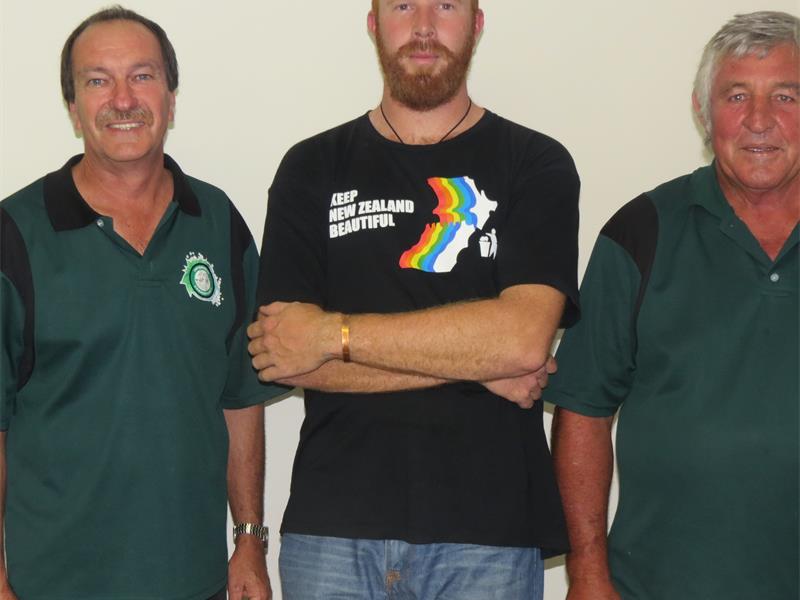
Shane McPherson is monitoring 12 local crowned eagle nests.
AMAZINGLY, the crowned eagle, one of South Africa’s largest and most majestic raptors, is surviving – even thriving – in some of the most built-up areas in KwaZulu-Natal.
And the South Coast has its fair share of these regal birds. A recognised authority on the crowned eagle, Shane McPherson is monitoring 12 nests in this area as part of an intensive study he is doing on urban populations of these eagles.
When Shane gave a talk and an excellent photographic presentation on this research, hosted by Umtentweni Conservancy, at Umtentweni Library last week, he and conservancy members were overwhelmed by the response. Even after more chairs were squeezed into the venue, there wasn’t a single seat empty in the hall .
Shane’s presentation was fascinating, more than living up to the great expectations preceding it.
Originally from New Zealand, he became hooked on Africa when he was involved in research work in Kenya. It was there that he first became acquainted with crowned eagles – a captive breeding pair. Although he has worked with other raptors in other parts of the world, the crowned eagle became his choice of subject when he headed to South Africa to do his masters degree. His MSc (Cum Laude) completed, he is now conducting further research on crowned eagles for his doctorate, which he is doing through the University of KwaZulu-Natal.
The boundaries of his study area stretch from Southbroom to just south of Richard’s Bay and inland to Mooi River. Many of the birds he is monitoring live in heavily urbanised areas and maps showing the nest sites and ranges clearly illustrate how Durban’s green corridor system is benefiting these study subjects.
Technology is harnessed to assist researchers, one of the main sources of data being cameras trained on nests, programmed to take photographs at frequent intervals throughout the day. Some of the young birds in the study area have been fitted with radio transmitters and their movements are monitored.
Many of the chicks are ringed before they fledge and members of the public are asked to keep a watch out for and, if possible, photograph birds sporting yellow or red rings. To report a sighting of a ring go to the website safring.adu.org.za
Shane took his audience through a year in the life of a breeding pair of eagles, providing interesting information about courtship, nesting, breeding and the rearing of chicks. He explained that the nest was rebuilt and re-used repeatedly by the pair. In one area, a single nest had been used for more than 60 years.
Usually two eggs were laid, the second being an ‘insurance egg’, as only one chick was raised. Footage of one of the nests showed the sad fate of the second, smaller chick who is not fed and gradually weakens and dies.
Happier footage showed all sorts of interesting and unexpected behaviour and incidents at the nest, including a delightful segment of a young bird actually playing with a piece of bone.
One aspect of the birds’ behaviour that has been carefully monitored and recorded is what they are eating. Interestingly, dassies and hadedas top the menu, particularly in urban areas. Shane pointed out that pets were generally not at risk of being preyed upon by the birds. A large amount of data has been collected in this regard and it showed that no dogs and a negligible number of cats and chickens have been killed.
By the end of Shane’s talk his audience was much more knowledgeable about these amazing raptors. His listeners were also more aware of how privileged they were to be living alongside these amazing creatures.
Before bidding his audience goodnight, Shane spoke about the owl nesting box project he and local conservancies had just launched. Anyone wishing to become involved in this or who would like to help with sponsorship for the crowned eagle research should contact Alex Skene of Umtentweni Conservancy at 078 5087290.