1. Easter is the celebration of the resurrection of Jesus Christ in the Christian religion.
2. Eggs have been seen as ancient symbol of fertility, while springtime is considered to bring new life and rebirth.
3. In America,Easter is the second biggest ‘candy’ holiday after Halloween. Seventy percent of Easter candy purchased is chocolate.
4. Some 76 percent of people think the ears of a chocolate bunny should be the first to be eaten.
5. Egg dyes were once made out of natural items such as onion peels, tree bark, flower petals, and juices.
6. There’s much debate about the practice of dyeing chicks. Many hatcheries no longer participate, but others say that it isn’t dangerous to the chick’s health because the dye only lasts until the chicks shed their fluff and grow their feathers.
7. The first story of a rabbit, later named the ‘Easter Bunny’ hiding eggs in a garden was published in 1680.
8. Easter takes place on a Sunday, after the 40-day period called Lent. Lent is referred to as a time of fasting, but participants focus more on giving up one significant indulgence.
9. Holy Week is the celebrated during the week leading up to Easter. It begins on Palm Sunday, continues on to Maundy Thursday, Good Friday, and then finally, Easter Sunday.
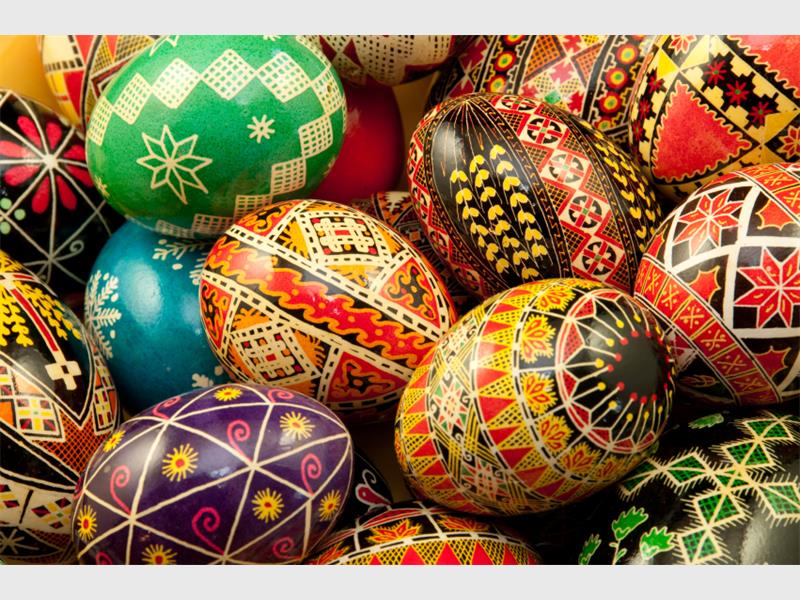
10. Painting eggs on Easter is always fun. But it doesn’t have to be child’s play — the Ukrainian Easter tradition of Pysanka eggs are a craft all by themselves. These highly-decorated eggs have been made during Holy Week for generations. Even when Easter is nowhere near, people can’t resist making them. While people once made eggs to ensure fertility and avoid fires and nasty spirits, today they take to the art form for the aesthetic allure.
Sources:
Violatti, Cristian. “Easter.” Ancient History Encyclopedia. March 31, 2014. Web Accessed November 4, 2014.
Dominguez, Trace. “What Does the Easter Bunny Have To Do With Easter?” Discovery News, April 19, 2014. .
Orgill, Kelly. “Easter: The nation’s second biggest candy selling holiday.” The Digital Universe, April 5, 2012. Web Accessed November 5, 2014. .
Torrisi, Lauren. “90 Million Chocolate Bunnies and Other Fun Easter Facts.” ABC News, April 6, 2012. Web Accessed November 5, 2014. .
Torrisi, Lauren. “90 Million Chocolate Bunnies and Other Fun Easter Facts.” ABC News, April 6, 2012. Web Accessed November 5, 2014. .
USA Today. “10 things you might not know about Easter eggs.” April 22, 2014. Web Accessed November 5, 2014. .
Kingson, Jennifer. “Nobody Minds Dyeing the Egg, but the Chicken Is Another Story.” New York Times, April 1, 2012. Web Accessed November 5, 2014.
Dominguez, Trace. “What Does the Easter Bunny Have To Do With Easter?” Discovery News, April 19, 2014. .
Russo, Nicholas V. “The Early History of Lent.” The Center for Christian Ethics at Baylor University, 2013. Web Accessed November 4, 2014. .
BBC News. “Holy Week.” October 7, 2011. Web Accessed November 5, 2014.
www.dosomething.org and www.toptenz.net