Every bear has his day – even Pooh!
Winnie-the-Pooh turned 90 years old on Christmas Eve, although his official ‘birthday’ is in October and his place in the calendar of ‘special’ days falls on January 18.
FOR a ‘bear of little brain’, Winnie-the-Pooh has really gone places in the past 90 years.
Created by English author AA Milne, Pooh Bear made his debut under his new name in the December 24, 1925 London Evening News, having first appeared as Edward Bear in 1924.
The first collection of Pooh stories appeared in the book Winnie-the-Pooh. At the beginning, it explained that Pooh was in fact AA Milne’s son Christopher Robin’s Edward Bear, who had been renamed after a black bear at London Zoo. The bear cub had been purchased from a hunter for $20 by Canadian Lieutenant Harry Colebourn in White River, Ontario, Canada, while en route to England during the First World War. He named the bear ‘Winnie’ after his adopted hometown in Winnipeg, Manitoba.
Winnie had been surreptitiously brought to England with her owner and had gained unofficial recognition as The Fort Garry Horse regimental mascot. Lt Colebourn had left Winnie at the London Zoo while he and his unit were in France; after the war she had been officially donated to the zoo.
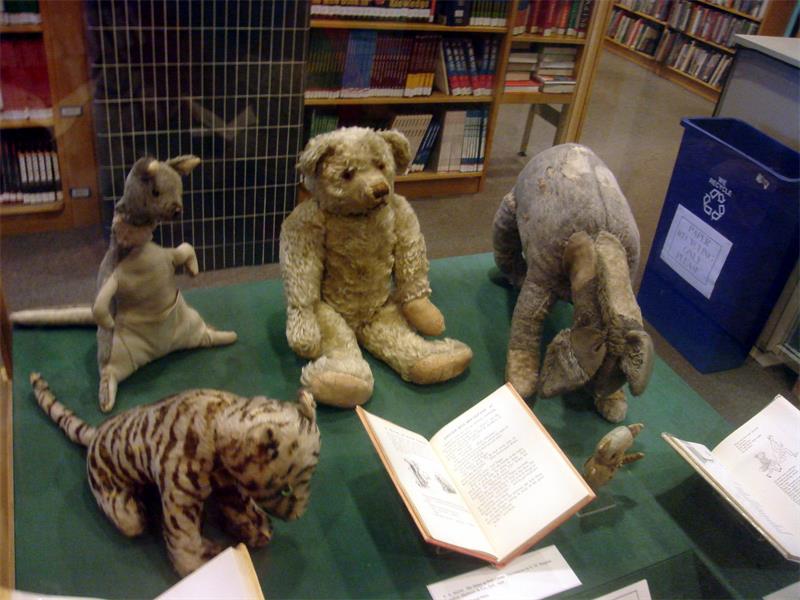
The rest of Christopher Robin Milne’s toys, Piglet, Eeyore, Kanga, Roo and Tigger, were incorporated into the Pooh stories. Two more characters, Owl and Rabbit, were created by AA Milne’s imagination.
The book was published in October 1926. This was followed by The House at Pooh Corner (1928). Milne also included a poem about the bear in the children’s verse book When We Were Very Young (1924) and many more in Now We Are Six (1927). All four volumes were illustrated by EH Shepard.
The Pooh stories have been translated into many languages, including Alexander Lenard’s Latin translation, Winnie ille Pu, which was first published in 1958, and, in 1960, became the only Latin book ever to have been featured on The New York Times Best Seller list.
Apart from entertaining generations of children and appearing on every ‘must read’ for those studying English as a foreign language, Winnie the Pooh has inspired multiple texts to explain complex philosophical ideas, simplify academic jargon and illustrate the works of philosophers including Descartes, Kant, Plato and Nietzsche.
Pooh has had streets named after him in Warsaw and Budapest and left us the sport of Poohsticks, for which a World Championship takes place in Oxfordshire each year.
Not a bad legacy for a ‘bear of little brain’.