The truth can be stranger than the Goon Show
On January 24, 1972, a Japanese soldier was found hiding on the island of Guam.
SOME time in the 1950s Neddie Seagoon and the rest of the cast of the ‘esteemed Goon Show’ captured ‘the Japanese army in that tree’ and towed it – tree and all – back to London, much to the annoyance of Major Bloodnok.
The fans loved it.
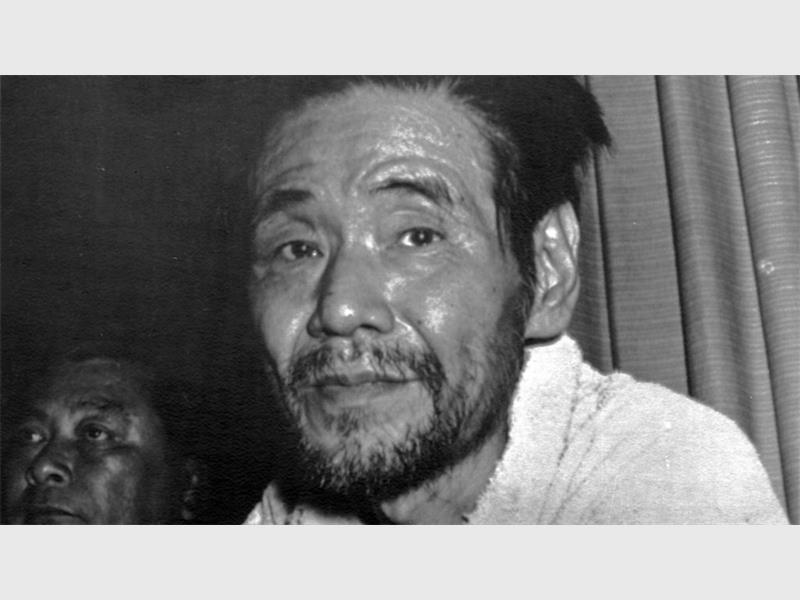
Little did they know that, on a remote island in the Pacific Ocean, there really was a remnant of the Japanese army. After he had been hiding in the jungles of Guam for 28 years, local farmers discovered Shoichi Yokoi, a Japanese sergeant who was seemingly unaware that World War II was over.
He had, he subsequently revealed, known since 1952 that World War II had ended. He feared to come out of hiding, explaining: “We Japanese soldiers were told to prefer death to the disgrace of getting captured alive.”
Guam, a 200-square-mile island in the western Pacific, became a US possession in 1898 after the Spanish-American War. In 1941, the Japanese attacked and captured it and, in 1944, after three years of Japanese occupation, US forces retook Guam.
It was at this time that Sgt Yokoi, left behind by the retreating Japanese forces, went into hiding rather than surrender to the Americans. In the jungles of Guam, he carved survival tools and, for the next three decades, lived in a cave and hunted for his food. After he was discovered in 1972, he was finally discharged and sent home to Japan, where he was hailed as a national hero.
He subsequently married and returned to Guam for his honeymoon. His handcrafted survival tools and threadbare uniform are on display in the Guam Museum in Agana.
Back in Japan, he became a popular television personality and an advocate of austere living. He was featured in a 1977 documentary called Yokoi and His Twenty-Eight Years of Secret Life on Guam. He eventually received the equivalent of US$300 in back pay and a small pension.
He died in 1997 of a heart attack at the age of 82 years and was buried at a Nagoya cemetery, under a gravestone that had originally been commissioned by his mother in 1955, after he had been officially declared dead.