Oribi roads need first aid
Rain has brought relief from drought but it has also damaged the roads.
THE KwaZulu-Natal Department of Transport’s Port Shepstone depot has been instructed to take urgent action regarding the shocking state of gravel district roads in the Oribi Gorge and Paddock area.
This was in response to complaints from residents of these areas, which the South Coast Herald forwarded to the Durban regional office.
Residents said farmers were pleased with the recent plentiful rain after the long drought, but that heavy downpours, including the 300mm that had bucketed down on the area in July, had badly damaged their roads.
Damaged or blocked culverts were affecting drainage and adding to the problem.
They had repeatedly contacted local transport department staff to complain about the matter but their complaints appeared to be falling on deaf ears, they said.
It is not just the inconvenience that is causing concern. Residents fear some of their roads are so badly damaged they have become downright dangerous, particularly the P262, leading to Lake Eland.
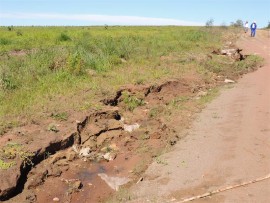
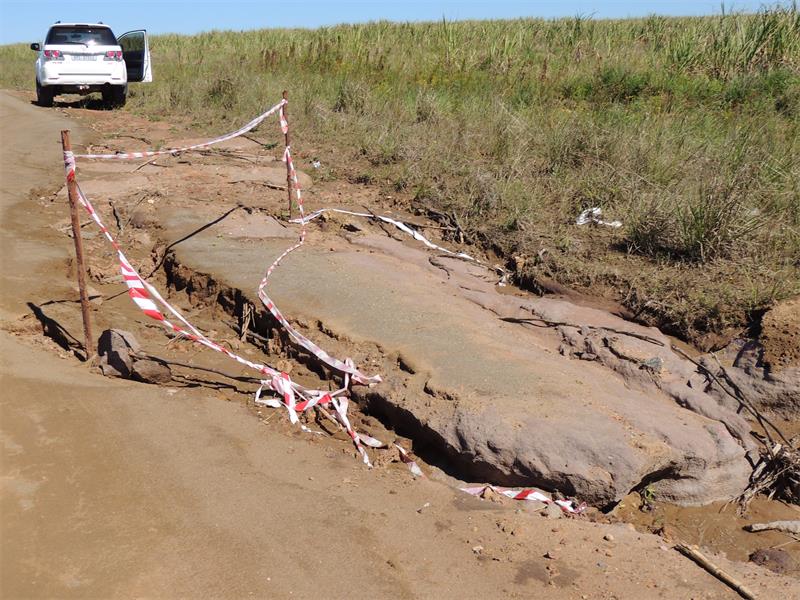
Two washaways close to each other, on opposite sides of this road, have reduced a section of it to single lane, skirting a deep donga at one of the washaway sites. However,the donga is not very apparent, particularly after dark, as there are absolutely no warning signs or reflective material in place to inform motorists of the deadly hazard ahead.
A local farmer has placed some warning tape next to the smaller of the washaways, which intrudes onto the road, but this would not be visible at night.
The P262 is hardly a quiet country road. Lake Eland is a popular and busy tourist attraction, attracting 70 000 visitors a year. It has a venue that is used for weddings and other events, so a number of Lake Eland visitors need to use the P262 after dark.
Many vehicles carrying children to a nearby school and a crèche use the road daily. The road is also an important artery for people who commute between the Oribi area and Port Shepstone.
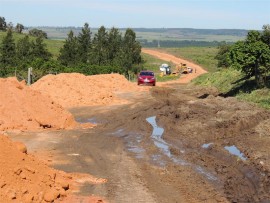
Drainage of gravel roads in the area is generally poor as culverts appear to be blocked or damaged along many routes. The standing water and resulting mud on these roads pose much inconvenience and even danger to road users.
The drainage on the D412 is extremely poor and motorists need a 4×4 to negotiate particularly muddy patches.
Residents pointed out that, although local transport department workers are trying to improve the condition of the roads by grading and resurfacing them with more gravel, this would only bring temporary relief. They believed conditions would just deteriorate rapidly if the underlying problem of poor drainage was not addressed.
The poor road network was also negatively affecting the local tourist industry that was becoming a major money spinner and job generator in the area.
Following receipt of the complaints, Gerald Perumal, the manager of the Durban Region, contacted Port Shepstone Cost Centre manager, Sibongile Somi, informing her that the situation needed urgent attention, investigation and action.
He asked her to ask her technical staff or district consultant to investigate the complaints and to keep the South Coat Herald and the department’s chief director’s office updated regarding repair plans.
HAVE YOUR SAY
Like our Facebook page, follow us on Twitter and Instagram
For news straight to your phone, add us on BBM 58F3D7A7 or WhatsApp 082 421 6033