Why we love bubbles
It’s no coincidence that the popping of Champagne corks is synonymous with having fun - our bodies are hardwired to love bubbles.
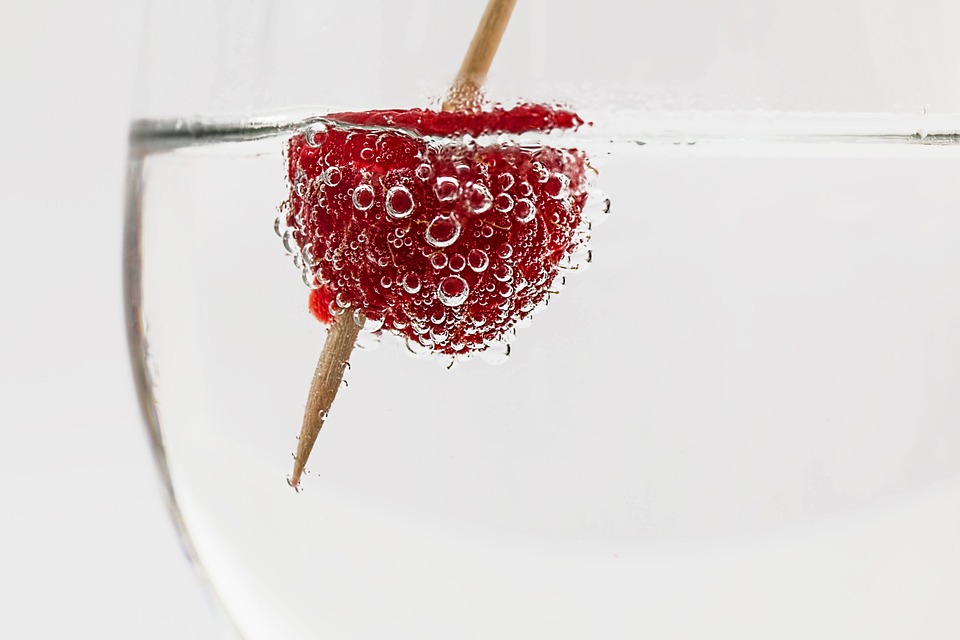
UNAWARE that humans are predisposed to love bubbles, the 17th century winemakers in the Champagne region of France, among them Benedictine monk, Dom Pérignon, were trying to get rid of the bubbles in their wine.
One of the reasons was that, as the wine fermented, it released carbon dioxide gas which, when trapped in the fragile bottles of the time, caused them to explode.
Ironically, it was the British who developed a taste for the French bubbly wine, establishing a market for the sparkling version of Champagne.
The British fascination with effervescent drinks also led to the breakthrough that would become the basis for most of today’s soft drinks. Contrary to what many people assume, it was an Englishman, not an American, who first discovered how to infuse water with carbon dioxide to make carbonated water.
In 1767, over 100 years before Coca-Cola, Joseph Priestly, suspended a bowl of water over a beer vat. He found that the carbonated or soda water had a pleasant taste and gave it to his friends for refreshment.
Over the next few years various people experimented with different ways to make carbonated water, among them Johann Jacob Schweppe. He started the Schweppes Company in Geneva in 1783, moving to London in 1792.
His drinks gained popularity among the bubble-obsessed Brits and in 1843 he became the official supplier to the royal family.
Of course people soon began experimenting with adding flavours to carbonated water, giving the whole fizzy water phenomenon added impetus.
With demand booming, it wasn’t long before someone came up with a way to produce carbonated water at home. The SodaStream company was formed in 1903, selling ‘apparatus for aerating liquids’ to royalty and upper-class families, allowing butlers to make soda water for their employers and visitors.
During the 1920s the company started to develop and sell flavour concentrates. Its marketing efforts received a welcome boost in the 1920s when the Prince of Wales granted it a royal warrant, even acquiring machines and a supply of syrups for the royal yacht, Victoria and Albert III.
But ultimately it’s the contention that bubbles are better which spans cultures and has endured since Priestly first offered his friends some of his sparkling water. Why? After nearly 250 years, it can’t just be the novelty of fizz.
Part of the reason is that the bubbles bring to the surface the flavour and aroma of the drink. But scientists now think there’s another reason why bubbles equal pleasure.
They’ve found an enzyme on the sour receptors of our tongues called carbonic anhydrase 4 (CA-IV). The bubbles stimulate the sour buds and the somatosensory system. The dual activation on the buds and the nerves creates a pleasurable sensation.
The somatosensory system allows us to perceive, touch, pressure, pain and temperature, but scientists think that the carbon dioxide bubble trigger the CA-IV differently, causing the sensation.
Even though Dom Pérignon may have disagreed, the fact is that for most people, bubbles just are better.
(Information from SodaStream SA)