WATCH: Sanral – ‘we are always considerate of the environment when building roads’
The agency is committed to preserving the environment and the crucial role that trees play in this. Back in 2015 when trees along the R511 at the Hartbeespoort Dam had to be removed, it was done to improve the safety of road users.
The land belongs to all who dwell on it, and we should all strive to give back what we take from it.
YOU MAY BE INTERESTED IN: New management for Sanral’s Eastern Region
This is the approach that the South African National Roads Agency SOC Ltd (SANRAL) has adopted in all its construction projects.
SANRAL is responsible for delivering quality roads, and in this line of work there is always some interaction with nature, and at times it is less pleasant.
The agency recently came under public scrutiny for cutting down trees in Ekurhuleni. The trees were growing near the R21 on the way to OR Tambo international airport. As a result, it was accused of not being considerate of the environment.
But there was a good reason for getting rid of the pine trees: the pine needles were continuously blocking grind inlets, which leads to flooding of the road.
SANRAL did not stop there: it replaced the pine trees with karee, which will not block any inlets.
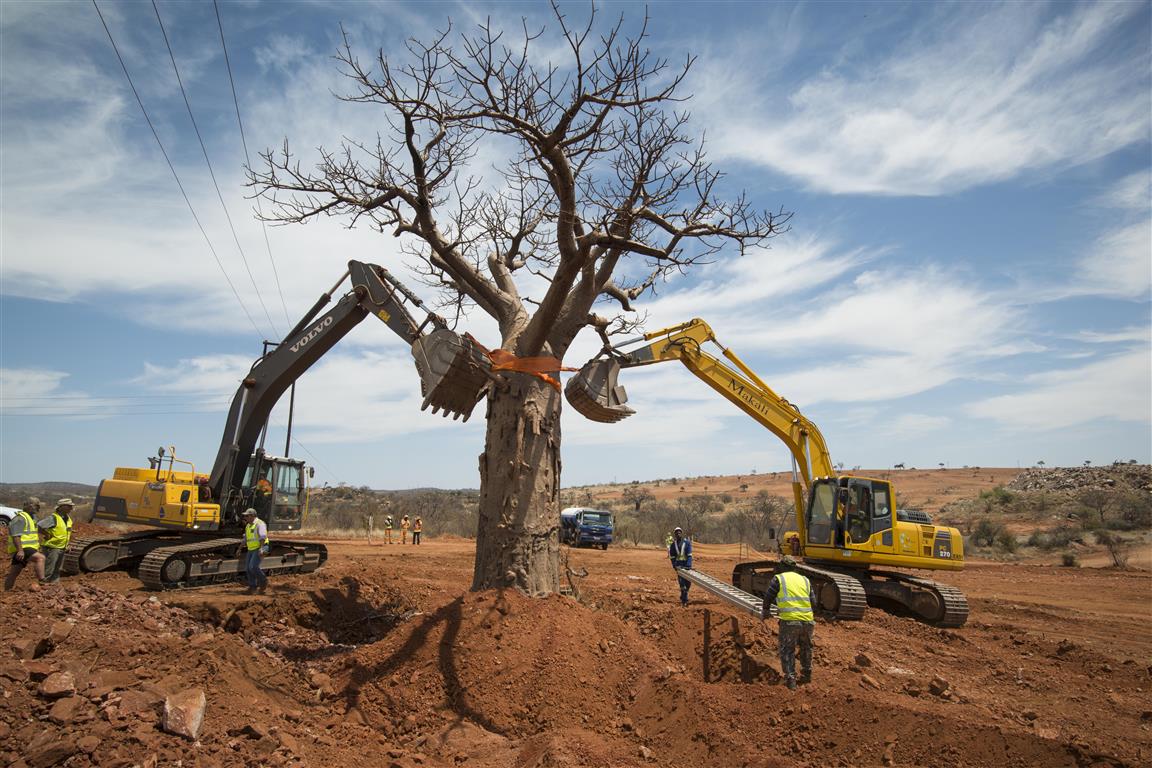
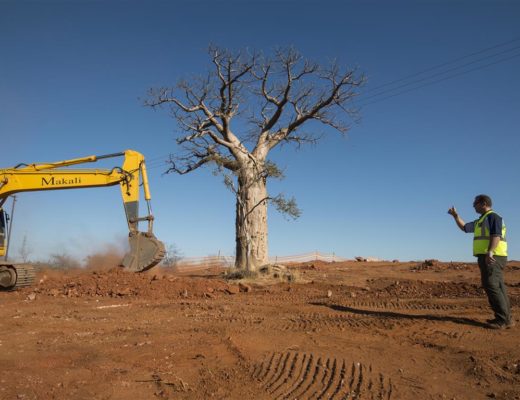
This is the way the agency works, as can be seen in thee the relocation of baobab trees near Musina during the upgrading of the N1. Eleven baobabs and 197 shepherd trees were relocated.
According to Vusi Mona, SANRAL General Manager of Communications, the agency always strives to meet the requirements as set out in Environmental Management Plan (EMP) per project.
The agency is committed to preserving the environment and the crucial role that trees play in this. Back in 2015 when trees along the R511 at the Hartbeespoort Dam had to be removed, it was done to improve the safety of road users.
In that instance, the agency obtained a permit from the Department of Forestry and Fisheries (DAFF) in Mmabatho, North West to remove these trees. Many of the trees were either obstructing sight distances, were too close to the side of road or too close to structures such as concrete-lined side drains and bridges.
“We are always considerate of the environment when building roads; whether it’s removing indigenous plants on a planned road reserve, managing stray animals crossing the road or digging-up rocks and sand for construction. We have an EMP for every project and it guides us to minimise or avoid adverse environmental impact,” he said.
This goes beyond just relocating trees. A construction, area has to be fully rehabilitated so that it will be usable again. Thus, where there was grass, it will be replanted and maintained over time.
SANRAL always consults and acquires permits from the Department of Agriculture and Forestry to ensure that all requirements are met before construction takes place.
HAVE YOUR SAY
Like our Facebook page, follow us on Twitter and Instagram
For news straight to your phone, add us on BBM 58F3D7A7 or WhatsApp 082 421 6033