National Oral Health Month: Gum disease – Gingivitis and periodontitis are in the spotlight this September
September is National Oral Health month - a time to increase awareness about oral disease and how to manage it.

“Around 80 percent of humans have some form of gum disease and cases can vary from mild to severe.”
Sarie Liebenberg, oral hygienist from Sandton, Johannesburg.
Two of the most common forms of gum disease are called gingivitis and periodontitis. Gingivitis is the first stage of gum disease and refers to the inflammation of the soft tissue around the teeth, where the bone around the teeth is not as yet affected. Gingivitis can be cured without leaving permanent damage to the gum tissue.
Periodontitis can develop if gingivitis is not treated.
Periodontitis is the inflammation of the soft tissue around the teeth as well as loss of the supporting structure (bone) around the teeth. The progression of periodontitis can be halted and the condition maintained if a patient seeks treatment in time, but this condition can leave irreversible damage to the supporting bone around the teeth.
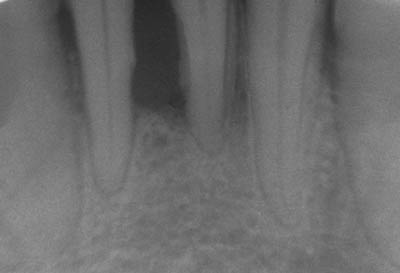
The frightening thing is that if periodontitis is not treated, continuous bone loss will lead to the potential loss of teeth!
“Everybody has bacteria in their mouths. It is called oral flora. Oral flora consists of the so-called good and bad bacteria. As long as there is a balance between the good and the bad bacteria, disease will not occur.” says Sarie. Problems can arise when the production of acidic compounds by microorganisms leads to damage of the teeth and gums.
For this reason we brush our teeth twice a day and floss at least once a day.
Gingivitis can be recognised by red, swollen gums that bleed easily when you brush your teeth. To treat gingivitis, you need to remove the plaque (bacteria) and calculus (calcified plaque) on the teeth and underneath the gums. This cannot be done with your toothbrush anymore and an oral hygienist or dentist needs to assist you with their specialised instruments.
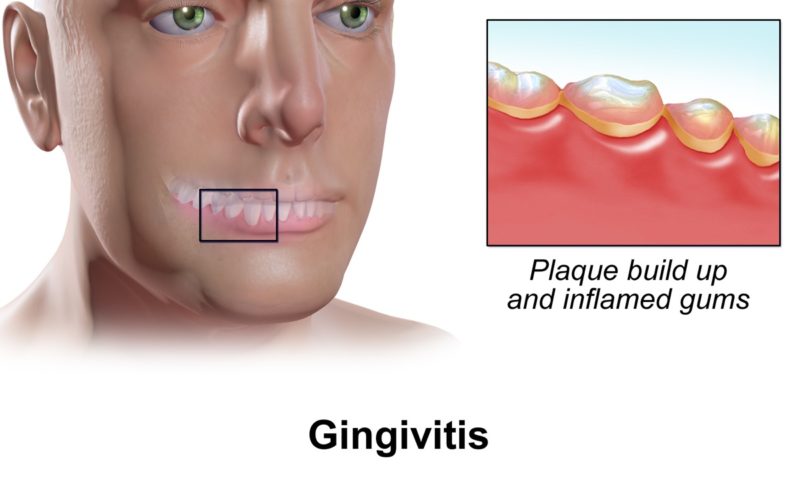
Gingivitis cannot be cured by simply using a mouth rinse. The cause of the inflammation (plaque and calculus) needs to be removed first. However, to help speed up the healing process, a specialised mouth rinse can be used.
Unlike gingivitis, periodontitis takes years to develop. One of the dangers of periodontitis is the fact that it is not necessarily painful. A person can have periodontitis already, and not seek help, which reduces the chances of early invention and treatment. Research has shown that periodontitis has a strong link to certain diseases such as diabetes, heart disease, osteoporosis, respiratory disease and cancer.
YOU MAY WANT TO READ: Celebrate World Oral Health Day by taking care of your teeth everyday
Although the exact link between oral conditions and these medical conditions is still not yet fully understood, evidence now shows that we cannot isolate the mouth from the rest of the body.
Bleeding gums caused by plaque and calculus on the teeth and underneath the gums
is one of the major reasons for bad breath.
“By brushing alone, we only remove about 60 percent of plaque. Inter-dental care in the form of flossing, inter-dental brushes or water irrigation is needed to remove the other 40 percent of plaque that forms in between the teeth and underneath the gums.” Sarie says.
Despite being very preventable, oral disease is the most widespread chronic disease.
Having a professional dental cleaning by your oral hygienist every six months, and daily flossing (or other form of cleaning in between the teeth) and bushing of your teeth twice daily, can help to reduce your chances of developing gingivitis.
Speak to your dentist about gingivitis and periodontitis.

PixabayHAVE YOUR SAY
Like our Facebook page, follow us on Twitter and Instagram
For news straight to your phone, add us on WhatsApp 082 421 6033