How to combat Asian borer beetle
Infected trees need to be removed urgently and treated responsibly. Trees which have been killed by the beetle need to be wood treated as it could serve as a breeding ground for the beetle for up to a year after the tree has died.
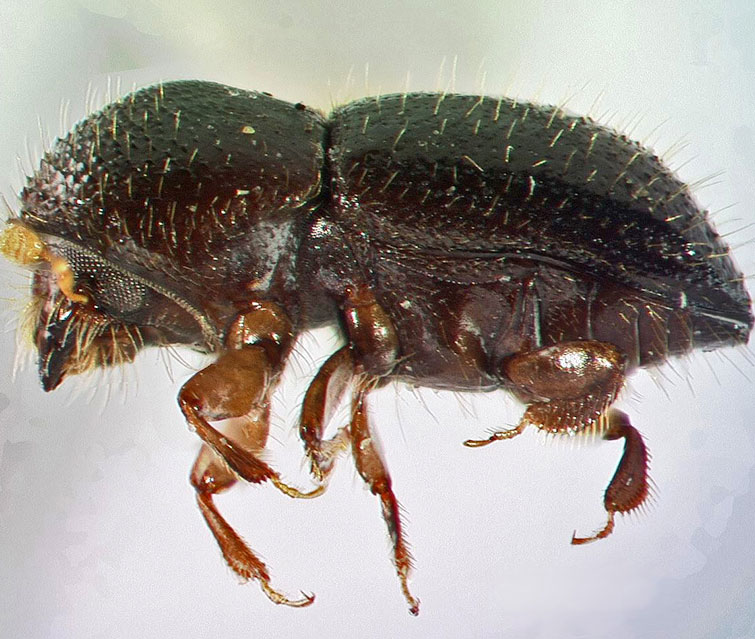
PRELIMINARY examinations by members of the Forestry and Agricultural Biotechnology Institute (Fabi) at the University of Pretoria have indicated that samples collected and sent last week appear to be those of the shot hole borer beetle.
The Southeast Asian beetle somehow found its way to South Africa in 2017 and was first discovered in the country by Dr Trudy Paap of Fabi. The beetle poses catastrophic risks to South African trees. It starts out with a few tiny holes in a tree, slightly larger than the tip of an average pen. Before you realise exactly what is going on, the beetles have already managed to create a large network of tunnels in which they thrive and spread a fungus which will eventually cause the death of the host tree.
ALSO READ: Borer beetle from Asia could spell doom for South Coast trees
The fungus, known as Fusarium euwallaceae, ensures that the beetles continue to survive and feed their larvae. The fungus grows within the tree’s vascular system, meaning that the host tree is unable to send vital nutrients throughout its system to sustain its health and growth. Previously not known to target Flatcrown trees, it is worrisome to note that the beetles may target more of our indigenous trees.
A recent paper published by Hilton Fryer of TreeSurvey stated that there are no single solutions and a successful treatment and prevention regime will incorporate multiple strategies and products, repeated over years. He said specialists among them were working on creative solutions and that people should enquire about products at their nearest nurseries.
Direct injection of poison into the tree would be the easiest way to deliver poison to the beetles. This method directly targets the tree and avoids poisoning the ground, which could be harmful to pets, plants and groundwater. Do not spray poison as this will have no effect on the beetles, unless the poison contains a surfactant. If so, only apply the poison to the trunk of the tree.
ALSO READ: New app will help fight borer threat
“The reality is that every tree in your garden could be attacked by the beetle. However not every tree will provide an ideal ecosystem for the beetle to thrive and breed. One heavily infested tree can contain over 100 000 beetles, and the females can fly up to 1km,” said Mr Fryer.
Infected trees need to be removed urgently and treated responsibly. Trees which have been killed by the beetle need to be wood treated as it could serve as a breeding ground for the beetle for up to a year after the tree has died.
Measures to stop the beetle attacking your tree include: Mulching the base of the tree; providing additional water if your trees are suffering during a drought; add bio-stimulants to the soil around the tree to boost its health; introducing micro-biomes and trichoderma to the soil around your tree to increase its quality. A local nursery will be able to provide further information.
If you suspect that your tree has been infested with the beetle, contact TreeSurvey via WhatsApp at 082-3597518 and provide your exact location, a close-up photo of the bark as well as a photo of the tree, which will allow for identification of the species of the tree as well as its general health. Although optional, providing your name and email address would be beneficial should TreeSurvey need to make contact with you.
HAVE YOUR SAY
Like our Facebook page, follow us on Twitter and Instagram
For news straight to your phone, add us on WhatsApp 082 421 6033