My family’s favourite festive fare
These Christmas recipes have stood the test of time.
AS Christmas approaches I find myself paging through recipe books, looking for a way to give a fresh, new twist to the traditional meal.
But Christmas is all about tradition, isn’t it. And somehow it wouldn’t be the same without those tried and trusted festive family favourites we trot out every year.
Our best recipes, the ones that have stood the test of time, are often those that have been handed down to us through the generations or scribbled on the back of an old envelope or scrap of paper, many, many years ago, by a dear friend.
Recipes are such strange things. They take on a life of their own and mutate over the years. Often the original donor of the recipe you’ve used for many years wouldn’t even recognise it any more.
Eventually, added to, subtracted from and altered over the years, they become uniquely your own recipes – sort of signature dishes.
We talk about Aunt Betty’s Pie, Gran’s turkey stuffing or Lyn’s secret spicy sauce. I have a recipe for Bridgette’s Cake, a family favourite handed on to me from my husband’s sisters – and nobody has a clue who Bridgette was.
So, let’s go back to some of my family favourites that will probably make an appearance during our Christmas festivities yet again this year. In the meantime I’m still looking for a way to give a fresh, new twist to the traditional meal.
Back in the 70s when I lived in Harare I had a good friend and neighbour who was also a fantastic hostess, cook and producer of luscious cakes and biscuits.
Heidi was Swiss German so many of her favourite recipes had German origins while my cooking style, though well South Africanised (is there such a word?) was rather influenced by my British ancestry.
Every year, as the Christmas season approached, we’d spend a whole the day in her kitchen baking all sorts of goodies for Christmas. It was such fun and we often swopped recipes, in the process adding a little ethnic diversity to both our cooking styles.
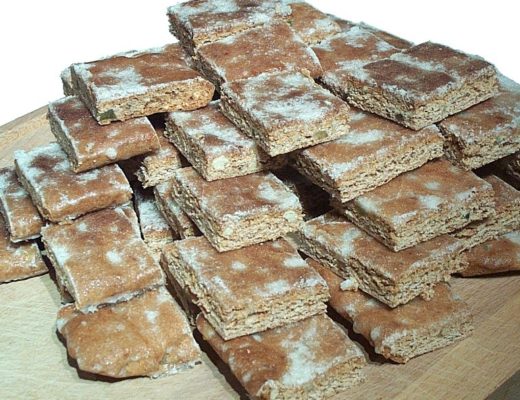
This is a great cookie recipe, Heidi’s famous Leckerli:
It calls for 90g of chopped mixed peel
5ml bicarbonate of soda
10mls each of ground cloves, nutmeg and cinnamon
5ml grated lemon rind
125mls each of honey and sugar
500ml chopped almonds
30ml water
625ml flour
Set oven at 160 degrees and grease a baking tray.
Boil honey and sugar together and add mixed peal and spices, then stir in the bicarb mixed with water.
Add almonds and flour and knead until smooth. Roll out into a square about 1,5cm thick, to fit the baking tray and bake for about 25 minutes.
Turn out onto a wire rack.
While still hot cut into squares but leave in the baking tray. When cool spread a little water icing over the biscuits.
>>>>>
I don’t know the recipe’s origins but my mother and her sister always used a basic biscuit recipe that is very versatile as all sorts of interesting ingredients can be added. It is still a firm favourite among the bakers in our family.
You will need 125g butter
200ml castor sugar
Two eggs
500ml cake flour
5ml of baking power
A pinch of salt.
Set oven at 200 degrees. Cream butter and sugar then add eggs one at a time. Add sifted dry ingredients. Knead the dough, roll it out and cut into the desired shapes. Bake for about ten minutes or until the biscuits are a light brown. Cool, ice in the colours of your choice and decorate with assorted sprinkles.
For variety add cocoa, choc chips, chopped cherries, nuts or dates, grated lemon or orange peel or any combination of these that you like to the dough.
You can also leave round, plain biscuits without icing, sandwiched together with some smooth jam and dusted with icing sugar.
>>
An aunt’s cooking instructions for the Christmas turkey include glazing it with a light coating of apricot jam, then draping it with a few pieces of streaky bacon. It works well.
>>>
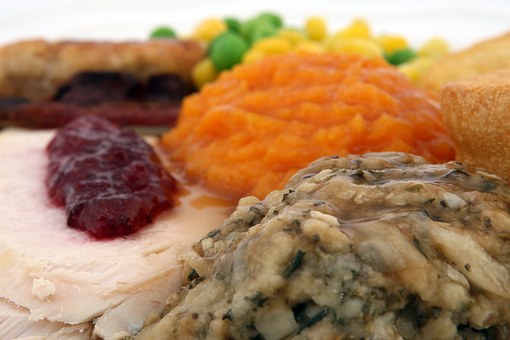
I wish I could remember who gave me my favourite turkey stuffing recipe. It is scribbled down in a notebook and I’ve had it for years but its origins, I am afraid, are lost in the mists of time. This mystery recipe makes enough for a 5kg turkey :
Make crumbs out of a loaf of day-old bread. This is easiest done in a food processor.
Melt about 30g of butter in a large pan – I usually use my electric frying pan. Add a splash of cooking oil and about 200g of chopped streaky bacon, then fry until crisp. Add the chopped turkey liver or a couple of chicken livers and a finely chopped onion and saute for a few minutes. Remove all this from pan.
In the same pan, melt another 90g of butter, add a dash of oil and fry the breadcrumbs until they are golden. Add the bacon and liver mix, 5ml ground nutmeg, 30ml chopped fresh parsley, 10ml fresh thyme, the grated rind and juice of a lemon, a good pinch of ground cloves, a good pinch of allspice and salt and pepper to taste.
Mix in a beaten egg and about 150ml of milk. Mixture should be soft but not too wet. Store in the fridge overnight.
>>>>>
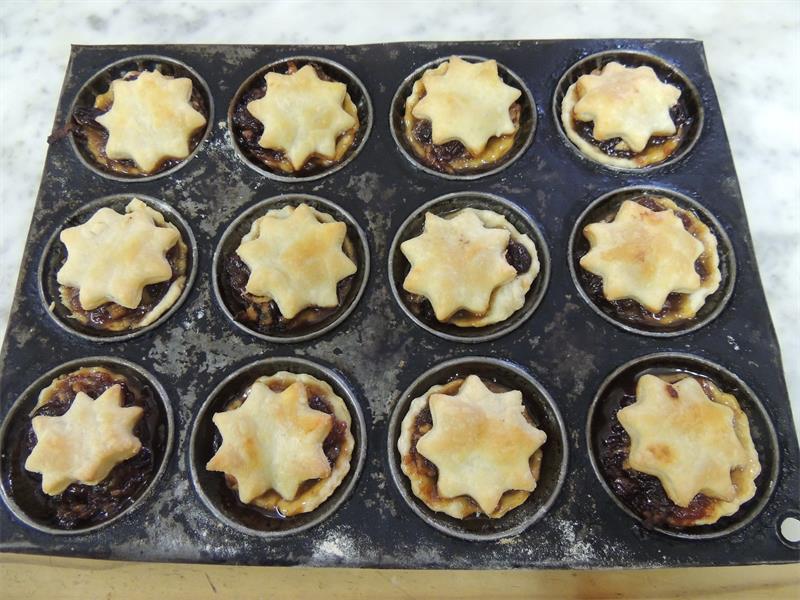
My mother’s homemade Christmas fruit mince meat stays at the bottom of my pile of Christmas recipes, I am afraid. One day I will do the whole chopping up of suet and fruit thing to create an authentic batch of mince pies.
In the meantime, I have a little trick or two to make the commercial fruit mince taste a bit more home made. First of all, buy the very best fruit mince you can find and empty it into the bowl, retaining the bottle as you might run out of pastry before you run out of mince. Pop any leftover doctored mince back in the bottle and it will keep quite happily in the fridge for a while.
Grate an apple and add it to the mixture (this idea comes from my daughter-in-law, Carla, and it really does enhance the flavour), add about a tablespoon of brandy, sherry or other sweetish fortified wine. Porterville Cellars makes a scrumptious golden Jerepigo that is just marvellous as a fruit mince additive.
You can also add a handful of sultanas or a dried cranberries – better still plump these up a bit by soaking them in the brandy or fortified wine for an hour or two before you need the mince meat.
I often use a simple short pastry for my pies. Rub about 120g of butter into 240g of cake flour and a pinch of salt, then add just enough ice water to make a firm, dry dough. Roll pastry out on a floured surface. Use a round cookie cutter to cut out the bases of the pies and a slightly smaller round or star shaped cutter for the tops.
Put the bases in the patty pans add a smallish spoon (not too much) of mince meat and cover with the tops. Dab the tops with a splash of milk or beaten egg and bake in a hot over (200 degrees) for ten minutes or until the pasty tops are nice and golden brown.
I sometimes vary my mince pies by using a homemade flaky pastry and I’ve even made a successful batch out of leftover puff pastry.
They are best served hot, perhaps with a little brandy butter. For unexpected guests you can even serve them up as pudding with brandy butter and hot custard.
HAVE YOUR SAY
Like the South Coast Herald’s Facebook page, follow us on Twitter and Instagram
For news straight to your phone, add us on WhatsApp 082 421 6033