Golden opportunity or dead duck, ask satellite poultry farmers
One of the funders, Africa Power Group, represented by Thami Ndita-Mpande explained that investors expected things to happen immediately after registration.
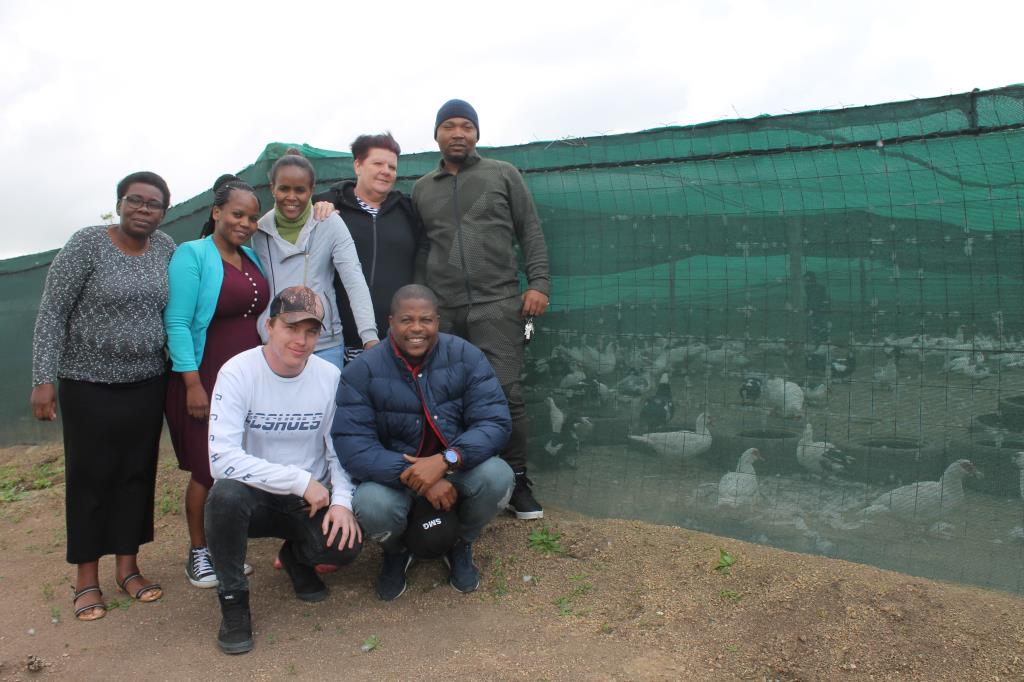
SERIOUS allegations have been levelled against a Craigieburn-based poultry farm which says it aims to help people make ends meet by providing business opportunities.
These opportunities revolve around the creation of hundreds of satellite farms which would theoretically be able to produce thousands of Muscovy ducks for export purposes.
A handful of people who have invested in the scheme however believe they have been conned out of R3 600, the sum each investor pays up front with the promise of having their own satellite farms up and running as soon as the project kicks off.
But, according to the director of Idada Hatchery and Poultry, Charmaine Nel, it’s not quite that cut and dried.
In 2016, Charmaine and her husband, William, came up with an idea which they thought would be able to change the lives of thousands for the better.
The idea was simple – people would register to be provided with everything they needed to become duck farmers.
This included financing, company registration and land.
The first investors registered, and before long, the project gathered momentum with more and more people clamouring to take advantage of this opportunity.
Such was the interest shown that the project was pitched to King Goodwill Zwelithini kaBhekuzulu in the hopes of acquiring more land for distribution.
The long-term goal now is to set up 5 000 satellite farms.
ALSO READ: Mismanaged poultry farm goes under the hammer
However, those who first invested were led to believe that once 100 people had signed up, the project could proceed.
Now, claim some, the project has been delayed time and again as they have been told more investors are needed.
Other allegations include that of the R3 600 registration fee, R1 200 was paid to an accountant to register the company and the remaining money is pocketed by Idada.
Mrs Nel said this couldn’t be further from the truth. “With all the farmers who have registered, if I put R2 000 in my pocket each time I would not be sitting here right now.”
At a recent meeting held to discuss these concerns, Mrs Nel said, “When we started out, we needed 100 people because we had a contract to supply 30 000 ducks a week. We then met with the deputy mayor Nomvuso Tshabalala (former deputy mayor) of eThekwini Municipality and a businessman who presented Idada with a letter of intent (LOI) for 100 000 ducks per week.
“With no means of meeting that demand, it was decided to up the number of satellite farmers. More funding was required and we approached Ithala land bank,” she said.
The bank was keen to provide finance, but was less than impressed at the number of registered farmers, and felt more investors should be sought.
Ithala is one of KwaZulu-Natal’s primary drivers of economic development and a strategic enabler of support for, in particular, this province’s historically disadvantaged communities.
Mrs Nel said another problem arose when the bank subsequently declined to advance funds as the satellite farmers were operating with ‘permission to occupy’ (PTO) documentation as opposed to being in possession of title deeds.
“We had to work with the Ingonyama Trust, and the farmers themselves were concerned as if they acquired title deeds, they would be liable for rates and taxes, which is not the case with a PTO.”
Another letter of intent was received from a company which wanted 300 000 ducks and Idada then had to increase the number of satellite farmers to 1 000 for the project to be feasible.
And in October 2018 Idada received yet another LOI.
“Everybody knows that the LOI states that I do not have the funding. As soon as I get the money, this LOI immediately becomes a contract. So they know that we don’t have structures on the ground except for Idada’s structure,” said Mrs Nel.
ALSO READ: Conditions improve at chicken farm [VIDEO]
Another allegation is that the company had not provided farmers with any documentation after the initial R3600 was paid.
“We update our farmers on where the project is heading several times a month. Every farmer who has paid the R3600 has received company registration papers, they have signed the memorandum of agreement with Idada, they have received their tax clearance and their Black Economic Empowerment documents.
“They have received the first half of their business plan, and we are now working on the second half,” she said.
Copies of the paperwork were provided to the Mail and several satellite farmers confirmed that they were in possession of their own documents.
“It costs around R600 000 per farm to build infrastructure and to get it up and running before the farmer starts turning a profit, said Mrs Nel.
“It takes 16 weeks to raise a Muscovy duck. So, that R600 000 also includes salaries for the first four months. It also includes a salary for the director and various other items such as breeding equipment.”
One of the funders, Africa Power Group, represented by Thami Ndita-Mpande explained that investors expected things to happen immediately after registration.
“We cannot say, here is R1.8-billion go ahead and start your project. We need to make sure that our funds are safe, we have to do our due diligence and we have to know that government supports this project. We have our own requirements. I want to make sure that this project gets off the ground. The model is scalable and sustainable, so why should it be kept to a minimum.”
According to Ms Ndita-Mpande, the office of the premier is aware of the project and supports it. However, requirements are still to be met, she said. Letters of commitment were shared with journalists.
“If this project was a scam, I would not be sitting here,” she added.
HAVE YOUR SAY
Like the South Coast Herald’s Facebook page, follow us on Twitter and Instagram
To receive our FREE email newsletter, click HERE