
Shona’s wonderful Wild Coast walk – Day 4
Everyone loves a good story or two - and tales of Khotso Sethuntsa and the Grosvenor shipwreck make for a riveting day.
The sea is gnarly and wild, the waves are wickedly massive, and the seahorses are galloping madly.
ALSO READ: Shona’s wonderful Wild Coast walk – Day 3
The howling wind shakes the hut we are sleeping in at Ndengane village and most of us are woken up at about 3am.
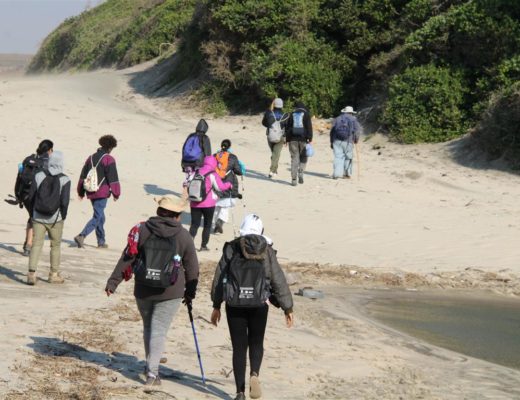
After yesterday’s (day 3) hectic walk, today is expected to be a shorter distance of about 10 kilometers, but instead we are sand blasted by the wind, making it feel like an impossible mission.
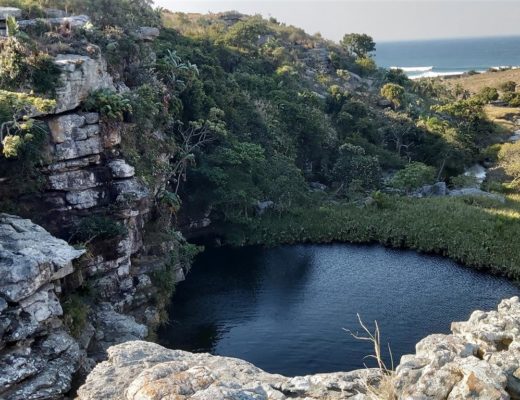
We find a semi-sheltered spot overlooking Khotso Sethuntsa’s sacred pool, and our guide Sinegugu Zukulu tells all about the millionaire medicine man.
“Those who came to Khotso for wealth, were told to sit at the sacred pool and to not run away no matter what came out of the water. A huge snake would then emerge with its mouth open. If one was a coward they would run for their lives, and go crazy. The brave ones would close their eyes, and the snake would swallow them. Three days later they would spit them out and they would become rich,” said Sinegugu.
He built distinctive blue and white houses (one can be seen in Lusikisiki), adorned with pillars, stained glass with statues of lions, eagles and baboons in the garden.
Sinegugu described Khotso as a short, clean shaven man who had many wives and children.
“He was a popular man. Anyone who met him said he had an amazing presence and made an impact where he was,” he said.
Afrikaaner leaders, including Paul Kruger, JG Strijdom and HF Verwoerd, visited Khotso for his medicines for political power.
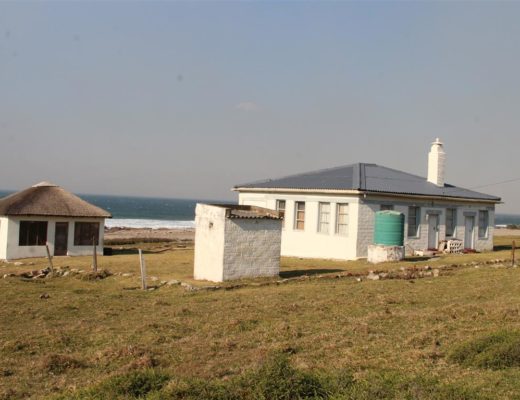
Further down the coast, we walk past Khotso’s sturdy stone-walled house built right on the beach, and the grave of his last wife.
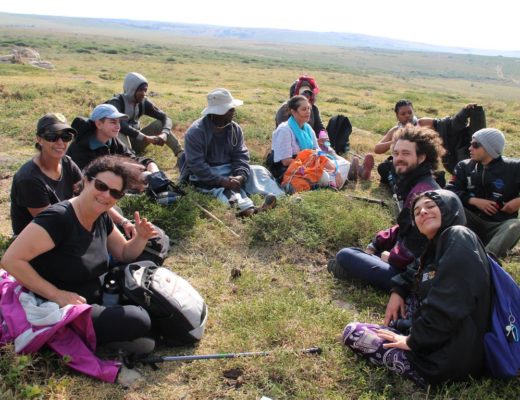
The wind continues to howl horribly…
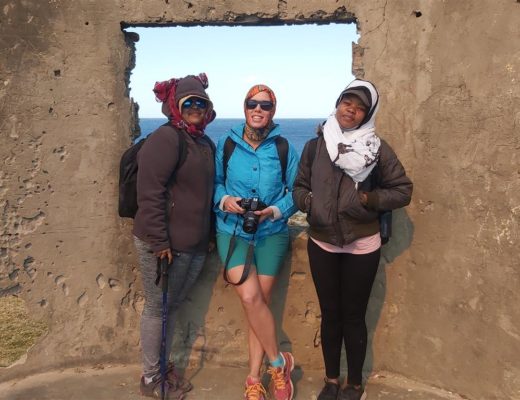
Lunch is enjoyed at a spot near the ruins of a building erected by a Hungarian team who came to find fabled treasures of diamonds, gold and gems left by the legendary East India merchant ship, the Grosvenor, which ran aground and sank on the Pondoland coast with nearly 150 passengers on August 4, 1782, en route to England from Ceylon.
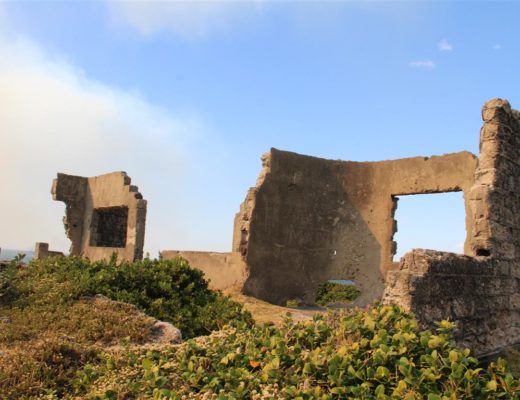
Sinegugu is an excellent storyteller – and while we munch on our steam bread, peanut butter or egg sarmies, he begins to tell the tales surrounding Grosvenor, which was wrecked north of the mouth of the Umzimvubu River.
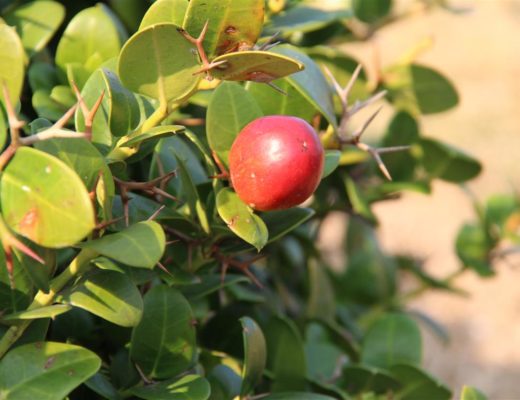
“Some of the survivors who decided to walk down to the Cape of Good Hope are believed (according to records) to have survived by eating the ‘tomatoes’ which must have been the red fruit of the Carissa Bispinosa bush (amatungulu),” said Sinegugu.
While walking the along the coast one can not help picking and eating the tasty shiny red fruit, and thinking about the castaways who probably had to not only scavenge for food, but fight off the odd lion or two.
Some 40 years prior to the Grosvenor’s misfortune, Bessie, a little English girl was cast ashore in a terrible storm in which her ship was wrecked at a remote spot known as Lambasi in 1737.
The Grosvenor was wrecked close to the place where the Portuguese ship, São João, sank more than two centuries earlier on 8 June 1552.
Once at our homestead in Rhole, some of us pile into the bakkie and we head off to find cellphone signal. (Although, by now the journalist more than likely has missed her print deadline)
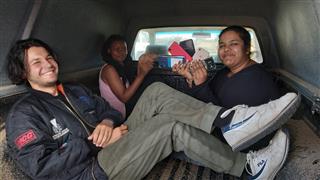
Our mission to find signal takes us along rutted windy dirt roads to the top of a mountain.
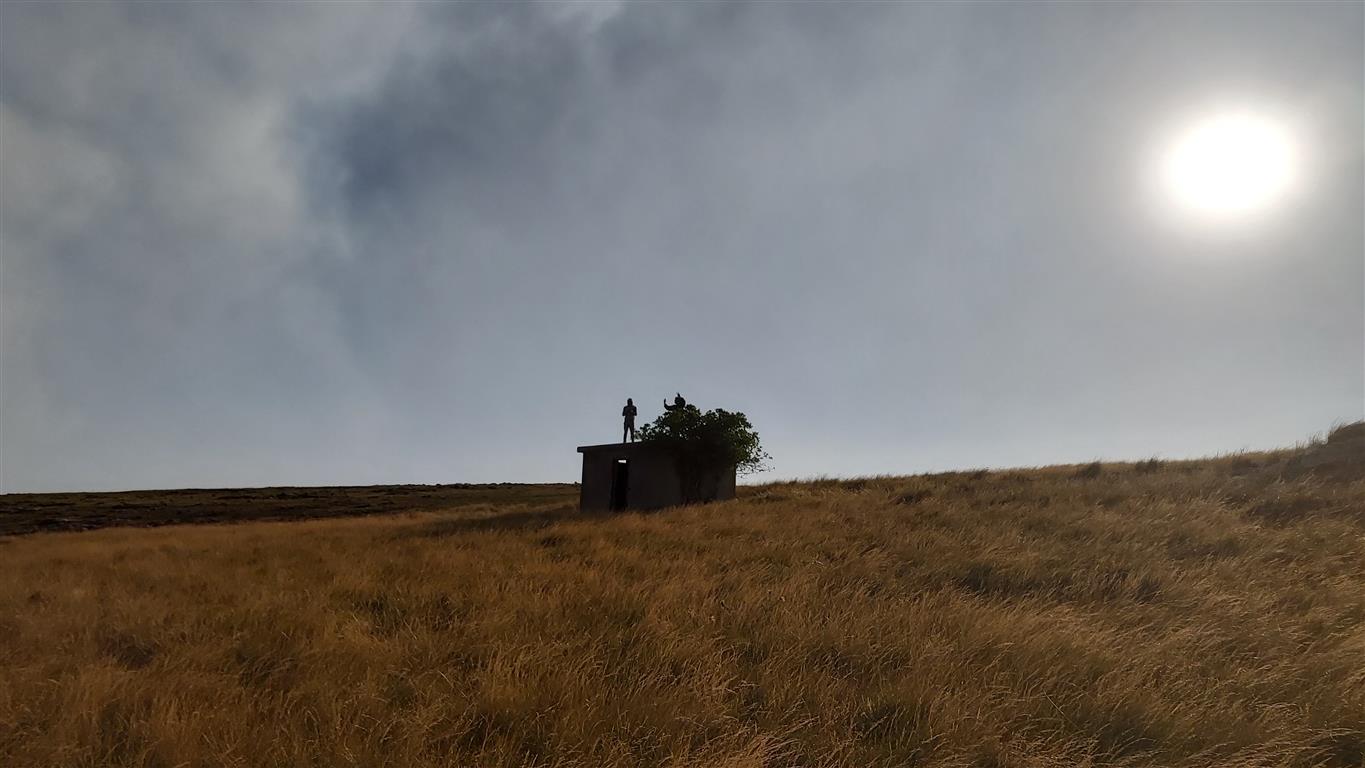
There is a fire blazing on the horizon, and we pass the old World War II barracks built for soldiers to keep an eye out for approaching enemies.
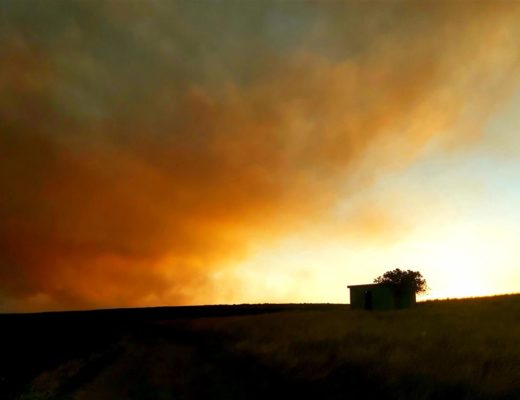
The more you explore Pondoland, the more you realise there is a story almost around every corner.
* Shona Aylward is taking part in the Wild Coast hike sponsored by the environmental journalism training agency, Roving Reporters (www.rovingreporters.co.za) and the 8 Mile Club, an adventurous group of charity swimmers who raise funds for various deserving charities.
HAVE YOUR SAY
Like the South Coast Herald’s Facebook page, follow us on Twitter and Instagram
To receive our FREE email newsletter, click HERE


