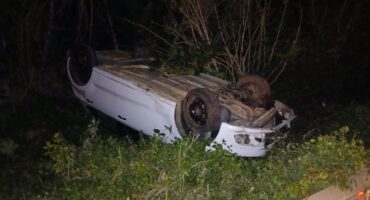
OIL DRILLING: A large spill or blowout would have major consequences for the marine environment
The South Durban Community Environmental Alliance (SDCEA) invites everyone to an oil and gas exploration presentation at the Ramsgate Lions Club (Old Ramsgate Bowling Club) this Saturday, November 16 at 10.30am.
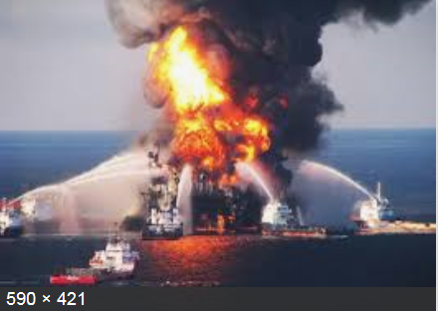
Environmental attorney Kirsten Youens recently addressed the Conservation Symposium on the Marine Protected Areas and Offshore Oil and Gas Exploration: One step forward and five steps back?
ALSO READ: Calls to stand against oil and gas drilling off South Coast
In October 21, attorneys Adrian Pole and Youens lodged a detailed appeal on behalf of WILDOCEANS, a programme of the WILDTRUST, with the Environment, Forestry and Fishery (DEFF) Minister Barbara Creecy, challenging an authorisation granted by the Department of Mineral Resources (DMR) to authorize foreign mining giants Eni and SASOL to drill six exploration oil wells at two deep sea locations in high current off the coast of KwaZulu-Natal.
Relying heavily on the results of commissioned oil spill modelling, the Environmental Impact Assessment (EIA) done by the oil company’s EIA consultants (ERM) argued that the possibility of a catastrophic oil spill should a well-head blowout occur was unlikely and that impacts on South Africa’s ocean would be low should this occur.
Presenting at the Environmental Law Association Conference today with Adrian Pole on marine protected areas and the offshore oil and gas push…a case of 1 step forward and 5 steps back? @OceaniMPActSA @WILDOCEANSSA pic.twitter.com/pQIm7HzMqI
— Kirsten Youens – attorney (she/her) (@kirstenyouens) September 27, 2019
Disturbed by the quality of the EIA, Dr Jean Harris, Executive Director of WILDOCEANS, obtained three international expert reviews of the EIA, including critique of the oil spill modelling and assessment of risks and impacts.
These independent experts, in contrast to the EIA, informed the decision of department of mineral resources, caution that such deep-sea offshore oil exploration is a new frontier for the oil and gas industry, and that well-head blowout frequency is expected to be greater in deep high-current locations and very rapid responses to catastrophic events would be near impossible.
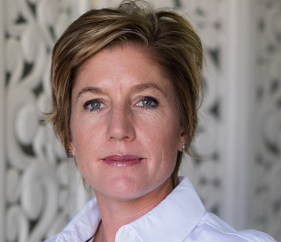
Furthermore, they caution that the risk assessment by the EIA consultants significantly under-represents the likely negative environmental impacts.
“This is particularly alarming given the Critical Biodiversity Areas and new Marine Protected Areas (MPAs) on the east coast of South Africa that are in the path of more realistic oil spill modelling scenarios, and damage to these areas would severely compromise biodiversity, fisheries and tourism,” said Harris.
Dr. Erik Cordes who specializes in deep sea science and co-leads the DOSI (Deep-Ocean Stewardship Initiative) Oil and Gas Working Group, whose 45 scientific members have written a letter to the Minister urging a precautionary approach.
In his expert report he states that ‘a large spill or blowout would have major consequences for the marine environment, from the shoreline to the deep sea’ and noted that the consultants for Eni-SASOL failed to consider important information about the behaviour of oil spilled from such depths, which have been gained over the past 10 years from the Deepwater Horizon incident.
Professor Claire Paris, a biological oceanographer in Miami with extensive experience in oil spill modelling, also expressed surprise that the Eni-SASOL EIA oil spill modelling did not use this Deepwater Horizon oil spill as a relevant frame of reference, and considers the oil spill modelling dangerously presented by the consultants to be ‘highly unrealistic with the predicted outcomes presented as a worst case scenario, actually being closer to a best case scenario.’
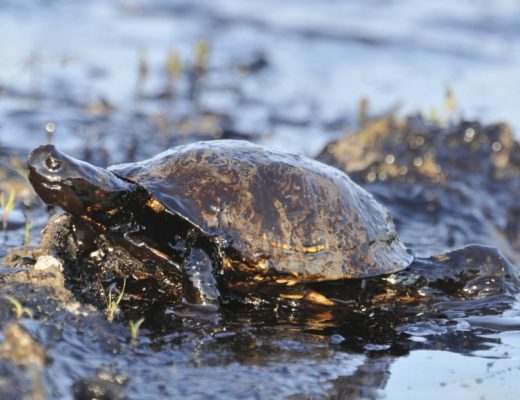
Professor Annalisa Bracco, a physical oceanographer from the Georgia Institute of Technology whose research has been instrumental in understanding oil and methane patterns following the Deepwater Horizon oil spill, also raised major concerns regarding the realism and reliability of the modelling simulations used in the Eni-SASOL EIA.
She highlights that outdated nature of the model and its application biases could impact hugely on the assessment of the oiling predictions and the impacts on the KZN shoreline.
In their appeal to the DEFF Minister to set aside the decision taken by DMR, WILDOCEANS contends that the Final Environmental Impact Report (FEIR) prepared by Eni and SASOL’s consultants (EMR) is “fatally flawed and cannot serve as a lawful basis for a reasonable and rational environmental decision.”
Grounds for this appeal that are put forward in the lengthy appeal document include that the public participation process was procedurally unfair, the EIA Oil Spill Model predictions are unrealistic, potential environmental impact is under-estimated, and there is no climate risk assessment.
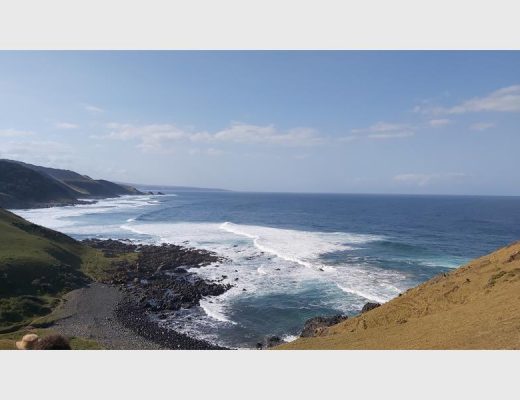
Meeting
The South Durban Community Environmental Alliance (SDCEA) invites all interested people, concerned citizens and organisations to an oil and gas exploration presentation this Saturday, November 16 at the Ramsgate Lions Club (Old Ramsgate Bowling Club) at 10.30am to 12pm.
The SDCEA strongly opposes the Department of Mineral Resources decision to grant authorisation to Sasol and Eni to drill for oil and gas in the Indian ocean and have called the meeting to discuss the issue and how best to move forward.
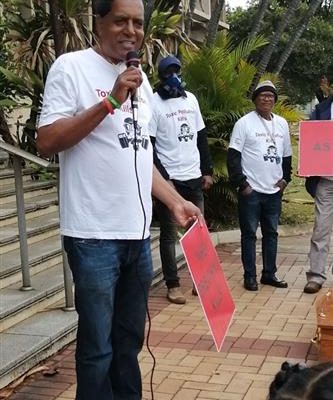
Environmental activist Desmond D’sa, from SDCEA said it is evident that oil rigs have dire consequences on the environment and marine life, as in the case of the Deepwater Horizon accident in 2010, where more than 200 million gallons of crude oil was spilt into the Gulf of Mexico killing 11 workers and destroying an abundance of marine life.
“No consideration has been given on how this exploration is going to affect subsistence fisherman who depend on the ocean for a livelihood, as well people in the tourism and recreation industry whose source of income depends on the ocean.
“Allowing Sasol and ENI to do this, clearly says that the South African government has no regard for climate change,” he notes.
For more information, contact Sherelee Odayar, the SDCEA project officer at 031 4611991 or email sherelee@sdceango.co.za
- This story forms part of Roving Reporters coverage of the 2019 Conservation Symposium and an associated environmental journalism training programme, Developing Environmental Watchdogs.
- Read more at www.rovingreporters.co.za
HAVE YOUR SAY
Like our Facebook page, follow us on Twitter and Instagram