Covid-19 places hospital under ‘war time’ circumstances
Resources were also a challenge at times and staff struggled to do the best with what they had.
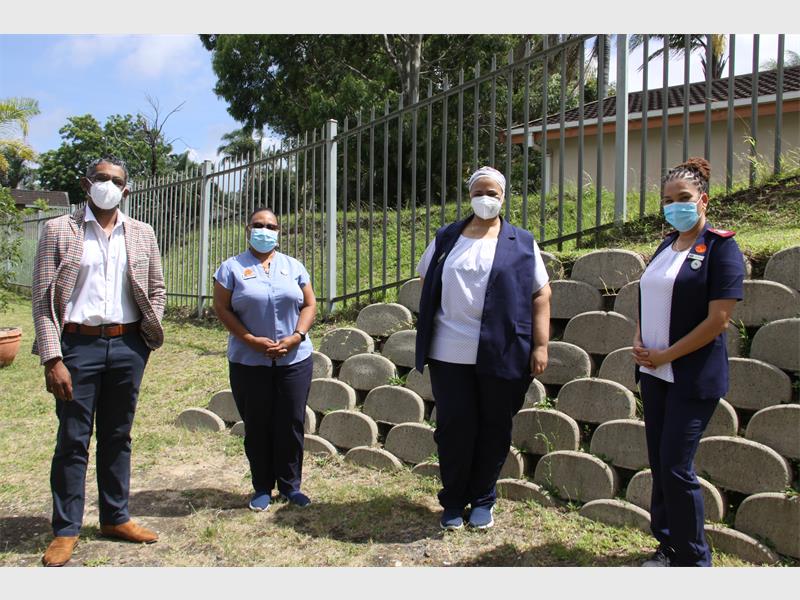
The number of patients seen at Netcare Margate Hospital during the second wave of the Covid-19 pandemic far exceeded wave one.
“It placed the hospital and staff under ‘war time’ circumstances,” said Dr Brendon Singh of the emergency department.
He said no patient was turned away, every staff member did their best under every circumstance with the utmost consideration of patient care.
“The nursing staff went beyond their scope of duty. There were times, two nurses would be required to nurse 30 to 40 patients in a ward, far above the average,” said Dr Singh.
Resources were also a challenge at times and staff struggled to do the best with what they had.
Dr Singh thanked Netcare’s head office for making more resources available and providing assistance where possible.
“We fought a good fight in the second wave.”
However, the emotional turmoil and effects of what staff endured during the second wave are surfacing now.
Paediatric unit manager and Covid co-ordinator, Sr Candice Tonny said there were many learning curves.
“If something worked today, there was no guarantee it was going to work tomorrow.”
She said as the disease progressed, staff learnt a lot more, were calmer and worked as a team.
“All round everyone pulled together – medical staff, cleaners, porters and the technical team.”
Due to some staff being exposed to the virus, others worked up to five or six days without a day off.
“There are many unsung heroes,” said nursing manager, Sarah McKaw.
She praised the technical team who were present day and night because of the oxygen usage – someone had to see to the oxygen tank.
“If you use a lot of oxygen, it condenses and ices up, they were there hourly washing down the tanks, so oxygen could be supplied to the hospital,” she said.
Unit manager for Covid and Persons Under Investigation (PUI), Sr Bronwen Daniels also highlighted team work, from the pharmacists to physiotherapists.
“Numerous times patients recovered and walked out, and we rejoiced,” she said.
On some occasions staff formed emotional attachments with patients.
“I broke down a few times, where I thought the patient would get better but did not recover. It became too much for me – I started crying.”
Although there were days, staff were despondent, they pulled through.
“Now we can handle anything, it has made us all resilient,” said Sr Daniels.
Staff were also offered a lot of counselling.
“The purpose of nursing is that we nurture – a lot of times we were surround by death – which had an emotional impact,” said Ms McKaw.
HAVE YOUR SAY
Like the South Coast Herald’s Facebook page, follow us on Twitter and Instagram