IUCN Save our Species African Wildlife Initiative bolsters wildlife security at Somkhanda Community Game Reserve
As game reserves continue to struggle in dealing with the impact of Covid-19 through the loss of income from the tourism model and the loss of manpower to combat wildlife crime, the IUCN (International Union for the Conservation of Nature) Save our Species African Wildlife initiative, co-funded by the European Union (EU), recently approved an …
As game reserves continue to struggle in dealing with the impact of Covid-19 through the loss of income from the tourism model and the loss of manpower to combat wildlife crime, the IUCN (International Union for the Conservation of Nature) Save our Species African Wildlife initiative, co-funded by the European Union (EU), recently approved an investment that will see a rapid transformation of technology available to game rangers at Somkhanda, a community owned reserve in northern KwaZulu-Natal.
The IUCN Save our Species initiative aims to improve the long-term survival prospects of threatened species. It also focuses on supporting the species habitats and working with the communities who share this habitat. It achieves success by funding and coordinating conservation projects into multiple initiatives across the globe.
The IUCN have awarded a rapid grant to WILDLANDS, a programme of the WILDTRUST, to assist the Somkhanda Community Game Reserve in transforming its monitoring and patrolling system to incorporate smart technology that will greatly enhance security on the reserve. In addition, the IUCN have provided emergency funds to WILDLANDS to support the local Anti-Poaching Unit (APU) in performing their duties.
This monitoring and patrolling system is known as the Vulcan EarthRanger system. It is a tool that integrates and displays all historical and real-time data available from a protected area—wildlife, the rangers protecting them, spatial information, and other threats. EarthRanger empowers protected area managers and rangers to take immediate, proactive actions to prevent and mitigate threat incidents.
While it is a free tool, funds are required to purchase the handheld GPS-enabled mobile devices used by the APU.
Funds are also required to train the APU in using this technology to its maximum benefit. This training was provided by the Southern African Wildlife College (SAWC).
Through a partnership with the Southern African Wildlife College, WILDLANDS has implemented the EarthRanger tech at Somkhanda Game Reserve with funds secured from the IUCN’s Save Our Species grants programme. The SAWC, who have a long-standing relationship with the reserve in providing training for the rangers, conducted on-site training and workshops with the game rangers to increase their skills in using this technology.
Meiring Prinsloo, Somkhanda Reserve Manager commented, “this state-of-the-art monitoring and patrolling system, greatly enhances our situational awareness across the entire reserve and enables us to direct our boots on the ground more effectively. It is like having your finger on the pulse of the reserve security at all times, which is crucial in allowing us to effectively protect our wildlife and biodiversity.”
According to Dr Roelie Kloppers, CEO of the WILDTRUST, “the beauty of this technology is that rangers can capture valuable data on priority species, the state of biodiversity, incursions and general census data as part of their regular patrols. This information is fed into a live online system enabling quicker response from the APU and data that is continuously updated. Moreover, it greatly increases the skills and job satisfaction of our rangers, as their routine fence and security patrols now plays a more significant role in collecting data on the status of biodiversity health in the reserve.”
This investment by the IUCN Save our Species comes at a time when most game reserves are struggling to secure income from tourism due to the long-term impact of the Coronavirus on national and international travel. Somkhanda has been especially hard hit as it relies heavily on international academic groups who have used visits to the reserve as part of their annual learning programmes.
WILDLANDS is especially grateful for this relief funding as it will provide much needed support as the reserve employs many local community members, whose livelihoods support over 300 dependents. Moreover, through this investment, the Somkhanda Anti-poaching Unit will be able to better secure the resident populations of our priority species of black and white rhino, wild dog, elephant and lion; upskilling the APU in the use of technology to counter wildlife crime and ensure improved management of this protected area.
Image captions: (Photographer CREDIT)
- Earthranger Training – rangers getting to know how this handheld GPS-enabled mobile device, used by the Anti-poaching unit for monitoring and patrolling system works. Photo credit: Meiring Prinsloo
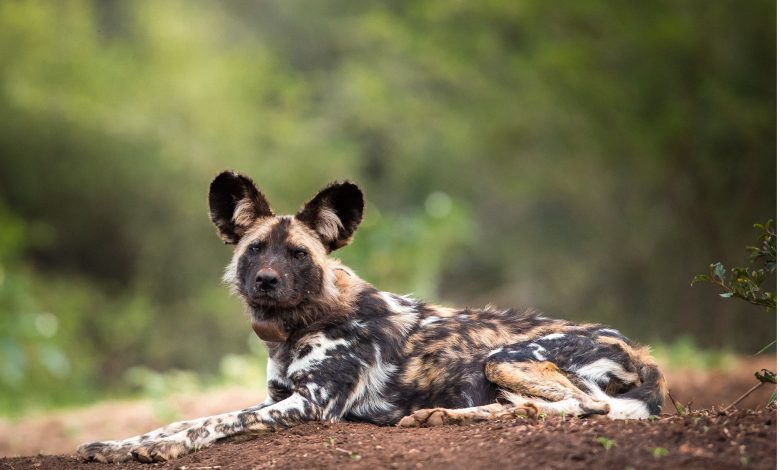
- Wild dog image taken at Somkhanda – this is one of the priority species that is intensely monitored by the rangers at Somkhanda. Photo credit: Chantelle Mellzer
- Somkhanda has a thriving lion population which is also one of the Big 5 at this reserve. Photo credit: Sven Musica
- Mpilo and Makhosi, rhino orphans which were recently relocated to Somkhanda, reintroducing them to the wild. Photo credit: Kirsten Oliver
WILDTRUST
https://wildtrust.co.za/ WILDTRUST (registered as the Wildlands Conservation Trust – IT No.4329/1991/PMB) is a South African Non-Profit, Non- Government and Public Welfare Organisation, established in 2004 through the merger of two regional Trusts. It pursues the realisation of its vision of “A thriving and resilient world” through two core programmes: WILDLANDS and WILDOCEANS.
The WILDLANDS’ programme focuses on terrestrial conservation and underwriting the sustainable development of the green economy, and the WILDOCEANS programme focuses on marine and coastal conservation and underwriting the sustainable development of the blue economy. The WILDTRUST vision is achieved through working at the interface between environmental sustainability and human wellbeing to improve livelihoods of communities and restore the ecosystems that support them. The work of the WILDTRUST encourages the employment and upskilling of the youth and the empowerment of communities to deliver a sustained and improved environmental outcome and impact.
IUCN Save our Species: https://www.saveourspecies.org/ The IUCN Save our Species aims to improve the long-term survival prospects of threatened species. It also focuses on supporting the species habitats and working with the communities who share this habitat. It achieves success by funding and coordinating conservation projects into multiple initiatives across the globe.
African Wildlife Initiative: https://www.saveourspecies.org/our-work/sos-african-wildlife The African Wildlife initiative is a partnership between the European Union and IUCN that responds to conservation challenges facing key threatened species in Sub-Saharan Africa. It delivers tangible results for species habitats and people.
European Union: https://ec.europa.eu/international-partnerships/home_en The Member States of the European Union have decided to link together their know-how, resources and destinies. Together, they have built a zone of stability, democracy and sustainable development whilst maintaining cultural diversity, tolerance and individual freedoms. The European Union is committed to sharing its achievements and its values with countries and peoples beyond its borders.
HAVE YOUR SAY
Like the South Coast Herald’s Facebook page, follow us on Twitter and Instagram