Looking Back: From Norway to Natal
The journey was not without its challenges, debilitating sea sickness being one of them.
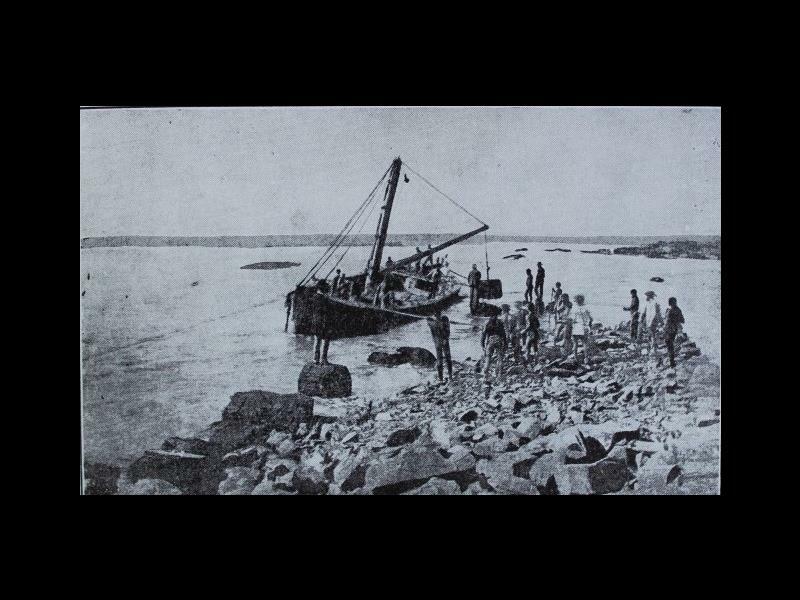
Early in 1882, after successful negotiations for emigration from Norway to Natal, the Norwegians gained free passage from London and would land at the mouth of the Mzimkhulu River in Natal (now KwaZulu-Natal).
They were given a lot of 100 acres each with 2 000 acres of common grazing.
Thirty four families signed up. These comprised Martinsen, Andersen, Bjorseth, Valdal, Vinjeveld, Lillebo, Hashemite, Bjorkelund, Gidske, Hageselle, Ole, Pahr, Ingesund, Kvalsvig, Holte, Kjonstad, Kjonstad (2), Nero, Rodseth, Harem, Lund, Hufft, Petterson, Tradal, Kipperberg, Brune, Bodtker, Standal, Ole, Sandanger, Dahle, Andreasen and Rev. Berg.
On July 14, 1882, the Wilson boat, Tasso lay anchored at the quayside ready for departure. Small boats surrounded the ship to see them off.
The journey was not without its challenges, debilitating sea sickness being one of them. Three children lost their lives.
But England was in sight and the travellers landed in Hull, on Monday, July 17, 1882.
They caught a train to London, where they were met by Rev. Berg, Pettersen, and Bodtker from Bergen and escorted by four policemen, reached the boat Lapland, owned by Sir Donald Currie aboard which the settlers would complete their journey on the July 28, 1882.
With 233 passengers on board, all committed to God’s care, the Lapland set sail.
In time they passed Robben Island, and soon lay anchored outside Cape Town. After the customs inspection, the boat was allowed to move to the quayside to take on provisions but no one was allowed to disembark owing to smallpox.
One evening it was joyfully announced that the Mzimkhulu River had been reached.
By midnight the boat arrived in Durban harbour. Next morning, August 28, 1882, the men rose early for their first view of their new country.
At nine, Mr. Butler, Secretary of the Immigration Board, came on board bringing a map of the settlement and the farms were allocated by the drawing of lots
The 100 mile journey by land to the settlement would have been hazardous, so the authorities allowed the Lapland to take them by river. They arrived back at the Mzimkulu mouth late on the evening of August 28, 1882.
Mr. Bazley fired five cannon shots as a welcome and the captain sent up coloured rockets in reply.
From that day onwards, as the Norwegians claimed their allotted land and began to trade, build, plow and plant, their indomitable faith and courage has remained the corner stone of their success.
Visit the Spillers Wharf restaurant in Port Shepstone, (formally a pump station), run your hand along the solid wooden planks of the Nordic boat at rest there after coastal flooding in 1959 and on a still day, you may hear the echo of Norwegian hymns being sung and the rhythmic hammer blows as she was being built.
(Thanks to Scott Kvalsvig for the research material. He is a direct descendant of the original Norwegian Settlers and still farms in the area.)
HAVE YOUR SAY
Like the South Coast Herald’s Facebook page, follow us on Twitter and Instagram