Citizen scientists at Renishaw Hills have identified the rare sable cruiser dragonfly among many other unique species.
The group (consisting of about 44 citizen scientists – many of whom are Renishaw Hills residents) set up a project on the global iNaturalist platform three years ago to record and study wildlife within the Renishaw Coastal Precinct. This is to document the return of animal and plant species to the region.
Tim McClurg, one of the citizen scientists of the project, explained that iNaturalist – which is supported by the National Geographic Society, among others – is the most prominent platform of natural sciences.
“Citizen science opens the door to an advanced system where biodiversity observations may be made constantly across the globe and shared instantly via a vast network,” he said.
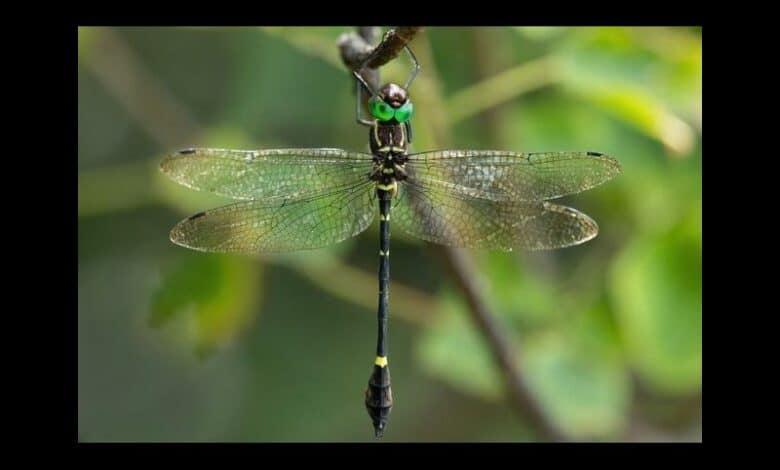
To date, the group has made 13 863 observations spread across 1 796 species, with McClurg noting one dragonfly sighting as one of the rarest in recent history. Recalling the event last December, he said he photographed a dragonfly near the Renishaw Hills Community Centre, which he then posted on iNaturalist.
“The response was immediate and enthusiastic from our local group of experts, among them, Peter Small, who confirmed it was a sable cruiser [Phyllomacromia monoceros], which is incredibly rare, localised and vulnerable,” he added.
“The total number of specimens ever seen in South Africa is probably around 20, with the first recorded sighting in Barberton, Mpumalanga around 1920.”
He stated that the most recent Renishaw Hills sighting is the furthest south that the sable cruiser dragonfly has been spotted – almost 800km.
“This raises a few questions. Has it always occurred here and simply been overlooked? Was it blown down in a storm? Is there a link with global warming? These are the questions that we may be able to answer with a vastly increased iNaturalist database,” said McClurg.
According to Small, they have recorded 75 of the 165 species of southern African dragonflies and damselflies in the area, with a few being unusual distribution records. The area is rated as one of the top dragonfly hunting spots in the country.
People are encouraged to join as citizen scientists to enrich one’s knowledge of wildlife and gain the satisfaction of contributing to an important cause.
To find out more, visit www.inaturalist.org. It is free of charge, and images can be taken and submitted directly from a cellphone.
HAVE YOUR SAY
Like the South Coast Herald’s Facebook page, follow us on Twitter and Instagram