Water crisis warning: Load-shifting could contaminate drinking supply in Ugu District
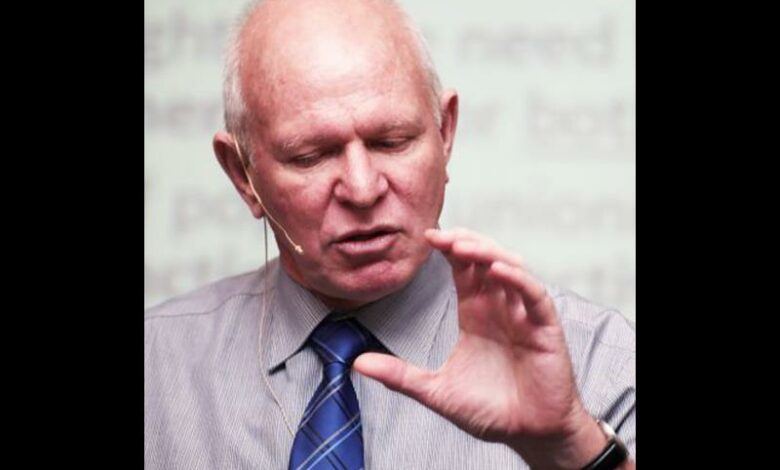
Dr Anthony Turton questioned a 'failing state' for accusing the consumer of using too much water when the sole obligation of that state was to provide such services.
In response to ongoing water challenges, the Ugu District Municipality, has implemented controlled bulk water rationing within the Bhobhoyi Water Supply System.
Deputy Water and Sanitation Minister, David Mahlobo, recently announced that municipal authorities across the province would introduce measures to manage supply more effectively. The announcement comes after days-long water outages affected parts of Johannesburg, Ekurhuleni and Tshwane.
The initiative is one of several “soft” water restrictions designed to prevent a total collapse of Gauteng’s system. Known as load-shifting, it involves redirecting water from reservoirs with sufficient levels to those that are critically low. This requires shutting off inlets and outlets from healthier reservoirs for hours or days, leaving their areas without water.
Water infrastructure expert, Dr Anthony Turton, described these measures as desperate and undesirable. “In effect, it is robbing Peter to pay Paul, and at best, it reduces the risk of rioting, but just by a fraction,” he said.
Turton warned that frequent load-shifting can allow sewage water to enter potable supplies. “Sewage pipes are gravity-fed, but potable water pipes are pressurised,” he explained. “If the pressure is reduced or lost, a negative pressure is introduced as water drains by gravity. This can collapse gaskets and O-rings, introducing sewage into the drinking system.”
He added that repressurisation can damage pipes, causing water hammer that dislodges biofilm and destroys structural integrity. “Think of a system cannibalising itself,” Turton said. “This is a last-resort measure before rioting breaks out, but the price is accelerated destruction of the system.”
Turton said the need for water throttling and load-shifting is empirical proof that the systems are near total collapse. “I am cautious of being a doomsayer, and for the last 18 years, I have tried to sound the alarm without creating panic. But my professional opinion is that systemic failure is now unavoidable.”
Turton also criticised the government for shifting the blame for its own infrastructure failures to end-users. In many water shortages over the last few years, municipal authorities have accused their residents of excessive water consumption.
He questioned a ‘failing state’ for accusing the consumer of using too much water when the sole obligation of that state was to provide such services.
“If 50% of the water is lost to leaks and illegal connections, calculations that divide total consumption into the total population serviced will reflect that 50% leakage as a high consumption per capita,” he said.
Turton first warned of a looming water crisis in a 2008 paper, highlighting South Africa’s lack of strategic planning and loss of expert capacity. Instead of acting, his employer at the time, the Council for Scientific and Industrial Research (CSIR), suspended him for insubordination and for allegedly bringing the agency into disrepute.
HAVE YOUR SAY
Like the South Coast Herald’s Facebook page, follow us on Twitter and Instagram