Nile crocodile dies after ocean exposure at Kelso beach
Crocodiles do have salt glands and can tolerate salt water to some extent, but they would have to acclimatise to such conditions such as those in St Lucia.
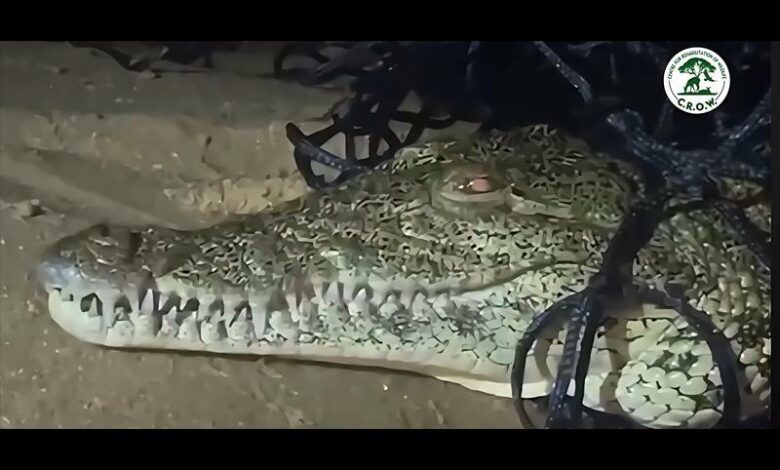
It has been confirmed that the Nile crocodile found at a Kelso beach last Friday, has died after exposure to the ocean.
According to the Centre for Rehabilitation of Wildlife (CROW), officials received a call from a member of the public who discovered the croc at the beach, lying in a small pool of water.
CROW’s operations director, Clint Halkett-Siddall, responded immediately and headed out with Zoe Dougall (clinic nurse), to assist with the rescue.
They took CROW’s crocodile trap cage and all the necessary handling equipment.
At about 19:30, the team successfully located and captured the crocodile, securing it safely in the trap cage. The crocodile was identified as a sub-adult.
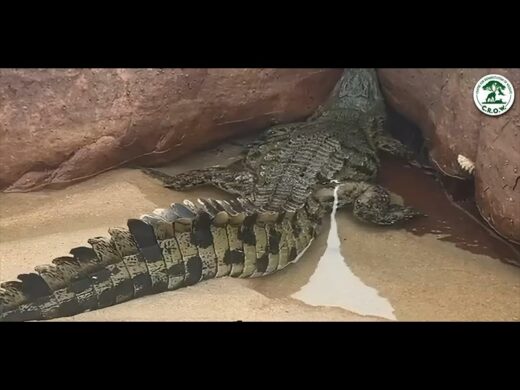
It was then transported to CROW, where it was placed in a holding enclosure overnight under close observation. The following morning, a larger enclosure was prepared with fresh water to accommodate the crocodile.
“While crocodiles do have salt glands and can tolerate salt water to some extent, they generally would have to acclimatise to such conditions such as those in St Lucia,” said Denika Govender on behalf of CROW.
“Taplin and Loveridge (1988) concluded that Nile crocodiles reared in fresh water and exposed acutely to sea water, suffered marked dehydration and hypernatremia which can progress to seizure, coma, or cerebral haemorrhage. Unfortunately, due to exposure to the ocean for over two days, this Nile crocodile died on Sunday at 11:00.”
HAVE YOUR SAY
Like the South Coast Herald’s Facebook page, follow us on Twitter and Instagram