Are South Coast seed pickers a threat to the environment?
Umtamvuna Marine Conservancy will consider future information sessions on other topics.
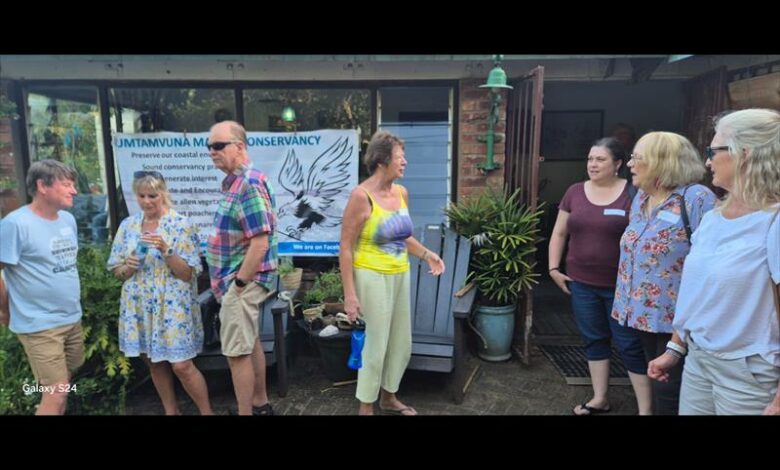
The Umtamvuna Marine Conservancy (UMC) recently hosted a joint information session in Port Edward, bringing together local environmental experts for an open discussion on marine and coastal conservation issues affecting the South Coast.
The session, led by Zeph Dindikazi of Ezemvelo KZN Wildlife, was well supported by various conservancies on the lower South Coast, representatives from the Department of Forestry, Fisheries and the Environment, the Wild Coast Sun, Ray Nkonyeni Law Enforcement, Saps, local security companies and members of the public.
Among the topics discussed was whether picking the protected strelitzia nicolai’s seeds poses a threat to the environment and if it is legal to do so. The topic had the meeting buzzing for most of the evening, with some conservationists and conservancies viewing the pickers as damaging protected indigenous plants, while others viewed them as people simply trying to earn a living to feed their families.
UMC chairperson Renee Alcock said she was disappointed that law enforcement representatives did not seem to grasp that all fauna and flora are protected in the government reserve and that it appeared that, in their eyes, hungry people were exempt from the law.
Captain Paddy O’Connor of Port Edward Saps said that by not stopping seed pickers from the outset, tacit consent had been given to them to pick along roads. He said that unless pickers damaged property, they were difficult to prosecute.
O’Connor conceded that protected trees in the government reserve are off limits, but added that the indigenous strelitzia nicolai is not “strictly protected” as it is not threatened.
Matt Williams, custodian and part-owner of the 180ha Red Desert Reserve in Port Edward, said seed pickers are poachers. He said there is economic value in strelitzia nicolai and other indigenous plants in reserves, and when the plants are damaged, there is a monetary loss to property. To this, Dindikazi countered that the pickers did not take the entire plants, only the seeds, and therefore, there was no case against them.
Williams reminded the meeting that a legal seed picker needs a letter from the landowner and must then apply for a permit.
While this is true, some pickers who applied for permits have waited for more than two years to be issued one and still don’t have one. When asked, the DFFE, which issues the permits, did not have a solution to make the permit system more accessible.
Several suggestions were made to educate pickers on how to pick sustainably and how to grow their own strelitzia nicolai crops.
Seluleko Cele from RNM’s Environmental Department said that while it is good to hold meetings or information sessions, the seed pickers themselves are often absent, and there is no clear communication between them and communities. Having a meeting with pickers would help to get their side of the story and build relationships, especially if licensing could be made more accessible to them.
Paddy Norman, chairperson of Conservancies KZN’s Ugu region, said strelitzia nicolai plants are teeming and prolific, and that seed pickers help relieve pressure on the poaching of more valuable plants such as bulbs.
He suggested that since the government reserve in Port Edward is a forest, UMC considers the Forest Act, as everything in a forest is protected. Conservancies could also consider getting a memorandum of understanding from the DFFE to manage the government reserves.
Alcock said while the information session was a good start, there was much work to do, and UMC would consider future information sessions on other topics.
HAVE YOUR SAY
Like the South Coast Herald’s Facebook page, follow us on Twitter and Instagram