Tent Travels: Mountain passes and a kingdom in the sky
Lesotho has plenty to offer the adventurous traveller.
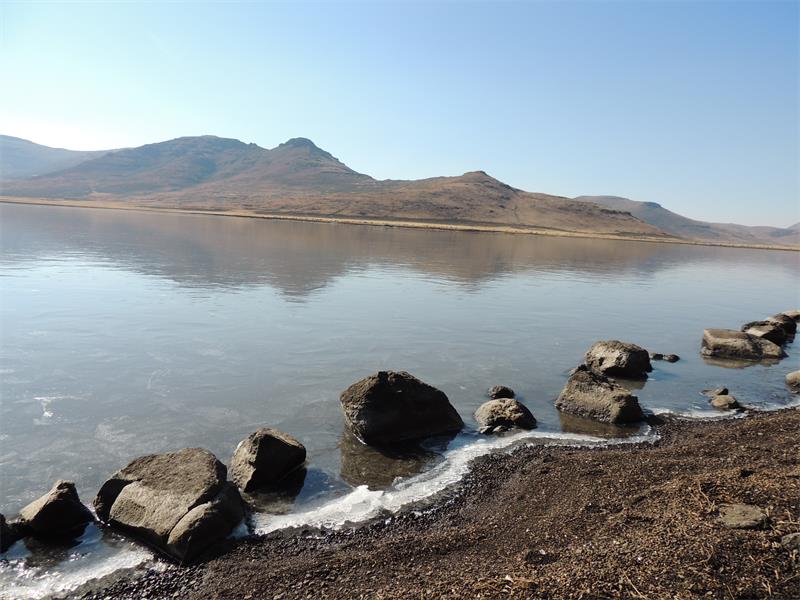
LAND-locked in the centre of South Africa, the magical mountain kingdom of Lesotho has so much to offer adventurous visitors and it is far easier to reach than many people realise.
There is a perception that one needs a 4X4 vehicle to explore Lesotho. However, there are a number of incredibly scenic tarred routes that even a saloon car would handle fairly easily.
From Maseru, a good tarred road curves all the way from the capital city to Mafateng, Mohale’s Hoek, Mpyeni and finally to Qacha’s Nek, a border post near Matatiele. There are a number of border posts and entry points onto this road from the Eastern Free State, too. Passes, particularly round the mountainous Devil’s Staircase area near the Zastron border, might sometimes be closed after heavy snow, but the road is in good condition for most of this enchanting route.

If you do have a 4X4 vehicle even more opportunities open up for lofty adventures. Of course, Sani Pass immediately springs to mind as the best-known of the adrenalin generating mountain passes the kingdom in the sky has to offer. With its rough gravel road, its hairpin bends, its dramatic scenery and the unpredictability of this, the only route between KwaZulu-Natal and Lesotho, driving up Sani is always a thrill.

Unfortunately, many people simply drive up Sani, stop for refreshments at the top, tick off Lesotho and wander back down again, never to return. A country as magical as this lofty land does not deserve this shoddy treatment. For Sani is just a gateway into a place so wonderful, so breathtakingly rugged and beautiful, that people who have taken the time and trouble to explore it hold it in awe.
And, if you are looking for adrenalin-generating mountain passes, Sani is a mere baby compared to some of the extreme motoring experiences the mountain kingdom has to offer.
The highlands of Lesotho are incredible. Switchback roads carve their way across range upon range upon range of mountains, a veritable sea of jagged pinnacles, as far as the eye can see.
Often the routes follow river courses through the mountains and while these roads are less dramatic than the mountain passes the scenery is just so pretty, particularly during spring and and summer when everything is so green and lush and all the wild flowers are in bloom.

Thabana-Ntlenyana, near Sani top, is the highest point in southern Africa and towers 3 482m above sea level. It is not much higher than the surrounding peaks and some of the passes in that area take travellers to altitudes almost as lofty.
Soon after Sani top, which is 2 874m above sea level, as you head towards Mokhotlong, is Black Mountain Pass. Although not as steep a gradient as Sani, this easily accessible pass is just as dramatic. A drive there is well worth the effort if you are going up Sani on a day trip. Take plenty of winter woollies. The top of the pass, at 3 240m, is always freezing and is often covered in snow.

Cresting at 3 275m, twisty-turny Tlaeeng Pass, along the scenic, tarred route between Mokhotlong and Oxbow, is said to be the highest road in Africa.
Heading eastward from Mokhotlong, on a slow but fairly good gravel road, towards the kingdom’s capital, Maseru, the intrepid traveller encounters a series of awesome passes before reaching the so-called lowlands.
The first one along the way, Menoaneng, at 3 030m, is particularly dramatic, although its sweeping curves rather than steep gradients, make it easy to negotiate. And the view from the top is just amazing. It is Bill’s and my favourite pass.
But pass after pass await the traveller – one of them bearing the rather alarming name of God Help Me Pass – before this scenic route flattens out near Maseru. Don’t, however, be fooled by the term lowland. No place in Lesotho is truly low or flat. The average height above sea level for the lowlands is still an impressive 1 600m and the attractive capital is ringed with mountains.
Some lovely mountain resorts can be found in the vicinity of Maseru, including vibey Malealea, a great favourite among Lesothophiles.

Well equipped and offering accommodation ranging from camping and backpacker dormitories to comfortable chalets, plus all sort of outdoor activities, it is a resort that puts the eco into sustainable eco-tourism. It is also a fine example of how genuine eco-tourism can uplift a community.
Shortly before you reach Malealea you traverse the delightful Gates of Paradise Pass, at a fairly high 2 003m. A plaque at the top of the pass exhorts the traveller: “Wayfarer, pause and look upon a pathway of paradise.”
If you are staying at Malealea, the nearby town of Morija, with its attractive museum, is well worth a visit. This historical little settlement was established by French Protestant missionaries in 1833, at the invitation of Moshoeshoe the Great, recognised as a wise statesman and the father of the Basuto nation.
From Malealea, you could do the scenic 4X4 route to the attractive lodge at Semonkong, then head back to Mokhotlong via the pretty town of Roma. Near Semonkong are the Maletsunyane Falls, the highest single drop in southern Africa.
We often head to Lesotho for a weekend and travel an interesting route from Matatiele in the Eastern Cape. We access Lesotho via Ramatseliso’s Gate, not far east of Qacha’s Nek, then travel to Sehlabathebe then Mashai, where we usually overnight at a basic little lodge. The next morning we head for Taung then travel back into KwaZulu-Natal via Sani Pass.
Interesting passes along this route include the rugged Matabeng (2 940m) and a scary little blighter out of the Senqu River Valley.

At Taung, travellers could make a detour to see Katse Dam, part of the engineering marvel that is the Lesotho Highlands Water Project. An easier option to view the dam, though, is to enter Lesotho from the Free State and to travel to Katse along a scenic but excellent tarred road.
A stay at Sehlabathebe National park, near the town of Sehlabathebe, is also well worth while. There was a lodge up there but I have heard that it has closed and that the new lodge, currently under construction, has not yet been completed. You’d have to take your tent with you if you wanted to visit this magnificent little reserve. You’d also have to be pretty self-sufficient as camping facilities are virtually non-existent. It is worth the lack of home comforts, though. The park is a veritable flower garden in summer when the grassland wild flowers are in bloom. With all its high-altitude specials the reserve offers interesting birding and the scenery there is incredible.
Mountain roads and magnificent scenery are not Lesotho’s only attraction.The friendly people are artistic and their lovely little settlements, which blend into the rocky countryside, are a joy to see. Many homes are built from stone, carefully decorated with mud designs or splashes of bright paint, around the entrances and windows.

In winter, life is harsh for the Basuto, but while travelling through the lush greenness in summer it is easy to envy them.
A proud horseman, clad in his traditional blanket, canters easily across an open plain. Fat cows graze on the green hillside. The verdant valleys and riverside plots of farmland form a green patchwork quilt and nearby a women tends her garden around a hut that fits so perfectly into its surroundings that it is nearly invisible. As you travel through the kingdom in the sky you discover a peaceful lifestyle that must have hardly changed in the last century.
Lesotho is truly a magical country. If it is still on your must-do list, I strongly recommend you get there soon. Read more Tent Travels here.