Tent Travels: Africa’s warm heart and the lake of stars
The lovely people of Malawi are the country's true treasures.
THE Malawi border post was chaotic. Huge trucks and 4X4 vehicles filled the parking area and we battled to find a space for our vehicle. Inside the building truck drivers, taxi and bus passengers and pedestrians, all with massive piles of luggage, formed long straggly queues or strode purposefully through a bewildering maze of piled-up boxes, crates, parcels and those ubiquitous striped woven plastic ‘African suitcases’.
We must have looked as confused as we felt. A smartly dressed customs officer took us under her wing and, in just a few minutes, shepherded us through the border formalities.
We thanked our friendly border guardian angel but she waved away our thanks and wished us a happy stay in Malawi. “You’ll like Malawi. It truly is the warm heart of Africa.”

How right she was. The bright little gem of a country, tucked snuggly into the Great Rift Valley, really stole our hearts. Physically, it is incredibly beautiful, with its Lake of Stars, perfect lakeside resorts, lofty plateaus and pristine wild places. From a tourist point of view it offers warm hospitality, political stability, good infrastructure and a gracious olde worlde charm. Our only question was why it wasn’t an even more popular holiday destination.
It is the warm, friendly, gentle, extremely polite people of Malawi, though, that give this African gem its glow. At the very touristy spots you do encounter some annoying hustlers and hawkers but that is to be expected in a poor country and they are in the minority. So many people extended a warm welcome to us and it was their kindness and friendliness that made our visit such a special one. We also met wonderful people from all over the world at the various places we stayed – and we were always impressed by the high calibre of the young South African travellers we encountered on our travels through Malawi.
Soon after we crossed the border we stopped at a hotel in the attractive city of Blantyre. We were hot, tired and thirsty and the ravages of dusty African roads had sabotaged any attempts we’d made at sartorial elegance. And our vehicle, a diesel Landrover, didn’t look any better, coated as it was with a thick layer of fine white dust.
We were met by a smartly attired doorman who gave us the kind of welcome he have might have reserved for visiting royalty. He personally escorted us to the quaint 60s style cocktail bar. It was pleasantly cool inside and the that ice cold beer tasted really good, but we still had a fair distance to travel so we hurried back to our vehicle – and did a double take. Was that shining, gleaming Landy really ours, The doorman, his uniform still spotless, saluted smartly. He hoped we didn’t mind him taking the liberty of giving our vehicle a quick wash? What was more, we had to cajole him into accepting a tip.

Heading out of Blantyre we were introduced to another Malawian phenomenon – the preponderance of bicycles. These basic, no frills but amazingly rugged cycles, often used to transport whole families or impossibly large loads, were the country’s most popular form of transport. Negotiating our way through hundreds of cyclists making their way home, it took us ages to leave the confines of the city. This delay, coupled with a few wrong turns as we headed up the mountainous road to the Zomba Plateau meant that we only reached the basic little campsite on top of a mountain after dark.
Once again, we experienced a warm Malawian welcome, the night watchman directing us to a level spot and making a fire for us as we set up camp. It was pretty cold there on that mountain top and the warm fire was much appreciated. The next morning we were treated to our first taste of the lovely fruit and vegetables that were available from the roadside stalls throughout Malawi.

As well as the basic tomatoes, onions, potatoes and bananas that were usually available from the markets and roadside hawkers throughout southern Africa, we were usually able to buy really tasty little green peppers, cauliflower, spinach, various squashes and pumpkins and all sorts of delicious fruit. After visiting the little market place near the Zomba campsite we came home with a basket filled with an assortment of fresh vegetables, fresh eggs, raspberries and the sweetest strawberries I have ever tasted.
After a couple of days – and rather chilly nights – camping on the beautiful Zomba Plateau with a charming group of young South Africans, it was time to move on. Driving down the steep winding road we passed many bicycles piled impossibly high with loads of firewood that towered over the cyclists’ heads. How they managed to keep their balance I just don’t know.
“Game disappointing but bird life phenomenal, ” was the note I made in my diary on reaching Mvuu Lodge, a green oasis of luxury after an exciting day spent exploring the winter-dry Liwonde National Park, situated in the upper reaches of the birding paradise that is the Shire River Valley. It had some disadvantages.

The roads were pretty bad and from time to time we’d been attacked by swarms of mean tsetse fly, but it was just so pristine and wild and wonderful. And the bad roads kept away the crowds. Many Liwonde visitors did fly-in safaris to Mvuu Lodge, from where they could do game viewing boat trips down the river, and they didn’t really bother to explore the park properly.
We had to ration our stays in game reserves because of the high costs – staying in South Africa’s parks is so incredibly cheap compared to staying in those across our borders – so only spent 24 hours in Liwonde but it was a wonderful experience and the camping ground at the rather luxurious Mvuu Lodge was excellent – and very sociable. Our friendly fellow campers were a mini league of nations.
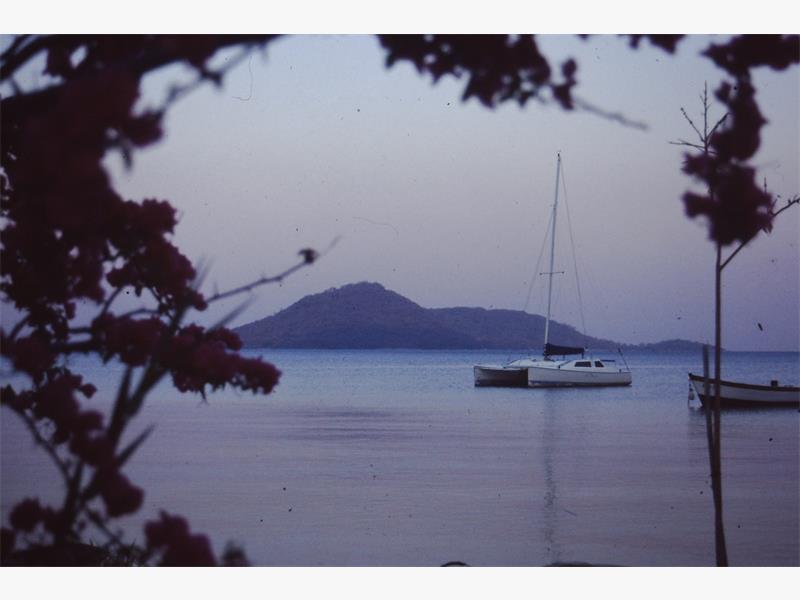
We were impressed by Malawi’s flagship national park but now it was time to visit its main attraction – the big blue, green-fringed expanse of water, about 600km long and 400m wide, that Dr David Livingstone christened the Lake of Stars. Now it is more prosaically known as Lake Malawi, but it still has a special sparkle of its own. The lake is part of the low-lying Rift Valley and its surface is only 400m above sea level but to its west, towering over it, is a steep escarpment about 2 000m above sea level at the top. Our first lakeside stop was a small resort next to the fishing village of Chembe and bordering Cape Maclear Nature Reserve. Although the vibey resort, much favoured by backpackers and overlanders, at Monkey Bay is better known and very popular, we preferred the peace and quiet – and stunning natural beauty – of Chembe.
The next morning we stocked up on supplies at a bustling roadside market but decided not to join the young overlanders who were sampling the offerings of the ‘fast food outlets’, stalls selling charred mielies, butchered-and-braaied-on-site chunks of meat and wedges of potatoes deep fried in pans of horrific-looking cooking oil. The rutted, once tarred road had fallen prey to some sort of degenerative disease but we enjoyed taking it slowly. The roadsides in Malawi are one continuous market place, bustling with activity, and there is always plenty to see. Malawians are industrious and artistically talented people. I could have filled up our Landy with the wooden carvings, craftwork and the wood, cane and rattan furniture made and sold at stalls on the side of the road.

We reached the busy Senga Bay area and spent a couple of lazy days swimming in the crystal clear lake and sunbathing on the white sand at the Wheelhouse Resort.
After Senga we left Malawi for a while to visit Zambia’s South Luangwa Game Reserve. Topping up our cash in Malawi’s capital Lilongwe before driving into Zambia, proved an interesting experience. It was a pretty time-consuming exercise but the staff members who assisted us at the bank were just so sweet we didn’t mind the long wait. Now, ten years later, with everyone so much better connected electronically, visitors needing funds in Lilongwe might have an easier time. Or maybe not. You never know. And any way, laid-back Malawi is not really a destination for those in a hurry!
After finishing at the bank, we took a quick look around Lilongwe, a city with two faces. There are two distinct sections to the capital, an impressive, modern rather flashy new area and the charming old town. Then we said goodbye to Malawi for a few days and headed to the Zambian border post.