
THE Wild Coast, as it is known, of the old Transkei is all too frequently in the news for all the wrong reasons, like plans to mine it for heavy minerals or run a multi-lane toll highway through it.
This is a shame, because it lives by its name as one of the wildest, most beautiful and most unspoilt parts of our country.
We have experienced the Wild Coast of Pondoland on a number of happy occasions, all of them special and all of them leaving us with great memories. We’ve even walked a small part of it, and that’s what I want to talk about, walking the Wild Coast.
The other day an old friend from the Johannesburg days popped in to visit. She had just come back from an eight-day adventure, walking from the Wild Coast Sun just down the road from here to Port St Johns, a distance of about 90 kilometres.
They walked to the Mzamba River, then Mtentu and through the Mkambati Nature Reserve, on to the famous Port Grosvenor, and finally the Mzimvubu River and Port St Johns.

They forded some rivers, but were ferried over others by boat and they walked the beaches, the grasslands and the forests.
Mostly they stayed overnight in private Pondo homesteads in rural villages, experiences she described with delight (and I know she’s right because we’ve done it elsewhere in Pondoland).
She said of particular joy was the quiet, the solitude and the lack of human development, just the glorious scenery (waterfalls plunging straight into the sea), the birdlife and of course the indigenous bush (they walked right through the world-famous Centre of Endemism).
The guides are trained by the Wilderness Leadership School, but it is an entirely Pondo venture and a fine example of what can be done with the Wild Coast with sustainable and responsible eco-tourism.
In fact, they want to start taking selected youngsters from Pondoland schools on the trails so that they may learn about their natural heritage.* It all sounds pretty good to me.
And then from one wild place to another, the Galapagos Islands in the eastern Pacific.
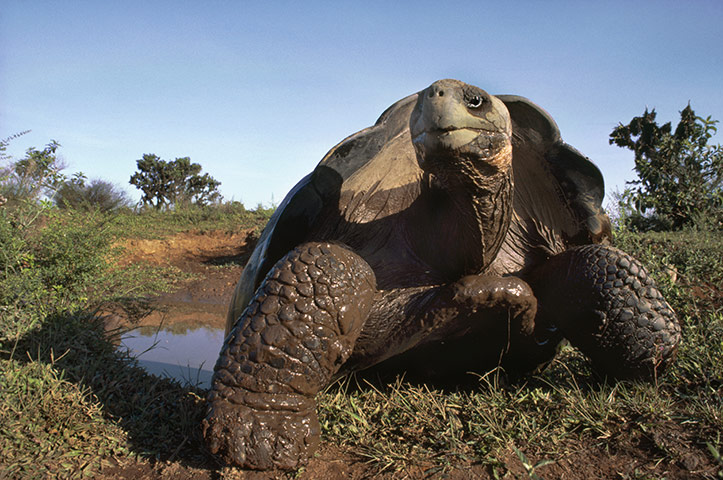
There is good news from the island of Espanola, where one of the Galapagos giant tortoise species, considered extinct in the 1960s, has re-emerged**.
The tortoise in question, which can weigh up to 250kg and live 200 years, was driven into near extinction by the introduction of goats to their island in 1905 and the subsequent destruction of the natural habitat.
No reason has been given for the introduction of the goats, but a subsequent removal programme led to their eventual elimination and the re-emergence of the tortoises, which are now present in sufficient numbers to ensure their survival.
A good news story indeed and interesting how human intervention can lead to very negative impacts on the natural environment, or quite the opposite, or both in this case. Cheers!
*Contact: Vuyani Mbuzwa 078-975-4471
**The Week: The Best of the British and Foreign Media.



