
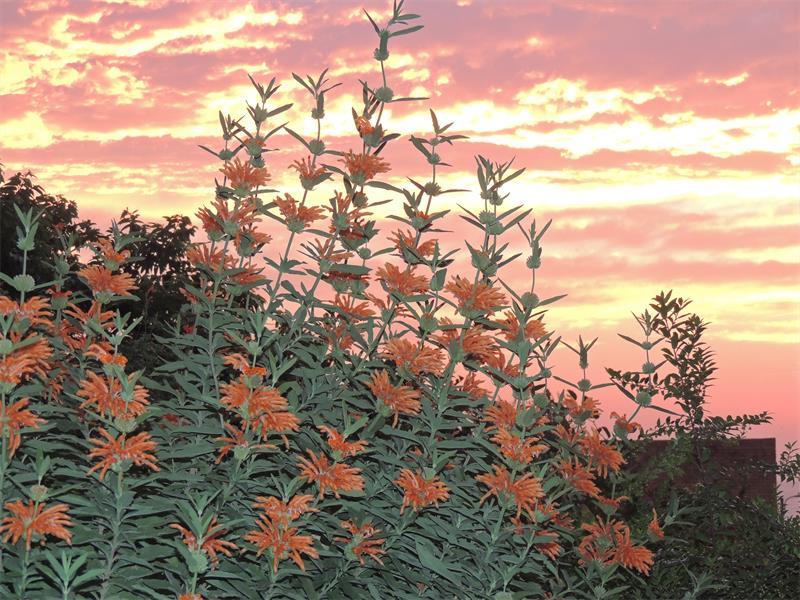
WITH the advent of June it is now officially winter and my coastal KwaZulu-Natal indigenous garden is celebrating its arrival with the first flush of winter-warm oranges, rusts, and reds.
The Leonotis leonurus, which goes by the common names of lion’s tail or wild dagga, is ablaze with spiky orange blooms, attracting the garden’s little flying jewels, its nectar-loving sunbirds. The descriptive Zulu name of this plant means bird beer but it is not the only winter flowerer that provides a sunbird feast. The older wood on my wonderful Halleria lucida is also covered with nectar-rich tubular orange flowers and the assorted aloes are just starting to bloom.
Also in flower are some of the succulents. Although this is such a wet part of the world, there are many indigenous succulents that thrive here on the moist, humid coast, without needing much care, so take a look at these interesting plants if you are planning a coastal garden. Even when not in flower, they are striking, their leaves often taking on reddish tones during the dry winter months.

Providing contrast for the riot of reds and oranges are the mauve flowers on the Hypoestes aristata or ribbon bushes. One of these has twined its unruly branches through a spiky orange Leonotis bush – what a pretty sight. These attractive indigenous plants make lovely garden subjects and need very little care. They seed themselves rather prolifically so need to be weeded out a bit. Like the Leonotis, they also need some discipline in the form of a rigorous pruning once they have flowered as they tend towards unruliness.
Also adding softer colours like pink, blue, mauve and white to the winter palette are a few of my many Plectranthus plants that are still flowering, although autumn really is their time to shine. Due to the ongoing drought in KwaZulu-Natal they have not been at their best this year. They are more thirsty than most of the indigenous species in my garden and have required frequent splashes of water.
I must say, the indigenous, water-friendly garden really comes into its own during times of drought and mine is still amazingly green and pretty. I only use a watering can, filled from my rain-water tanks, to water the more thirsty species garden. Mostly, my drought-resistant indigenous plants don’t even need any watering at all, Between them and my rain water tanks, in spite of the drought, our water bills remain pretty low.
To receive news links via BBM, add us using the pin 2BABF7D1.
The South Coast Herald is also on Facebook and Twitter – why not join us there?



