
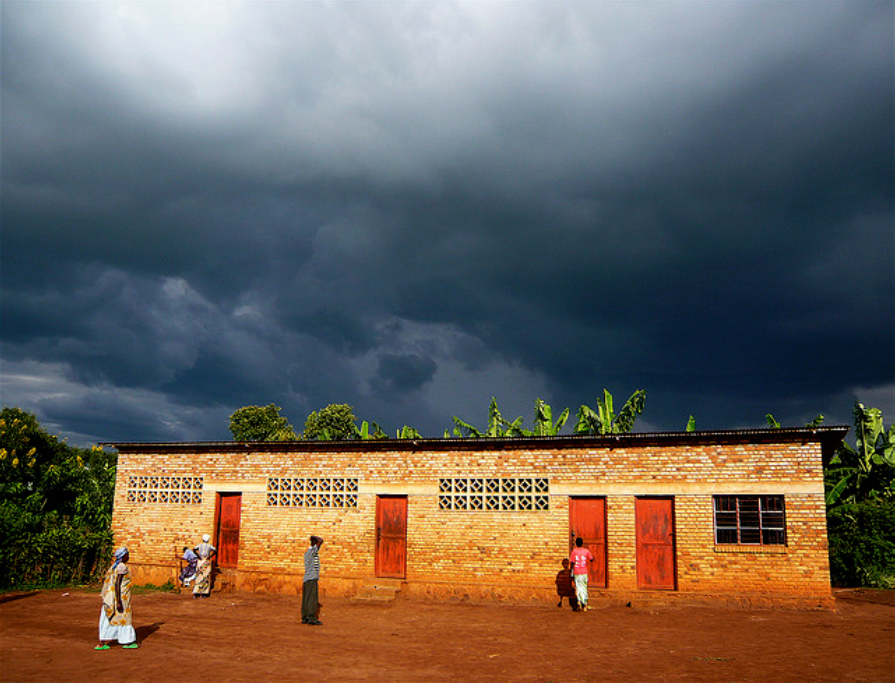
THAT very special smell of rain, it’s an essentially African thing – rain on parched ground, rain on hot tar, rain on a dry garden.
I don’t think there is anywhere else in the world where rain smells so good, only in Africa. Did you notice it the other day when we had the first rain after nearly 12 weeks (for us, anyway)? The smell came first, then the first drops of the wonderful stuff.
I was raving about the rain to a friend just yesterday, particularly the 12 weeks without it, and he said, ‘Think global climate change…’ and we did.
In England they have been recording temperatures of up to 36º and it has created a degree of havoc (think Wimbledon) and friends in Northamptonshire have told us that the heat has not only kept them out of their garden, but it appears to have discouraged their garden birds too (one can but wonder how they would enjoy a South Coast January).
Temperatures as high as 36º have been reported from British Columbia in Canada too, the highest temperature ever recorded in that province (they’ve also had catastrophic forest fires).
In Australia it’s been unseasonably cold and dry in Western Australia, while the eastern states have had both drought and floods.
And just in case you think I’m neglecting us, just the other day we had the unlikely lower South Coast experience of it being no more than 12º all day, the lowest daytime temperature we’ve recorded in 11 years. Global climate change? One can but wonder.
While we’re sniffing the rain, here’s another sniffing story and some very welcome news from Mozambique and Angola, where it’s reported that sniffer rats are being used to find old land mines.
It’s reported that the rats, African giant pouched rats, have a highly developed sense of smell and are able to detect land mines from the scent.
Having found one (they may be giant, but they are too light to detonate the mine), they scratch frantically at the soil over it and are rewarded with a piece of fruit.
A Belgian NGO, Apopo, is running the project and it’s reported that the sniffer rats have so far discovered 13,000 mines, which have subsequently been destroyed, thus reclaiming more than 1,100ha of land in Mozambique and Angola.*
It doesn’t take a chartered accountant to work out that that is about 12 mines per hectare and that tells us just how bad is the problem of old land mines in those countries.
But back to our sniffer rats. There are five species of African pouched rats, including the giant, which can grow to the size of a large domestic cat. They are so named because of the hamster-type storage pouches in their cheeks, which they use to take food down into their underground storage chambers.
They are common throughout sub-Saharan Africa.**
Here’s to the rain, cheers!
*The Week: the Best of the British and Foreign Media.
**New Encyclopedia of Mammals, editor: David MacDonald, Oxford University Press, 2001.

To receive news links via BBM, add us using the pin 2BABF7D1.
The South Coast Herald is also on Facebook and Twitter – why not join us there?



