
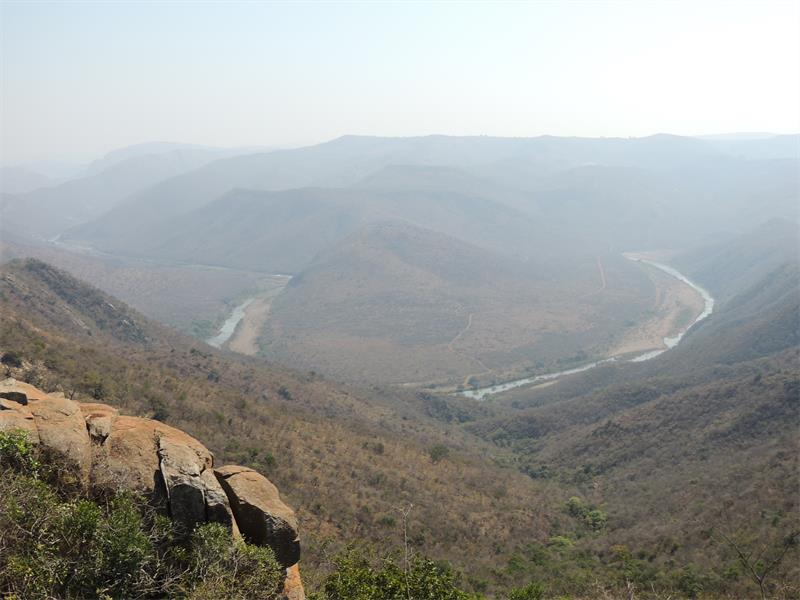
BILL and I always think of Ithala as a beautiful place but memories grow dim over time and our return to this lovely northern KwaZulu-Natal game reserve was long overdue; we’d forgotten just how beautiful it actually was.
Ithala really is physically stunning and, coupled with its incredible diversity, it is an extremely valuable addition to Ezemvelo KZN Wildlife’s portfolio of interesting and varied conserved places. Situated in the drier northern section of our province, not far from Vryheid, the Ithala landscape is typical of that rugged, thorny, mountainous area.
Geographically, it offers an incredible mix, rising as it does from about 400m above sea level in the north to 1 400m above sea level in the south. From the lofty Ngotshe Mountains that are such a stunning feature of the park the terrain drops rather suddenly downward toward the substantial Phongola River valley. The reserve is well watered with many streams and rivers flowing through steep, wooded valleys towards the Phongola River, which forms Ithala’s northern boundary.

The geographical diversity that ranges from high cliffs, ridges and plateaux to rolling grasslands, coupled with a good mix of soils, makes for a really impressive biodiversity. Ithala is home to a large and interesting suite of plants, mammals, insects and birds. All told, there is always something interesting to see and experience when you visit this reserve but it is probably its stunning natural beauty that is its biggest drawcard. With many view sites where you can leave your car and three lovely picnic areas there is amble opportunity to take time out just to sit and enjoy the views. You can also pick up a pamphlet from reception and spend a pleasant morning doing the informative and scenic Ngubhu Loop Auto Trail.
Ithala was our second port of call on our recent KwaZulu-Natal road trip. Although we’d left our first destination, Weenen Game Reserve early in the morning, we’d spent a good few hours exploring Talana Museum in Dundee along the way to Ithala and it was mid afternoon by the time we checked in at the reception at Ntshondwe Camp.

I don’t know if there is a rest camp in the whole of South Africa quite so beautifully situated as Ntshondwe – or one that that blends in so perfectly with its natural surrounds. Not surprisingly this gorgeous rest camp, at the boulder-strewn feet of the Ngotshe Plateau, has won a number of awards.
The gardens are lovely, too, and are filled with birdsong. In fact the camp is a great place to do some gentle birding. There is also a restaurant and terrace overlooking a waterhole, another excellent birding spot – and when we arrived an elephant paddling in the waterhole was causing great excitement. We didn’t linger long, Even though we planned to take the 4X4 short cut to the camping ground we still had quite a long drive ahead of us.
The Doornkraal camping area was as lovely as we had remembered it and we and our travelling companions Ian and Fiona, who were putting up their tent when we arrived, were the only resident campers. It is a simple, rustic camping ground. It is not electrified and is unfenced so you need to be a little careful, especially after dark. However, it is wild and wonderful and remote and its many avian visitors offer plenty of good armchair – or camp chair – birding.
On previous visits we’d had to endure (icy) cold showers, so we were pretty impressed to see that a new hot water system was now in place in the tree-shaded outdoor bathroom. What luxury! There are also a little thatched kitchen area with washing up facilities and a communal thatched boma.

We chose a site overlooked by a rocky hill and with a lovely view of the bilharzia- and crocodile-free river at the edge of the camping area. It being the end of winter there wasn’t too much water in the river but little pools in the rocky bed were ample for a cool-down splash on a hot afternoon. After setting up camp we took a little drive to a nearby green and pleasant river-side picnic spot where we met Ian and Fiona for sundowners.
The whole of Ithala is incredibly scenic but the most spectacular route has to be the drive from the campsite to the main camp via the Ngubhu Loop. This road, overlooking the magnificent Ngubhu valley, meanders through the green, well-treed slopes at the foot of the towering red cliffs. In some places the cliffs are shelves of water-smoothed, rounded rock formations In other places they are made up of great big vertical slabs, the red surfaces splashed with lime green and luminous orange lichens.
Although it was still August spring was making itself felt in this well-watered, game-filled Eden at teh foot of the cliffs and all the trees were putting on their multi-hued spring finery. Mostly the new leaves were a frothy concoction of all shades of green ranging from electric acid to a sombre olive but many species were celebrating the end of winter with an explosion of new orange, yellow and red leaves. Here and there the crimson flowers of the corals trees or the fluffy white dombeya blossoms, would add a highlight to the vibrant colour scheme. There was plenty of game about, especially sure-footed kudu but we were disappointed not to see the black eagles or klipspringers that make the cliffs their home.

Eventually we turned off onto a flatter road leading to the pleasant Onverwacht picnic site where we met up with Ian and Fiona for lunch. This area is good for game viewing, with plenty of general plains animals including big herds of wildebeest and zebra, milling about. It is not so obvious now but when we first used to visit Ithala quite a few years ago the grasslands still bore the signs of having once been farmlands.
Human habitation of the area that is now conserved as Ithala goes all the way back to Middle Stone Age. Over the centuries many Zulu refugees would seek sanctuary in the caves hidden in the cliffs during times of war and political unrest. Then came the European settlers. Sections of Ithala have been settled and farmed since 1884. Sadly most of the game was eventually hunted out or was severely depleted by the Rinderpest epidemic of 1896. Bad farming practices also took their toll, too. By the time Ezemvelo’s forerunner, the Natal Parks Board, took it over in 1973, when it was proclaimed, 25 mammal species had become extinct locally and over-grazing and severe erosion were widespread.

Since then, Ithala’s fortunes have improved dramatically and its proclamation and subsequent development have been a grand success story. Patiently, those charged with Ithala’s care have helped to heal the traumatised earth and healthy grasslands now cover many of the scars. About 20 mammal species, including elephants, have been reintroduced and the park has grown from its original 8 000ha to an impressive 30 000ha.
The following day, our last in Ithala, we decided to meet our friends for breakfast under the magnificent riverine trees at the popular picnic site next to Phongola River. We set off early to travel there via yet another of the reserve’s scenic showpieces, the magnificent Ntshamanzi 4X4 track. This route over extremely rugged terrain, was quite challenging in places with some steep, rough and stony sections and some nasty drop-offs. It really is a gorgeous route though and well worth the effort.
Along with views of jagged ridges and deeply incised valleys we had a lovely sighting of a procession of elephants making its away along the crest of mountain.

Our friends were already preparing breakfast when we arrived at the picnic site. Well, Ian was. Fiona, an ardent and dedicated birder was in her element in this riverine birding paradise and was far too busy twitching to worry about bacon and eggs. After breakfast when we were ready to leave we realised there was no ways we were going to pry her away from the Phongola picnic site so we left her and Ian to it and meandered slowly home, taking in the wild and remote Ngulumbeni Loop and view site on the way. We came across quite a bit of general game including a number of giraffe and two mountain reedbuck, close to the road.
Fiona and Ian arrived back in camp quite a bit later and Fiona as still starry-eyed after her three-hour stint of magical birding at the Phongolo picnic site. It was her and Ian’s first sortie into our KwaZulu-Natal parks and although it as still early days she was already ecstatic.

Birding-wise she hadn’t yet seen the best, though. We were leaving Ithala the next morning to continue with our KZN explorations and we were looking forward to her reactions when we reached some of our province’s mega-birding meccas of like Ndumo, Tembe Elephant and Mkhuze Game Reserves. Birding is truly spectacular in our province and if you are of a twitching persuasion, our wonderful game reserves are a must.
Even if you aren’t a twitcher and haven’t explored KZN, add a visit to Ithala and the other magical reserves to your bucket list.



