
JUST a while ago I wrote about the re-establishment of brown hyaenas in the Karoo and the great importance of such efforts to the conservation and restoration of the original balance of nature, but then South Africa is no stranger to such projects.
Interesting, then, that two reports have since crossed my desk, one about what is termed the ‘rewilding’ of Britain and the other about renewed conservation efforts in the United States of America.
In Britain, the concept of ‘rewilding’ follows a general move towards restoring the natural state of affairs around river courses, wetlands and forests.
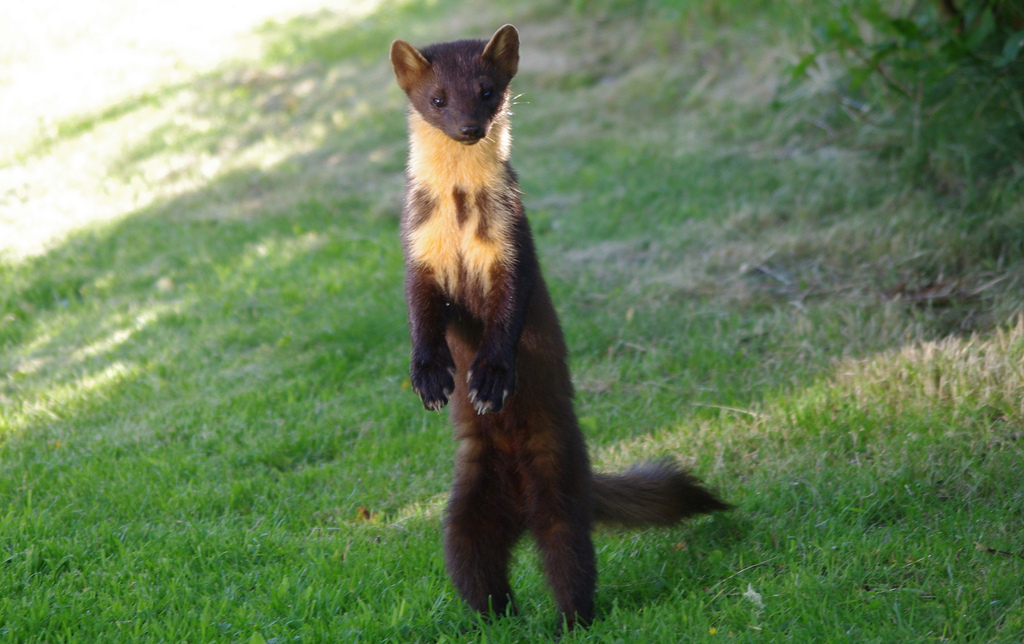
For example, for the first time in 460 years river beavers have reappeared in Devonshire and for the first time in over 100 years a wild pine marten has been seen in Shropshire (although there are small, rare populations in Wales and Scotland).
Other projects include the re-release of white-tailed sea eagles on Mull in the Inner Hebrides and Konik stallions in Cambridgeshire, both, significantly, getting widespread public support.
So it came as no surprise when the possibility of re-introducing the Eurasian lynx to mainland Britain was given overwhelming support.
Other so-called key species that are being considered are the wild boar and wolves. These are all species that are considered vital to the health of natural ecosystems, such as those now being restored across Britain.
Is it going to happen, wild boars, wolves and lynxes in Britain?

Well, conservationists are very much for it and believe it is entirely possible, so the next time you visit the UK there may be something else to look out for once you’ve seen the changing of the guard at Buckingham Palace.
On the other side of the Atlantic, President Barack Obama of the United States of America has been called on to give more teeth to the Endangered Species Act, which has been in force for some time.
Many conservationists are concerned that America’s wildlife is in trouble, claiming that perhaps one in five species of fauna and flora are at risk of extinction (that’s a very serious claim).
They say the Act needs to be applied more effectively and they have asked President Obama to go back to Congress to boost policing of the Act.
As a matter of interest, two excellent examples of ‘rewilding’ in the United States are the grey wolf in the Yellowstone National Park and the American bison on the great plains, both species brought back from the brink of extinction.
Both the wolf and the bison have done remarkably well and are fine examples of what can be done. So, get to it Mr Obama. Cheers!
Sources: The Week: The best of the British and International Media and Care2Causes.
PS: It seems not everyone is experiencing a dearth of monkeys (see my column of two weeks ago). Readers are telling me that there are monkeys, monkeys everyone, but I have to stand by what I said, I did my homework and we still haven’t had a monkey raid as of old. So, where have OUR monkeys gone?
DID YOU KNOW?
Click on the words highlighted in red to read more on this and related topics.
If you are reading this on your cellphone and there are telephone numbers provided in the text, you can call these simply by clicking on them.
To receive news links via BBM, add us using the pins 58F3D7A7 OR 58F25573. The South Coast Herald is also on Facebook, Twitter, WhatsApp and Instagram – why not join us there?



