ONE doesn’t really think of South Sudan in terms of wildlife, and yet some really good news has arrived on my desk about the sighting of rare forest elephants for the first time in the west of that country.
Wildlife researchers from the South Sudan Wildlife Service, Burchnells University in the United States of America and Flora and Fauna International, operating in the state of Western Equatoria, set up dozens of camera traps to capture the forest wildlife.
The forest elephant is smaller than the savannah elephant, like ours, and is classed as Critically Endangered.
The researchers also picked up lots of other rare creatures in the forest, including golden cats, water chevrotain (a small antelope), red river hogs, giant pangolins, chimpanzees, leopards, forest buffaloes, four species of mongoose, spotted hyaenas, yellow-backed duikers, honey badgers, monitor lizards and western bongos.
Remarkable, and all this from camera traps. The forests of Western Equatoria and the wildlife are under threat from the ongoing conflict in South Sudan.*
And from Africa to China and the WWF’s (Worldwide Fund for Nature) Living Planet Report for 2015**.
The report says that the number of invertebrates worldwide has declined by over 50 percent over the past 40 years or so, including China’s.
It says that China has concentrated its conservation efforts on the giant panda, but that many of China’s other rare and important species are in real trouble.
The number of giant salamander has declined by 80 percent, due to habitat loss and human consumption (the Chinese eat them).
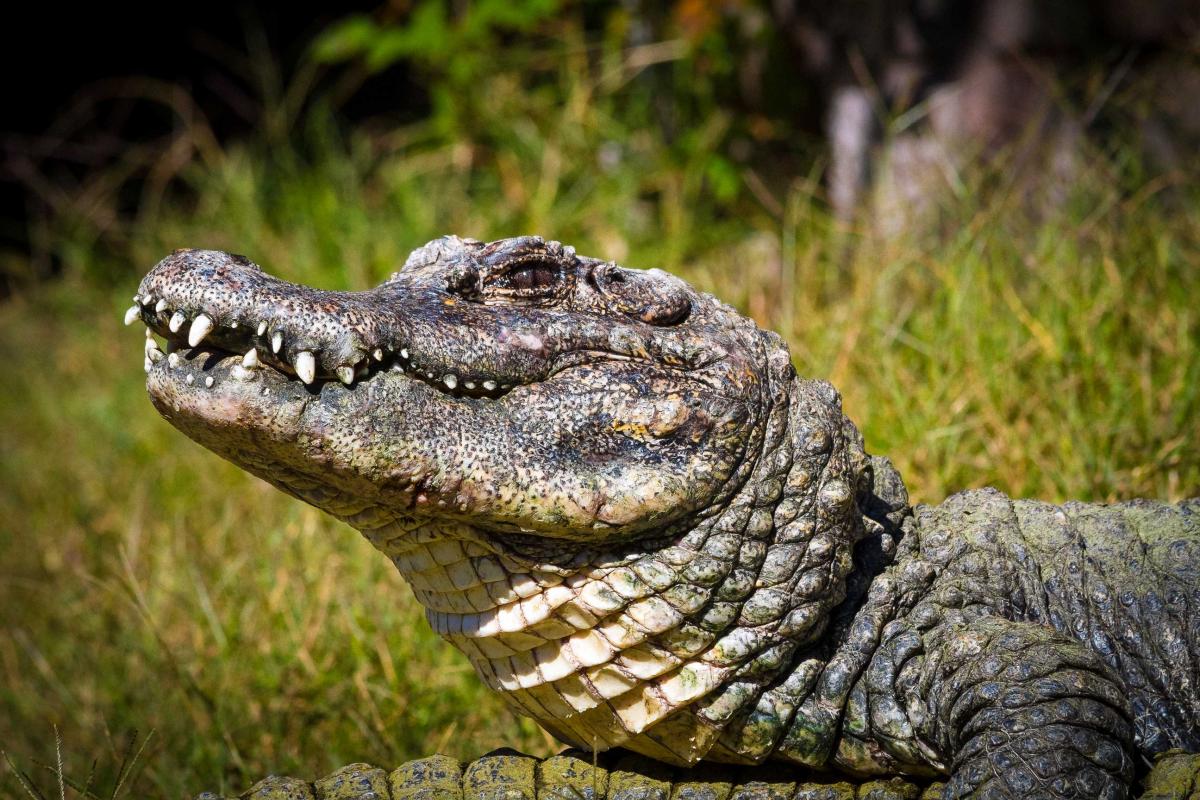
There are fewer than 150 Chinese alligators (one of the rarest alligators in the world) left in the wild due again to habitat destruction and persecution by farmers.
The South China tiger may already be extinct as there have been no reliable sightings of them since the 1970s, and that’s due to human pressure. So, not such a good report card for China.
I have read elsewhere that the Chinese efforts to breed giant pandas is a purely commercial affair.
It’s fairly safe to say that every zoo in the world would like a giant panda, but if they want one they are going to have to pay millions of dollars for it, all of that going into Chinese coffers and apparently not to breeding programmes for the giant salamander, Chinese alligators or the South China tiger.
An indication that help may be on the way for endangered species worldwide comes from the United States, where scientists at the Cornell University and the Smithsonian Institute have successfully bred seven puppies conceived by IVF (in vitro fertilisation).
The mother was a beagle and the donor father a cocker spaniel***.
Many may think that the world has enough beagles and cocker spaniels, but the whole point of test tube babies is that the technique can also be applied to endangered species, although successfully breeding a South China tiger by IVF would certainly not be the end of the story, but it’s an interesting prospect. Cheers!
*savetheelephants.org News Service. ** and ***Care2Causes.