THE TC Robertson Nature Reserve has lots of trees. Probably more species, 100-plus and counting, than the whole of the United Kingdom. Almost all are indigenous to the very rich biodiversity hotspot we sit plumb in the middle of, the MPA (Maputaland-Pondoland-Albany) Centre of Endemism, one of three in our country and only 34 globally.
Predictably, we also have a few alien invaders like Brazil peppers (Schinus terebinthifolius) and syringa (Melia azedarach) whose seeds are happily planted – with a neat little package of manure to speed germination – by our birds, who should really know better! These exotics grow and spread alarmingly at the expense of natural vegetation as they await the not-so-tender ministrations of Mike and his crew.
We’re always urged by naturalists to look through – not at – the bush to spot animals and birds. Botanists, even the mildest ones, hate this and vehemently disagree.
As soil, water and plants form the very foundation of any eco-system, on which every insect, reptile, bird and mammal is absolutely dependent all the way up the food-web, it might be an idea while strolling the trails and even meandering about the picnic area to have a close look at – and in – some of the trees.
We have some stunners, usually marked for easy identification: Cape chestnut (Calodendrum capense) on the eastern edge of the picnic area near the dam; several weeping boer-beans (Schotia brachypetala); any number of nature’s food-trees, the wild figs (Ficus natalensis, F. lutea, F. burkei, F. sur, etc) – a particularly fine example of natalensis towering from a rock over the surrounding forest can be found about 200 metres up Shaka’s Trail. And an amazing red-stem corkwood (Commiphora harveyi) shedding sheets of papery bark awaits the energetic hiker at the crest of the Grassland Trail. To name just a fraction.

The coast golden-leaf or mitzeeri (Bridelia micrantha) is a large, very common pioneer species of damp places with characteristic orange-gold leaves in autumn and a beautiful copper-red spring flush. Unusual in our climate and landscape of mostly evergreens. The tiny yellow-green flowers between August and October (the species name, micrantha means ‘small flowers’) aren’t worth writing home about. Unless you’re an insect. Or an insect-eating bird, lizard, tree-frog, or those that in turn eat them.
Aside from being the foodplant for a host of butterfly and moth species, the Bridelia will often reveal a large lump to those who peer up its branches to just below its spreading leafy canopy. The lump might be a monkey or fat bird, but there’s a good chance it’ll be a nest. Not necessarily a bird’s nest so it’s as well to note the colour and texture of the lump.
If pale and leathery about the size and shape of a rugby ball, it will be a ‘bagnet’. A nursery for hundreds of processionary moth caterpillars (Thaumetopoedae species) to spin cocoons in which to pupate and emerge as adult moths.
If dark and like a huge, muddy-looking human head, it will be home to a colony of cocktail ants (Crematogaster species). Unique amongst all our ant species, cocktails are known for building these arboreal nests from chewed vegetation.

And aggressively ‘raising their gasters’ (cocking their tails) when danger threatens. They have a unique ball-and-socket joint between thorax and gaster (tail) to enable this trick. Between 3 and 5mm long these fascinating little girls bite readily and in number if molested, but cannot draw blood.
Hopefully Prof Mark Robertson, Dept of Zoology and Entomology, University of Pretoria, currently engaged in a study of TC’s ants, can tell us more in time to come.
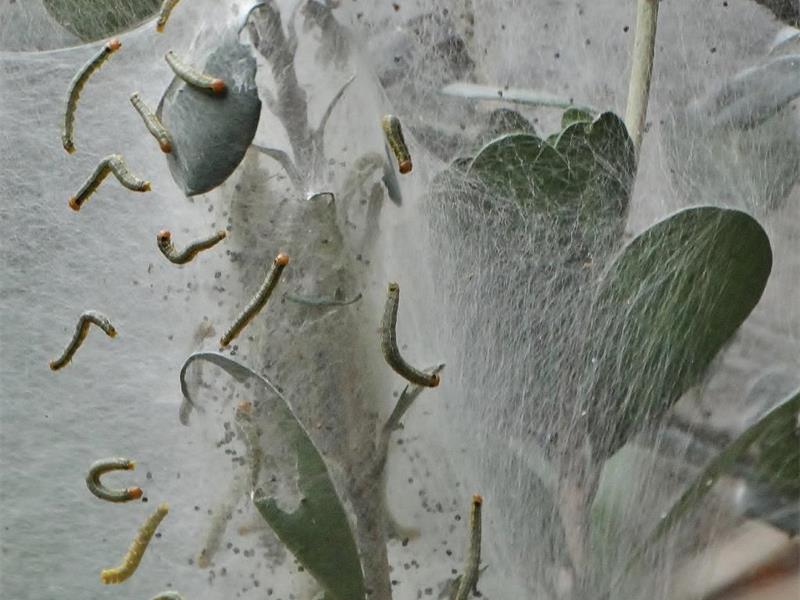
Another interesting phenomenon, this affecting a specific tree genus, is ‘tenting’. The milkwoods – and the forest red-milkwood (Mimusops obovata) in particular – often nearly vanishes beneath billowing clouds of silk.
These are communal webs spun over part or all of the tree by thousands of enterprising tent moth larvae (Bostra carnicolor). They often eat every leaf from even a large tree, but the tree soon shrugs this off and – fertilised by a rain of ‘frass’ – caterpillar poop – grows faster and leafier than ever.
So, looking at and in trees at TC can be a rewarding experience, even to the botanically-challenged.
The legendary Mongoose Tea Garden, home of sinfully delicious goodies, is open for usual Wednesday morning business. Book with Denise at 074 8632411.
Our officer-in-charge’s next popular TC Robertson Junior Rangers’ course will be held on February 20 and 21, 2016. Contact Mike at 082 4069891.
HAVE YOUR SAY
Like our Facebook page, follow us on Twitter and Instagram
For news straight to your phone, add us on BBM 58F3D7A7 or WhatsApp 082 421 6033