OF all the little settlements that dot the wide and empty expanse of the Karoo, it is Nieu Bethesda that I think of as the quintessential dorpie.
It has everything that a Karoo dorpie should possess – the dusty streets lined with irrigation canals, flat roofs and white washed building, a handsome church spire and even a windmill or two.
The little houses are built close to the road, the shady stoeps the overlook the pavement making it easy to converse with passersby. No wonder Karoo people are so friendly and chatty.
Generous back yards come complete with rickety chairs under venerable old grape vines and well pruned fruit trees. Shady and cool in the sizzling summer months those enclosed back yards with their now leafless trees capture the sun during the harsh winters.

The gravel roads leading into the town are just corrugated enough to deter anyone but the genuinely interested. This seems to protect the integrity of the sleepy Karoo village, preventing it from becoming just another yuppy weekend get-away. It remains unspoiled, unpretentious, hospitable and, as a resident we met described it, “a nice, quiet little town with just enough tourists to make it interesting”.
It is of course Helen Martin’s Owl House that is Nieu Bethesda’s biggest attraction. Born in 1897, Miss Helen, as she was known, was raised and spent most her life in the town.
Helen’s younger years are something of a mystery – she spent some time in Graaff-Reinet training as a teacher and there was a short-lived marriage somewhere along the way – but she returned to her home town to nurse her ailing parents in the 1930s. Her mother died in 1941 and her father, a difficult man known as The Lion, died in 1945.
In 1952, Miss Helen married again, but her second marriage only lasted three months. Eventually it was a spell of illness that changed her life. Lying in bed, the moonlight drifting through her windows, she realised her life had become drab and colourless. And so began her obsession with colour and light and the way these are reflected.

Visiting her Owl House is a somewhat uplifting, somewhat depressing experience. The interior walls are brightly painted and covered with glass which Miss Helen ground with a coffee mill in her back yard.
Coloured glass has replaced the clear glass of the window panes. Owls on the sill of a scarlet window guard the kitchen hearth. Every surface of her homes is a magpie’s nest of cheap ornaments, coloured lamps, mirrors and virtually anything glittery and bright that Miss Helen could acquire. In spite of all this colour and reflected light, I thought the house echoed a lonely sadness.
Outside is the fantastic Camel Yard, an exuberant, busy place with a contrasting backdrop of deep blue Karoo sky and khaki hills. Every corner of the yard is crowded with the strange sculptures wrought by Miss Helen and her assistant, Koos Malgas, out of cement, wire, old bottles and fragments of shattered glass.

Peacocks, cat-like creatures with car headlight eyes, acrobats and mermaids and her signature bottle-eyed owls mingle with symbols of the mystical and religious sources from which she drew inspiration. Her artwork reflects a miscellany of influences ranging from Biblical script, Eastern mythology and heavenly bodies to the work of William Blake and the poetry of Omar Khayyam.
In one corner, life-sized camels, wise men, shepherds and a host of mythical concrete figures follow suspended tin stars to Miss Helen’s mythical east. Their outstretched arms seem to speak of Miss Helen’s yearning for some unattainable light.
Over the years, Miss Helen became more and more reclusive; the townsfolk must have viewed with suspicion this eccentric artist in their midst.Then her health deteriorated. Her eyesight began to fail, perhaps from all those years of working with ground glass. One cold, winter morning in 1976, the 78-year-old artist committed suicide by swallowing caustic soda.
Next door to the owl house is a building that reflects another facet of the fascinating Karoo, the excellent Kitching Fossil Museum. It houses an attractive and informative display that reminds visitors the Karoo and its wealth of fossils have stories to tell that go back some 200 million years.

It also tells of Professor James Kitching who found his first fossil at the age of six and who went on to head the Bernard Price Institute for Palaeontology Research at the University of the Witwatersrand.
When he died on Christmas Eve, 2003, he left a legacy of thousands of hours spent collecting fossils in the field. His colleagues describe him as “one of the scribes of the story as told by the rocks of the Karoo”.
Nieu Bethesda reminds us that the Karoo is still producing artists and creative thinkers. The charming little village has more than its share of art galleries, craft shops and interesting eateries.
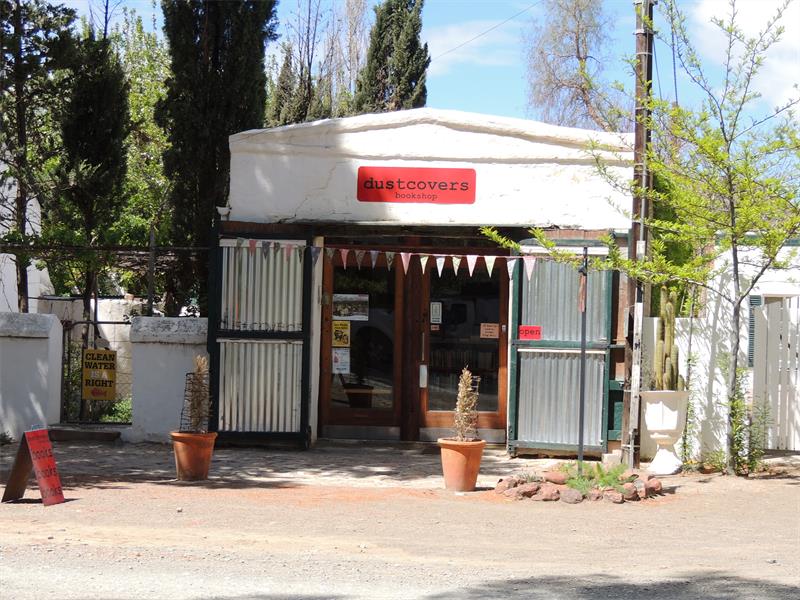
And travelling around the Karoo it soon becomes evident that Karoo people still indulge in the happy and addictive habit of reading. Like many of the Karoo towns we have visited Nieu Bethesda boasts a fabulous little bookshop, Dust Covers, a delightful little converted garage that is absolutely crammed with wonderful new and pre-loved books.

HAVE YOUR SAY
Like our Facebook page, follow us on Twitter and Instagram
For news straight to your phone, add us on BBM 58F3D7A7 or WhatsApp 082 421 6033