A WHILE back I wrote about the onset of mosquitoes heralding the arrival of summer. Well, the mozzies are still here but I have some new information.
A reader and regular correspondent, Curious Naturalist of Pumula, has written to say that she worked for several years with an eminent research entomologist at the National Institute for Virology in Johannesburg and that his specific field of interest was the mosquito.
She confirmed that they home in on carbon dioxide and that the entomologist used live rodents in traps as bait.
She says the research included breeding habits and ‘all species of mosquito require a blood meal before they will breed, but the more fastidious ones require human blood’.
Apparently the eminent entomologist, in the interests of science, would roll up his shirt sleeve to provide the human blood meal, if and when necessary.
On a somewhat less scientific note, Curious Naturalist says she has read somewhere that coriander keeps mosquitos at bay and she is conducting an experiment whereby she is sprinkling coriander on her morning toast. We shall keep you informed.
Of course, when one mentions mosquitoes one automatically thinks of malaria.
Well, we are fortunate down here in that we are not in a malaria area. The closest area of concern would be northern Zululand, from about Mfolozi and Mtubatuba upwards, but even that is considered a low risk area.
Moderate risk kicks in when you get up to the Kruger National Park and surrounds. Swaziland and Mozambique are also considered malaria risk areas, so the best advice is, if you are travelling northwards, talk to your doctor or pharmacist.*
As a matter of interest, malaria risk areas include much of sub-Saharan Africa, except most of the very south (us), parts of North Africa, the Arabian peninsula and the Persian Gulf, parts of Turkey, across south western Asia, south Asia, southern China and South East Asia and, ironically, New Zealand’s North Island, and then most of the northern half of South America and Central America.
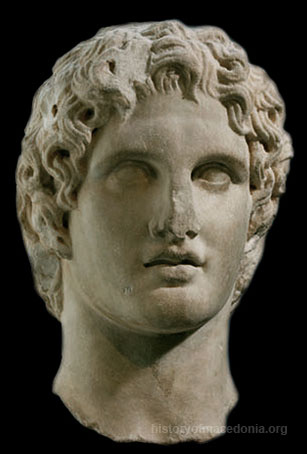
Historically, malaria was well-known to the ancient Greeks 2500 years ago and then the Romans (Alexander the Great had malaria, as did several famous Roman emperors).
In fact some historians believe that the disease may have been a contributing factor to the breakdown of the ancient Greek civilisation as well as to the eventual fall of Rome.
It was common in Medieval Europe and in fact it was still being reported in England, including London, 150 years ago.**
Finally, long, long ago when I worked for South Africa’s overseas shortwave radio service, I did a programme on malaria.
In response, a loyal listener in Canada sent me a mosquito trap.
It’s a perfect gin trap just 4cm long (I’ve just taken it out of my desk drawer) which you set and then bait with a tiny drop of blood. You put it out at night when the mozzies are around and by morning you will have caught your first one. Cheers!
*Department of Health map. **A Layman’s Guide to Malaria, Martine Maurel, Southern Books, Halfway House, 1994.
HAVE YOUR SAY
Like our Facebook page, follow us on Twitter and Instagram
For news straight to your phone, add us on BBM 58F3D7A7 or WhatsApp 082 421 6033