WHEN one thinks of the international trade in ivory one seldom thinks past the use of it in other than trinkets in China, and yet there is a whole new problem area out there.
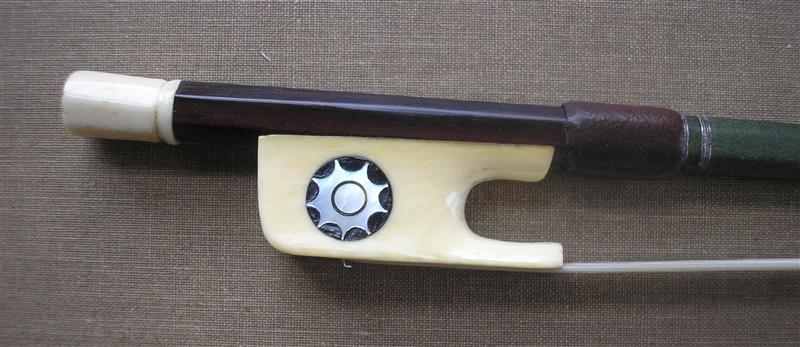
Many classical musical instruments contain small amounts of inlaid ivory, specifically violins, violas, cellos and basses, usually in their bows.
It is also found on some woodwind instruments and bagpipes often have large amounts of ivory attached to them.
And you can’t just chip these bits of ivory away as many of these instruments are hundreds of years old and worth vast amounts of money.
Perhaps the finest example of this are the Stradivarius instruments, particularly the violins.
The Stradivari family of Italy, particularly Antonio, produced what are often described as the finest stringed instruments ever made, in the 17th and 18th centuries.
A violin from their so-called Golden Period, from 1700 to 1725, recently sold for US$15.9-million (that’s about R250-million, and you wouldn’t want to chip the ivory off that, would you?).
So, what’s the problem?
Well, new anti-poaching and ivory laws, particularly in the United States of America, and these would be federal, state and even local laws, forbid the transportation of ivory over borders.
Classical musicians do a lot of travelling and they are having problems crossing borders. And it’s not just classical musical instruments either, but items like pipe organs (although one is unlikely to want to do too much travelling with a pipe organ), guitars, walking canes and antique firearms.
It’s obvious that the authorities are going to have to come up with some compromise on this issue, so watch this space.*
Staying with ivory and old ivory, parts of the fossilised skeleton of a prehistoric elephant of perhaps 100,000 years ago have been found on the Isle of Wight in England.
It’s been named the Palaeoloxodon antiquus and is a fair indication that Great Britain was once joined to the European continent and that the weather was somewhat warmer.*
And a froggin’ we shall go!
I’ve mentioned frogs in a couple of recent columns and well, here’s some good news on the local front.
A colony of the Critically endangered Pickersgill reed frog has been found at the Nkomba Conservation Area in Pennington.
The frog, which is found only on the KZN coast from Sezela to St Lucia, lives in coastal wetlands, most of which are themselves critically endangered.
A frogging party set up by the Pennington Conservancy and featuring local amphibian and reptile specialist, Nick Evans, found the frogs on a recent night safari into the wetland.**
Talking frogs, a reader found a pure white frog in his garden in Trafalgar the other day.
He sent me a photograph of it and I couldn’t find it in my books so sent the photograph to Nick Evans.
He came back to me saying that it was a painted red frog (a most attractive little chap), but it was white because they tend to adopt that colour during the day to deflect the sun. Now you know, cheers!
*Savetheelephants.org News Service, **Pennington Conservancy.

HAVE YOUR SAY
Like our Facebook page, follow us on Twitter and Instagram
For news straight to your phone, add us on BBM 58F3D7A7 or WhatsApp 082 421 6033