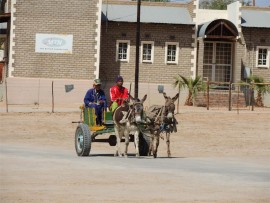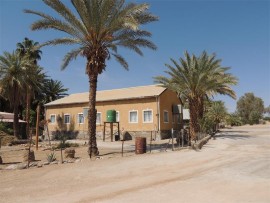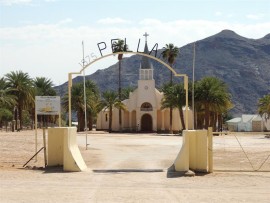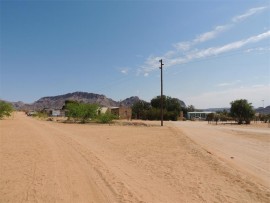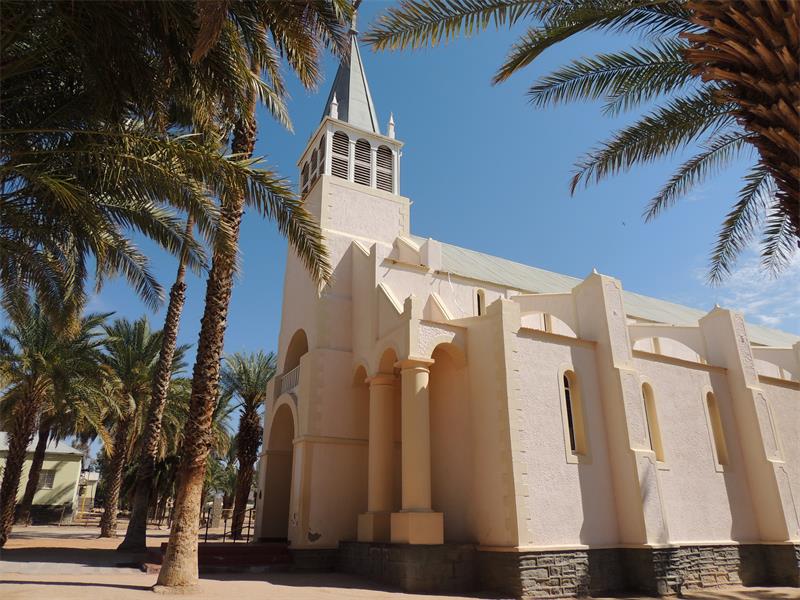
A BUMPY road through a sandy, featureless landscape took us to a timeless place, the spring-watered mission station called Pella. This remote, drylands settlement is well named. The original Pella was a biblical town, a Christian refuge in Macedonia. In 1814, when the London Missionary Society founded its Northern Cape namesake, the mission station served as a refuge for Khoi Christians fleeing south of the Orange River to escape disturbances in their area. With its stately date palms – Pella is renowned for its delicious dates – its walled garden, ochre buildings, desert-like setting and surrounding rocky hills it is a scene straight out of a children’s book of Bible stories.
Although life can never have been easy in this remote, arid, sand-filled place of extreme temperatures, a deep sense of contentment and tranquility pervades the little oasis, making it a peaceful refuge from the frenetic, modern world. When we arrived, the school bell had not yet rung and children were playing in the dusty square in front of the elegant church. It is Pella’s most imposing building. A great drought forced the London Missionary Society to abandon Pella in 1872 but, six years later it was taken over by the Roman Catholic Church. Two Catholic missionaries, Father Simon and Father Wolf, built the church themselves, using wagon loads of locally sourced material and an encyclopaedia as their building manual.
Both priests gave more than 50 years of their lives to the community around Pella and both are buried there. As the school bell tolled and the children disappeared a tiny, elderly but sprightly nun approached us. She did not seem surprised to find two strangers on her doorstep. She welcomed us warmly, her dark eyes twinkling, and whisked us off on a guided tour of the mission station.
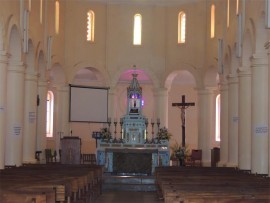
We admired the beautifully decorated old church and wandered through the cool old mission buildings, absorbing the atmosphere of this special little place. In the small museum our diminutive guide showed us the old vestments, no longer used but lovingly preserved in tissue paper. The fine needlework and exquisite embroidery are the work of the mission’s original French nuns, who stitched these intricate works of art by the light of a flickering candle flame. My favourite was decorated with a fall of bright green leaves and yellow and orange Namaqualand daisies. It was worn by the priests at thanksgiving services after the rain.
Bill and I were reluctant to leave this little haven but we had many miles to travel that day. Our charming guide bade us farewell and wished us a safe journey. As we drove away it felt like we had journeyed back to more gentle era, to a time when nuns spent long, lonely evenings lovingly stitching their small masterpieces by candlelight; to a time when two priests had the patience and faith to build a cathedral in the sand. That was our first visit to Pella, quite a few years ago. We revisited it fairly recently and were pleased to find this timeless oasis had remained unchanged.
HAVE YOUR SAY
Like our Facebook page, follow us on Twitter and Instagram
For news straight to your phone, add us on BBM 58F3D7A7 or WhatsApp 082 421 6033