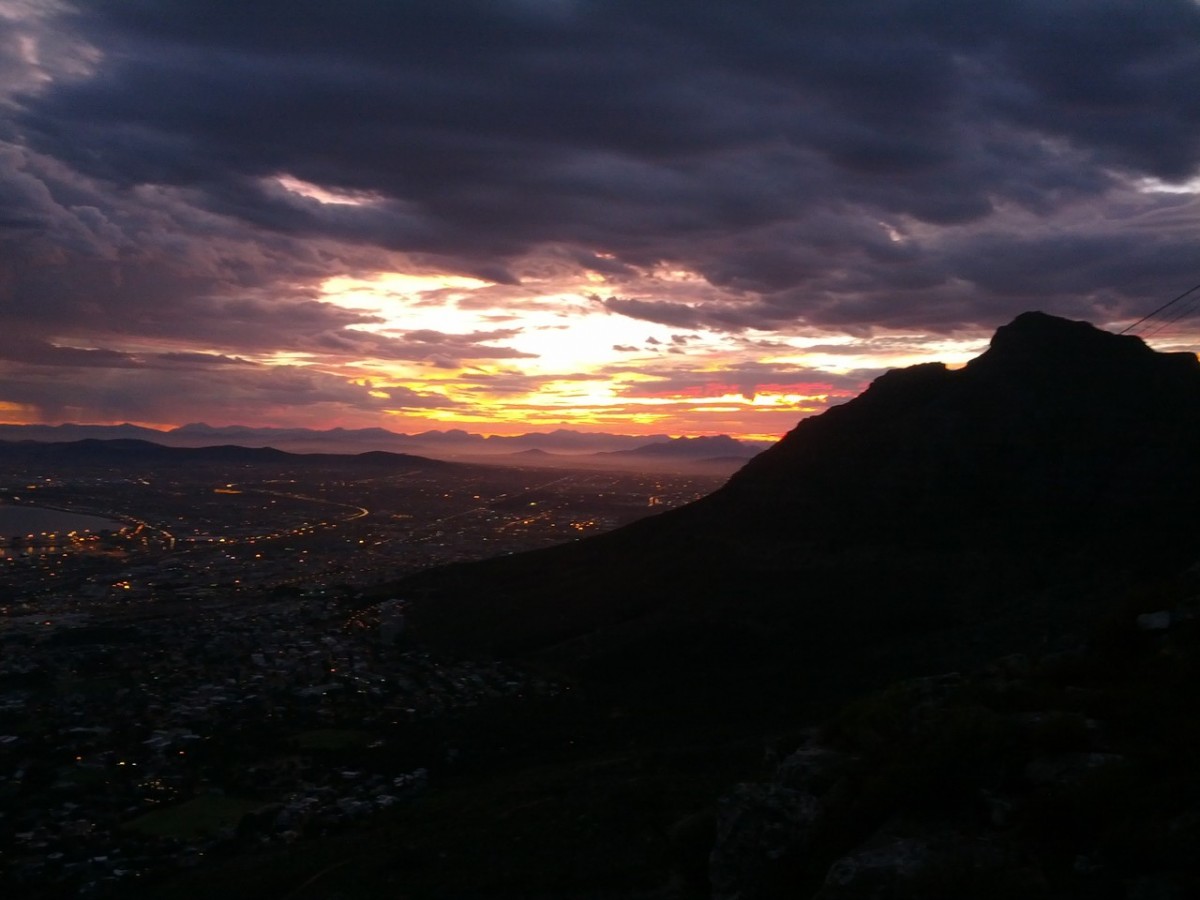
A FEW days ago the world celebrated Earth Hour, an annual event when we are asked to switch off all non-essential electrical appliances for just one hour to emphasise our technical footprint on our planet’s natural environment.
We sat with a candle for well over an hour, sitting in the Hide and pondering the meaning of life (we certainly didn’t miss anything on Saturday night television).
The whole world, in fact 172 countries, gets involved in Earth Hour and landmarks around the world are switched off to enhance the whole effect.
In South Africa, it was Table Mountain that went dark. Why I am I telling you all this after the event?
Well, Eskom has announced that it saved an estimated 515mw during that one hour on a Saturday night.
That may not mean very much, so I did some calculations based on how much electricity we use monthly and therefore hourly, and according to those calculations some 400,000 families around South Africa observed Earth Hour.
There is a long way to go to create even more awareness, but I think that is a pretty marvellous show. Well, done South Africa!*
And now there is some more good news, and some bad news too. First the good.
The Department of National Parks, Wildlife and Plant Conservation in Thailand has announced that it is to establish a huge elephant sanctuary in the east of the country.
The plan is to buy up farming land and add it to existing forested areas and parks to establish an area that will be food-rich for elephants.
There is currently, as there is in virtually every elephant range state in Asia or Africa, conflict between elephants and rural people and this new reserve should go a long way towards resolving that in Thailand.
There are currently about 380 elephants in the wild, most of them in the east of the country. It is envisaged that the new reserve could also become a major tourist attraction, with visitors taking safaris to look for wild elephants.**
And then, a team of palaeontologists from the University of the Punjab in northern Pakistan have discovered the remains of an extinct species of elephant, the stegodon.
The remains have been dated at 1.1-million years, the oldest elephant remains found in Pakistan to date, and include one complete tusk 2.5m long and 20cm in diameter.
The fossilised remains of ancient antelope and cattle-like species were found in the same dig.**
And finally, those Japanese whalers are at it again.
It’s reported that the Japanese Antarctic whaling fleet is currently in the southern oceans on a quest to hunt at least 333 minke whales, in direct defiance of an International Court of Justice ruling banning such expeditions.
The fleet, comprising four vessels, left Japan in December and may well have completed its illegal hunt by now.
Japan refuses to comply with the international ban on commercial whaling, claiming that it needs 133 dead whales for scientific research purposes.***
I dare not comment. Cheers!
Fin24.Com*, Savetheelephants.com News Service**,
The Week: The Best of the British and Foreign Media***.