A REPORT on deforestation by the World Resources Institute (WRI) says that the world is losing over 200 000 square kilometres of trees a year – that’s an area about twice the size of Portugal.
The United States of America-based WRI says that apart from the usual deforestation hot spots like Indonesia and the Brazilian Amazon, there are also very serious areas of tree loss in West Africa, Madagascar and the Mekong River basin in South East Asia, where forests are being cleared for the production of soya beans, palm oil and beef.
In a separate study, researchers at Yale University in the United States have estimated that there are now some three-trillion trees worldwide, that’s something like 422 for every human being on the planet (I just knew you needed to know that).
That means, say the learned gentlemen at Yale, that the number of trees on Earth has roughly halved since the beginning of what is called human civilisation 12,000 years ago.*
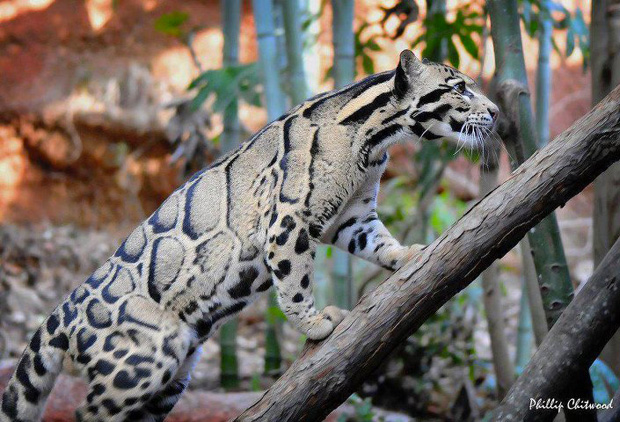
Better news for trees comes from the state of Sabah in Malaysian Borneo, which has announced the establishment of a new 68,000ha forest reserve protecting elephants, orangutans and extremely rare clouded leopards.
The new reserve will link two existing reserves, Maliau and the Danum Valley, to provide a vital corridor for wildlife through the three reserves.
The new reserve has been heavily logged in the past, but that has now been stopped and the jungle should recover over time.**
Good news too from the United Kingdom, where two of England’s best-known national parks, the Yorkshire Dales in the north east and the Lake District in the north west, are to be greatly expanded this year.
A government statement says the expansion of the parks will mean that they will meet in the middle and cover an area of some 4,532 square kilometres.***
And while we’re on the subject of forests and deforestation, if you have any concern at all for the world’s pine forests you will stop eating basil pesto.
Apparently the growing demand for the sauce, which involves not only basil, but garlic, olive oil and lots of pine nuts, is threatening the survival of pine forests because of the unsustainable harvesting of the nuts.
Apart from the actual trees, it’s reported that the wildlife in the forests is also at risk.
This is all a great pity, as basil pesto is wonderful stuff.***
Elizabeth David, probably the greatest food writer of the past 65 years (to some of us anyway) gives a recipe for a vegetable soup using basil pesto.
It’s La soupe au pistou from Nice, borrowing the pesto from its home town, just over the border, Genoa in Italy.
It’s onions, tomatoes, French and haricot beans, courgettes and potatoes, and finally celery leaves, vermicelli and, of course, basil pesto.****
Sounds good enough to eat. Bon appetit!
*The Week: the Best of the British and Foreign Media.
** Savetheelephants,org News Service.
***The Week,
****Elizabeth David, French Provincial Cooking, The Cookery Book Club, London, 1967.