PERHAPS it is the quality of the light, the crispness of the air or the majestic scenery but being in the Drakensberg is always so exhilarating. Over the last couple of weeks, we’ve done quite a bit of virtual wandering through the South African urban landscape but it’s time to leave town and seek out some wild beauty spots. Let’s pack our virtual bags and head inland for a short, late summer visit to the mountains. In summer the Drakensberg resorts have great appeal for people who live on the KwaZulu-Natal South Coast. Here, in this idyllic spot we call home we enjoy an almost perfect climate. We have good rains and lots of sunshine. Our weather is never too cold and is hardly ever too hot – except for a couple of months when late summer throws a hot, moist, sticky blanket over KwaZulu-Natal’s sweltering coastal regions.
I like hot weather and would never trade our, at times uncomfortable, coastal summers for the icy inland winters but even I sometimes need to escape late February’s unremitting heat and humidity some time, so recently we decided to head for the hills for a long weekend. There are plenty of southern and central Drakensberg mountain resorts that are closer to home but we chose the popular. more northern Royal Natal National Park for two reasons. Firstly, in spite of the fact that it is reputed to offer some of the best mountain scenery in South Africa, it was a part of the Drakensberg that we didn’t really know. Back in 1971 my father and I spent a few days at the gracious old Royal Natal Hotel and Bill and I paid a day visit to the reserve a number of years ago. It was time we got to know this world-famous beauty spot better. Secondly, we wanted to do the Cannibal Cave parkrun, but more about that later.

In spite of its name the Royal Natal National Park not one of the official South African National Parks that come under the SANparks umbrella. It is a provincial park, administrated by Ezemvelo KZN Wildlife. However, it is one of the many parks and resorts within the greater uKhahlamba-Drakensberg Park, which is a World Heritage Site. This massive conserved area, about 150km in length is described by Unesco as a place of ‘exceptional natural beauty in its soaring basaltic buttresses, incisive dramatic cutbacks, and golden sandstone ramparts’.
Its Zulu name means barrier of spears and its Afrikaans name means dragon mountains. It provides shelter to a rich variety of rare and magnificent flora and fauna and is a veritable art gallery of ancient San rock art. All its different components offer outstanding natural beauty and Royal Natal proved to be no exception. We enjoyed our lovely meandering drive to the park. It was drizzling when we left home early in the morning and we encountered some heavy rain and pockets of thick mist. Being in no hurry, we stayed off the main N2 freeway as much as we could. From a foraging point of view it was a successful drive. We bought some lovely salad vegetables and fruit at a fresh produce store in Hilton then we detoured to visit two of our favourite country outlets, a wonderful bakery and a shop selling honey and honey-related goodies, in the Champagne Valley.

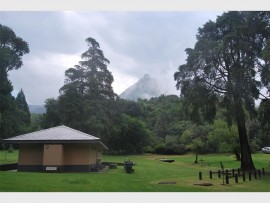
By the time we reached Royal Natal’s Mahai campsite the rain had turned into a very light drizzle and we were able to set up camp without getting too wet. Oh, but Mahai was beautiful. It was a large camping area with more than 80 sites set out on a well maintained lawn beneath large, shady trees. Most of the biggest trees were shaggy old pines and cypresses but we were told these exotics were dying off or were being removed and replaced with indigenous trees, including many yellowwoods that should look stunning in a few years time. The facilities and manicured grounds were first class, attractive and perfectly maintained. As well as the ample, spotlessly clean ablution blocks, there were a number of small kitchenettes providing washing up sinks, hot and cold water, kitchen counters and even boiling water on tap. There was even a well-equipped laundry area with washing machines. a good percentage of the sites were electrified. What impressed us most, though, was the friendliness, helpfulness and efficiency of all the staff members we met, not only in the exceptionally well run Mahai camping area, but thoughout the park.
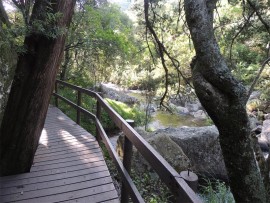
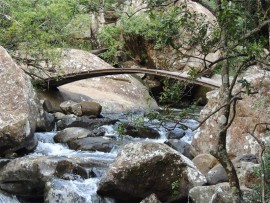
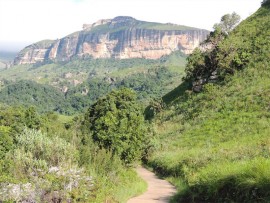
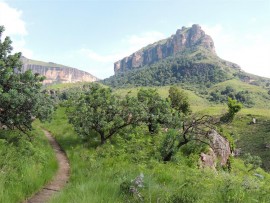
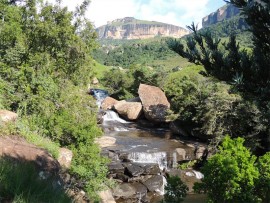
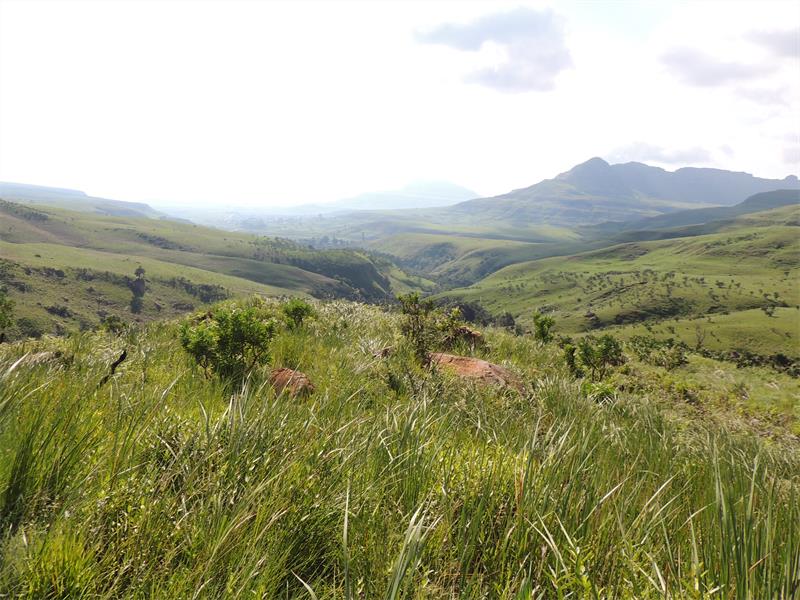
When we arrived on the Thursday afternoon the campsite was almost empty but we were warned that it was going to be a busy weekend. We hadn’t realised it was the private schools’ half term weekend and the camping site was almost fully booked. On Friday morning, we woke up to a quiet camp and did a short, easy walk along the paved walkway, through magnificent riverine forest to a point on the river descriptively called the Cascades. We then clambered up a very steep concrete path taking us higher and higher to Lookout Rock. This was well named. The view from there as simply awesome and made the tiring trudge up the mountain well worthwhile. After completing our two-hour walk, we felt we’d earned a bit of a rest so we took a drive to have a look at the park. This mountain paradise is absolutely spectacular and the iridescent green summer vegetation accentuated its great natural beauty. It is dominated by the magnificent Amphitheatre, perhaps the Drakensberg’s best known formation.

We also took a drive out of the park to check on the condition of the Oliviershoek Pass road that, some time ago, had fallen into disrepair and had been closed. It is such a scenic alternate to the N3 when we are travelling between Johannesburg and Durban so we were pleased to see the route had been reopened and that the road was in excellent condition. By the time we returned to camp, almost every site was taken and a festive holiday atmosphere prevailed. With more than 80 large camping sites, Mahai camp is big but comfortable and very roomy, with the individual sites overlooking extensive, grassy common areas so it never feels over-full. The younger visitors were having a wonderful time.
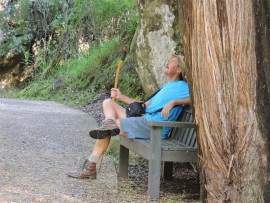
There were three cricket games on the go and a big bunch of children had befriended each other and were enjoying a lively soccer session. Bikes and tricycles whizzed along the walkways and nearby roads and a constant stream of walkers strolled along the riverside walkway in front of our site, heading for the Cascades. That evening we strolled along the walkway to a bench beneath a massive yellowwood tree alongside the river where we stopped for a leisurely sundowner. The old giant seemed to enjoy our company and we appreciated its shade. We didn’t overstay our welcome, though. Soon we were contentedly braaiing our supper as the busy camp settled down for the night. There is nothing like a little fresh air to encourage youngsters to surrender to the sandman and at an amazingly early hour Mahai fell silent. We were soon off to bed as well, looking forward to an early wake-up call and a chance to notch off a Cannibal Cave parkrun.
HAVE YOUR SAY
Like our Facebook page, follow us on Twitter and Instagram
For news straight to your phone, add us on BBM 58F3D7A7 or WhatsApp 082 421 6033