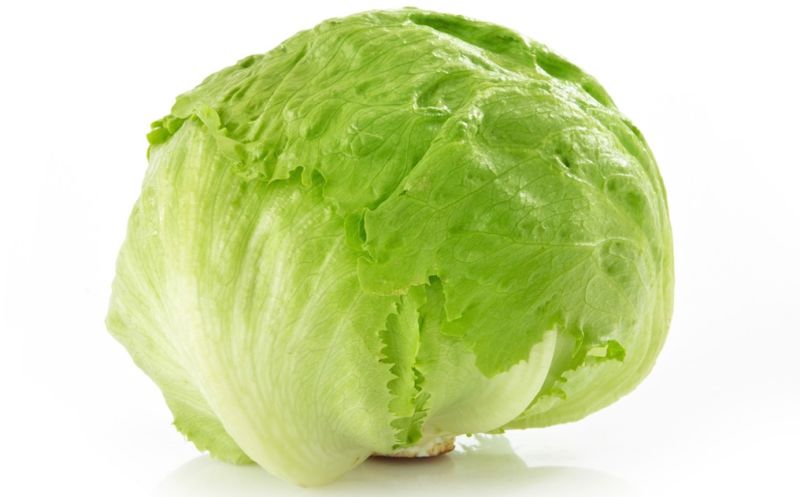
A REPORT to hand suggests that giving up eating meat in favour of vegetables is not necessarily as green as it might seem.
Researchers at the Carnegie Mellon (yes, really) University in Pittsburgh in the United States have studied the environmental impact of producing, transporting and storing a variety of different foods and have established that although meat production contributes hugely to greenhouse gas emissions, some ‘healthy’ non-meat products are costly too.
The production of some vegetables, for example, requires even more water and energy per calorie than meat, leading to higher greenhouse gas emissions.
They found that in particular eating lettuce creates three times more emissions than eating bacon, while other vegetables like aubergine, celery and cucumbers are very bad when compared to pork or chicken.*
Well, there go some of my favourite snacks: thinly sliced aubergine fried in olive oil, celery dipped in bagna cauda (an incredible northern Italian concoction of equal amounts of finely chopped anchovies and garlic fried in butter), lettuce sarmies and, of course, cucumber sandwiches (although I’m a non-traditionalist and keep the crusts on).

This one is for carnivores.
You will know about the lion lying down with the lamb, well, how about this one.
Amur, the Siberian tiger in the Primorsky Safari Park in Russia, is fed two live goats a week. Recently, however, when a billy goat was introduced into the tiger’s lair he turned the tables on the master predator and chased him out of his shelter.
The tiger seemed to have accepted his defeat graciously and climbed onto the roof of his shelter out of the way, while the goat ambled around below.
Now, apparently, the two have become firm friends and are inseparable, and the tiger is fed rabbits out of respect for the goat.
And another predator story.

One of the rarest mammals in North America and one of the most endangered canid species in the world, the red wolf, brought back from the brink of extinction just 30 years ago, is in trouble again.
The red wolf once roamed much of the south east of the United States, but by the 1960s was threatened with extinction in the wild by habitat loss and predator control programmes.
It was eventually declared endangered in 1973, but its decline continued and the last wild individuals were captured in 1980.
A captive breeding programme was launched and by 1987 the conservation authorities were able to release the first red wolves in the state of North Carolina.
They originally did quite well, but ongoing pressure from farmers and ranchers, as well as continued habitat loss, drove them back to the brink of extinction and today there are just perhaps 50 left in the wild.
Conservationists have called on the authorities, including the United States Fish and Wildlife Service, to step in and join the North Carolina state conservation people, along with a slew of NGOs, to redouble their efforts to once again save the wild red wolf.
What a sad story to end on. Cheers.
Sources: The Week: The Best of the British and Foreign Media and Care2Causes.
HAVE YOUR SAY
Like our Facebook page, follow us on Twitter and Instagram
For news straight to your phone, add us on BBM 58F3D7A7 or WhatsApp 082 421 6033