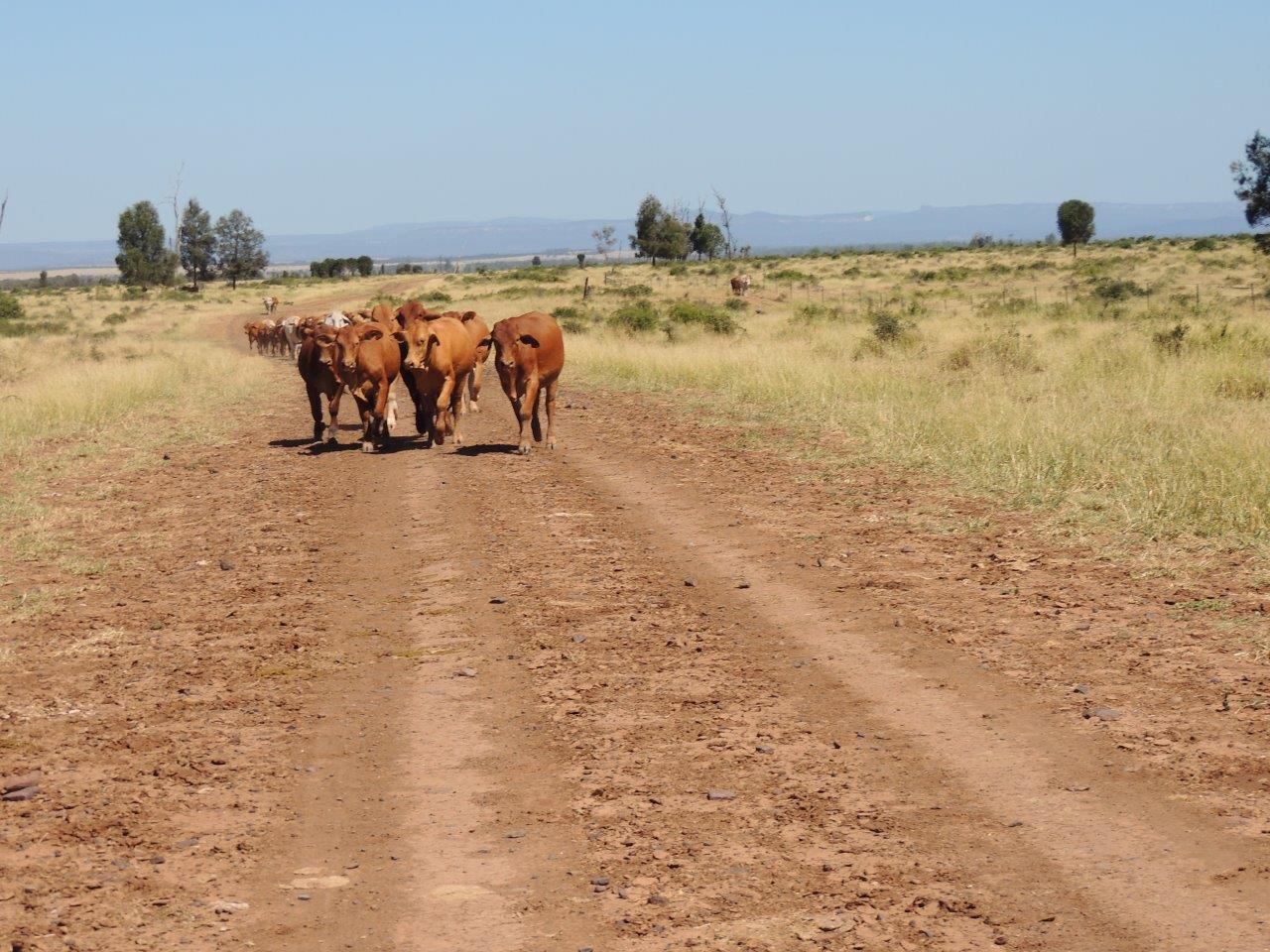
THE road slowly petered out and became a rutted sand track. A herd of red cows swept past us, ahead of the woman on a horse who was briskly urging them forward. When we came to a barbed wire fence and a rough farm gate we wondered if we were lost. The gate, a flexible pole and barbed wire construction, gave a good fight when I tried to open it but I eventually managed to drag it across the road and then wrestle it shut again but – whew – where on earth were we? Then, with some relief we spotted another direction sign to Lake Nuga Nuga and knew we were on the right – if bumpy and dusty- track. This lake, with its extensive wetlands, is the largest natural expanse of water in the dry Central Queensland Sandstone Belt and is home to an impressive population of water birds. However, we would not have even known about it if it had not been for a ranger we’d met in Carnarvon Gorge National Park who’d recommended it to us.

Our visit to this strange, watery place was well worth the detour. A birding paradise, it thoroughly tested my fledgling Australian bird identification skills and I must confess that at times, I failed dismally. There were just so many different water birds including a beautiful flotilla of graceful black swans, pelicans, magpie geese and countless ducks.The raptor population was amazing, too, with whistling kites (one of many new Australian bird list ticks) practically falling out of the trees. Birding aside, the lake’s strange beauty made it a winner. It was a harsh, dry place and the blistering heat that day made it even less hospitable, but there was something so magical about the contrast between the silvery sheets of water and their arid surrounds.

The lake and extensive wetlands were set in a flat, rocky basin covered with sparse yellowing grasses and scrubby trees. A few well-treed, conical hills – what South Africans would call kopjies – and a distant range of mauve mountains added texture to the scene but its most striking physical feature was the forest of ghostly dead trees standing with their feet in the water. We later learnt that the lake was only about 160 years old and was a result of unusually heavy rains and the flooding of the Brown River, on which this body of water lake is located. The many drowned trees indicate the lake’s relatively young age.

Bush camping and spending the night under the stars there would have been amazing, but it was early in the day, there were absolutely no facilities and it was just so hot and dry. We decided to push on. Another of Mother Nature’s Australian surprises awaited us that day. Instead of returning to the busier A7 road, we stayed on the winding Arcadia Valley road, a velvety green route through a well-treed range of mountains. The pretty road eventually joined the busy Warrego Highway, a section of Australia’s Great Inland Way, and it was back to civilisation for us. We soon found ourselves cruising through Roma, a major outback town with a population of about 7 000 people.
A busy but attractive provincial town, it was the main centre for what was a major gas and oil exploration region. It even has a museum, the famous Big Rig, dedicated to this industry. Roma is also situated in cattle country and Australia’s largest cattle sales are held at the Roma Sales Yards twice a week. We didn’t have too much time to linger in Roma as it was getting late and we needed to find a place to spend the night. After a quick shopping expedition we were soon on our way, zipping along the Warrego Highway, along with some massive trucks and two-or three-trailer ‘road trains’. We eventually found ourselves spending the night in another freebie camping site, at Judd’s Lagoon near a dot on the map called Yuleba.

Facilities were basic – a long-drop loo and a tap with a dribble of not-for-drinking water – but the river views were beautiful and we were in good company. Lovely Judd’s Lagoon was obviously a popular spot with the friendly, free-wheeling ‘grey nomads’. Their huge caravans and mobile homes dwarfed our modest little encampment outfits, though. We headed back to Brisbane the next day. Cruising along the highway, we travelled through a number of prosperous country towns like the historic Queensland village of Miles, Chinchilla ‘the melon capital of Australia’, and busy Toowoomba , Queensland’s largest inland city.

From there it was downhill to the coast, back to the bright lights of Brisbane and the ‘other’ Australia. Urbane, sophisticated, densely populated, noisy and busy, the city and its congested surrounds were a world apart from where we had been. What an amazing contrast – the bustling coastal city and the unspoiled places, open spaces, down to earth people, outback towns and country roads we had discovered on our four-day walkabout.
HAVE YOUR SAY
Like our Facebook page, follow us on Twitter and Instagram
For news straight to your phone, add us on BBM 58F3D7A7 or WhatsApp 082 421 6033