A STUDY done by the World Health Organisation (WHO) shows that global warming is having impacts other than rising sea levels and changing regional climates.
It is also causing the rapidly increasing spread of diseases among human populations.
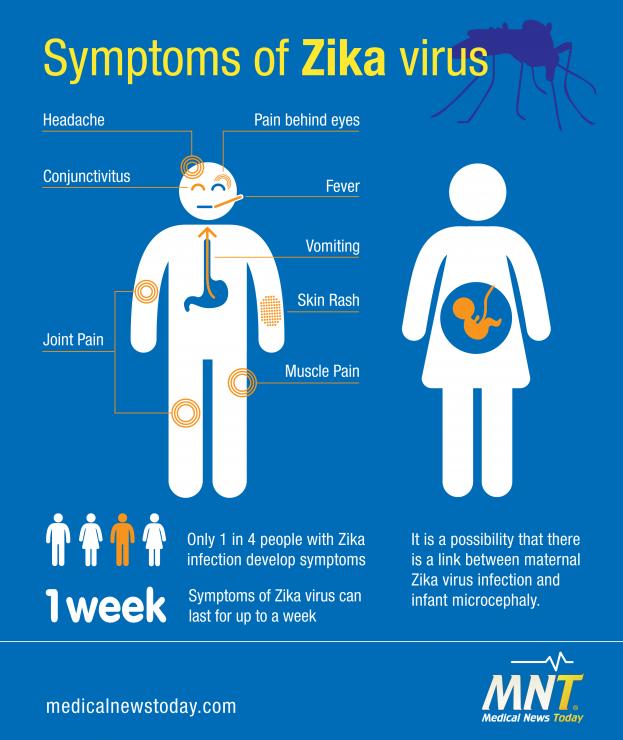
The report is in response to the spread of the latest killer disease, Zika, in Latin America and elsewhere.
Zika, which is spread by mosquitos, arrived on the scene last year and up to 1.5 million cases have been reported in Brazil alone.
It has spread throughout Latin America, as far north as Mexico, and the first cases have been confirmed in the United States and Canada.
Apart from Zika, a hotter and more humid world is also seeing the spread of other virulent infectious diseases such as West Nile, dengue fever, Chagas disease, Lyme disease, yellow fever, Rocky Mountain spotted fever, Rift Valley fever, Japanese encephalitis and malaria.
Many of these diseases are spreading further afield geographically and affecting more and more people.
In fact, the WHO has already declared a global state of emergency.*

On the subject of global warming, San Francisco has become the first major city in the United States of America to introduce legislation enforcing new buildings of up to 10 storeys high to be fully solar powered.
From the beginning of next year, all such buildings will have to have solar installations on their roofs to provide for all electrical needs.
Several smaller urban centres in the United States have already introduced such legislation. **
There is some very welcome wildlife news from Ethiopia, where a population of lions that was thought to have become extinct in the last century, has been discovered.
The Ethiopian lion was thought to have disappeared from the remote Alatash Game Park many years ago, but scientists from Oxford University in England, working with the Born Free Foundation (founded by British actress Virginia McKenna who starred in the film covering the lives of the famous Adamsons of Kenya) have announced the discovery of at least 200 of them still alive and thriving out there.
It’s reported that there are perhaps just 20,000 lions left in the wild in Africa today, so this is a major breakthrough. ***
And finally, in many countries, including South Africa (where you need a special permit) it is illegal to keep wild animals as pets.
So it is in Brazil, with the exception of a retired coastal fisherman who seems to have acquired a penguin.
Joao Perreira de Souza found a badly oiled Magellanic penguin on the beach in 2011.
He took it home, cleaned it up, nursed it back to health and then released it, thinking that he would never see it again.
But a year later, at the beginning of the season, the same penguin turned up on the beach, thousands of kilometres from the breeding grounds, appeared delighted to see Joao and stayed until the end of the season – one happy penguin, one happy retired fisherman.***
*Third World Resurgence, Penang, Malaysia. **Care2Causes. ***The Week: The Best of the British and Foreign Media.
HAVE YOUR SAY
Like our Facebook page, follow us on Twitter and Instagram
For news straight to your phone, add us on BBM 58F3D7A7 or WhatsApp 082 421 6033