RIGHT in front of the Hide is a prominent flowering shrub, hardly more than an arm’s length away.
It’s covered in clusters of tiny purple flowers and some clusters of bright orange berries, and a little further on there is another that has more berries than flowers right now, but they are both a huge attraction to the butterflies.
The shrubs are one of many duranta species, almost certainly a naturalised South African, although the jury is apparently still out on whether it’s actually a pest or not.
I hope not, it really is an asset.*
We’ve been sitting in the Hide with the butterfly book enjoying the chance to identify as many as we can.
So far we have ticked off the spotted pentica, common diadem, African monarch, citrus swallowtail, African migrant and the veined sword tail.
That’s a pretty good score as from experience we know that butterflies are difficult to identify because they never sit still long enough. **
And of course the butterflies attract the birds.
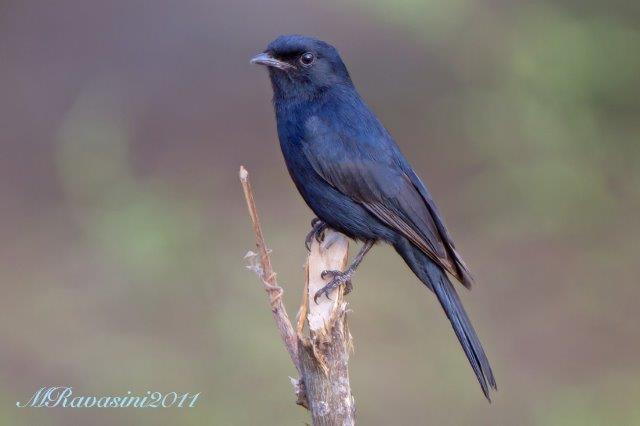
Every now and then a black streak appears from Stage Left, nobbles a butterfly in full flight, performs a perfect aerial U-turn and disappears back Stage Left again.
It took us a while, but we have finally identified it as a southern black flycatcher.
The birds are loving the berries too, particularly the speckled mousebirds, although apparently the berries are poisonous to humans.
Not so welcome was a recent invasion by monkeys.
How is it that although they’ve never been into our new home, they know exactly where we keep the fruit bowl?
Anyway, the said fruit bowl is again hidden, as I suppose it should be.
I’ve said this before, but it can stand being said again – much of the problem with monkeys raiding houses is the fact that some people still insist on feeding them.
This really is bad news and can even turn what should be a normal, perhaps casual interaction with monkeys into a potentially dangerous situation.
I’ve even had reports of women suffering ‘hit and run’ attacks when they’re walking with, for example, a loaf of bread.
It may not always be obvious that you’re feeding the monkeys if, for example, you are in the habit of putting out fruit and perhaps bread for the birds – that, I’m afraid, is also monkey food.
So, stick to a little wild bird seed at a time as this is unlikely to attract too much attention from anyone other than your birds.
Staying with birds for a moment, a familiar chat has adopted us, becoming, well, quite familiar.
We were watching him performing some remarkable aerobatics the other day, leaping up, doing mid-air somersaults and dropping back to the ground, generally behaving most strangely.
There were two of them, but the other was behaving quite normally.
Could it have been aggression or possibly a mating display?
Something to ponder upon. Cheers!
*Trees of Southern Africa, Braam van Wyk & Piet van Wyk, Struik, Cape Town, 1997.
**Butterflies of Southern Africa, Mark Williams, Southern Books, Halfway House, 1994.
HAVE YOUR SAY
Like our Facebook page, follow us on Twitter and Instagram
For news straight to your phone, add us on BBM 58F3D7A7 or WhatsApp 082 421 6033