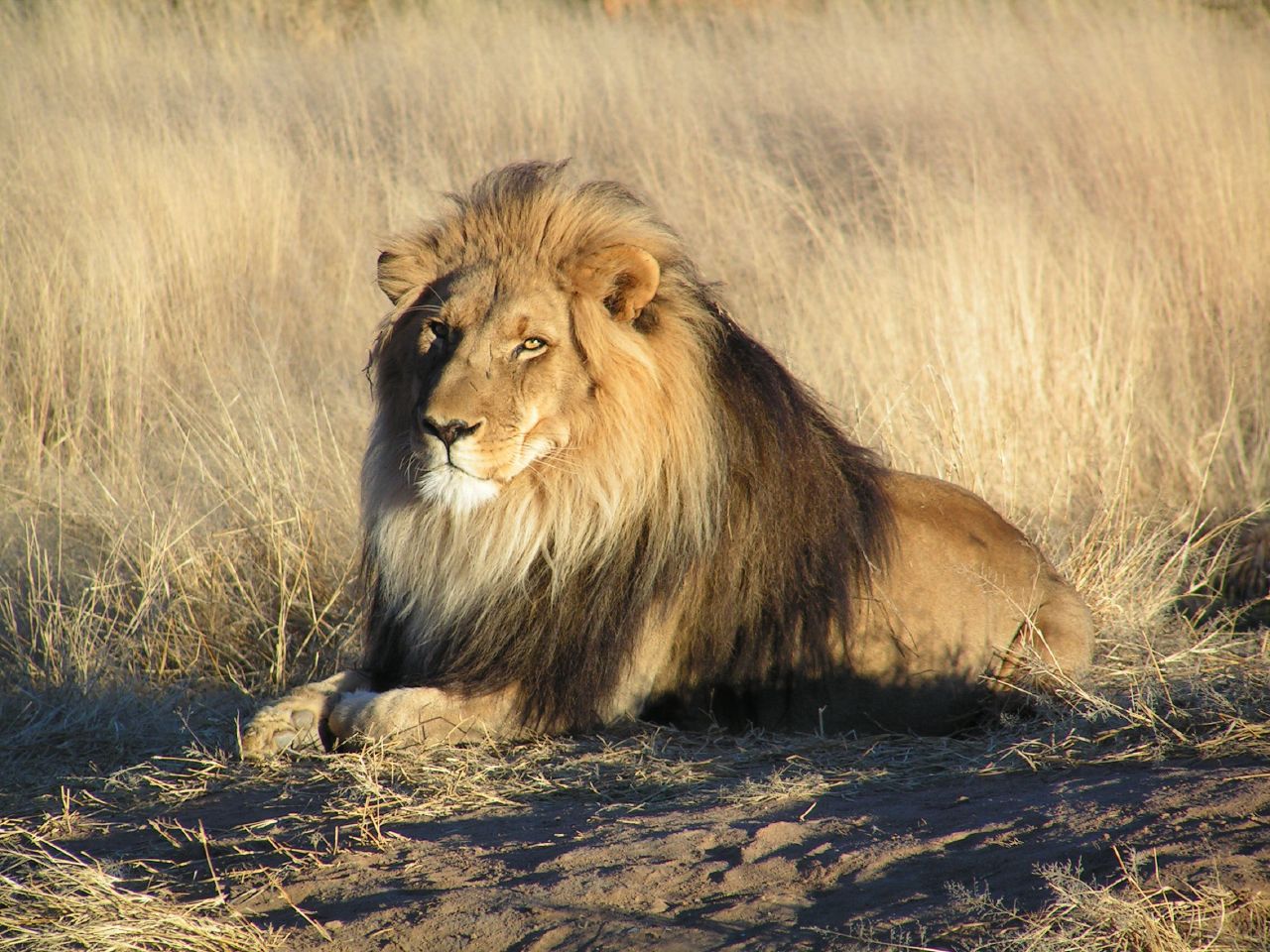
IT is World Lion Day next Wednesday, for what it’s worth. A little over a century ago there were perhaps a million lions in Africa.
By the 1940s that number had dropped to about 450 000, and today there are fewer than 20 000.
It’s a sorry tale of annihilation by man.
I can find no statistic giving a reliable, or even unreliable, figure on the number of lions in the wild in South Africa today, but there are apparently about 1 000 captive bred lions lined up to be shot as trophies (known as canned lion hunting).
Apart from trophy hunting, lion bones are being sold to far eastern countries for use in traditional Asian medicine. *
Sadly, the lion is not the only large predator in trouble.
A report to hand says the plight of one of the world’s rarest predators, the Sumatran tiger, has worsened considerably and that international help is needed and needed fast.
Fauna and Flora International, a London-based conservation group, reports that the numbers of Critically Endangered Sumatran tigers in the wild has dropped from about 500 to around 350 over the past five years.
The main threats facing the tiger, which is found only on the Indonesian island of Sumatra, are a dramatic increase in poaching and habitat loss.
Tiger skins remain a valuable commodity and their dried bones (like those of South Africa’s lions) are used in traditional Asian medicines, while huge swathes of jungle have disappeared because of logging, spreading farm land and palm oil plantations, and disastrous fires.**

There are five surviving subspecies of tiger, all of them endangered: the Bengal, the Indo-Chinese, the South China, the Amur, and of course the Sumatran, while three others, the Caspian, the Javan and the Bali are already extinct.***
It’s not only the big guys who are in trouble. It’s reported from Australia that the first mammal to fall victim to man-made global climate change has gone extinct.
It is, or was, a Bramble Cay Melomys, an attractive rodent found only on a tiny island belonging to Australia in the South Pacific.
Rising sea levels and in particular spring tides and the like have swept over the low-lying island so often that the rodent’s habitat has been almost completely destroyed and most of the rodent population drowned. ****
Another rodent, the much-loved British dormouse, is also in trouble.
The dormouse, made famous in Lewis Carroll’s Alice in Wonderland (remember, the dormouse was a special guest at the Mad Hatter’s tea party), is in serious trouble in Britain.
Once plentiful across Europe and Asia Minor, it has become threatened with extinction because of habitat loss and fragmentation, commercial forestry, agriculture and urbanisation.
Finally, global warming is changing its natural habitat, which is natural woodlands, faster than it can adapt. ****
A quote is called for: “I’m truly sorry man’s dominion has broken nature’s social union, an’ justifies that ill opinion, which makes thee startle…” Roberts Burns, To A Mouse.
*International Union for the Protection of Nature and Natural Resources. **The Week: The Best of the British and Foreign Media. ***The New Encyclopedia of Mammals, Oxford University Press, 2001. ****Care2Causes.
HAVE YOUR SAY
Like our Facebook page, follow us on Twitter and Instagram
For news straight to your phone, add us on BBM 58F3D7A7 or WhatsApp 082 421 6033