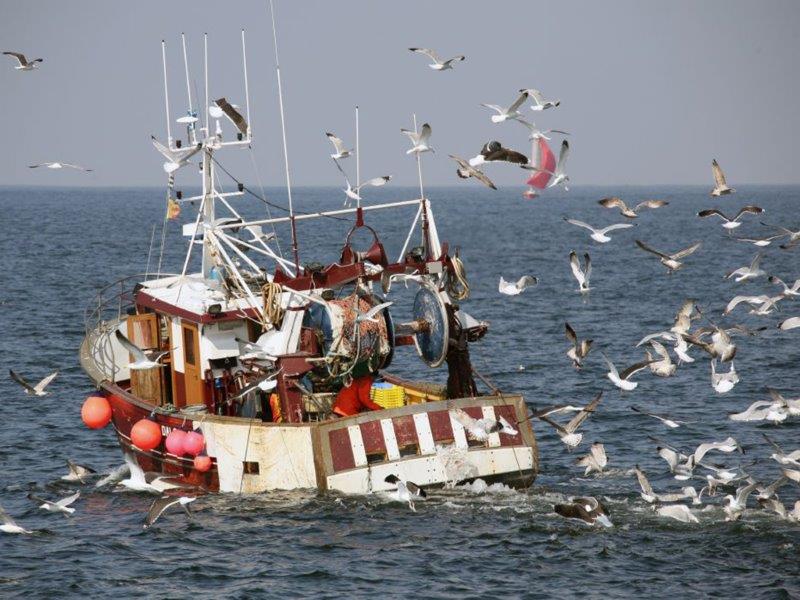
ONE of the worst by-products of commercial fishing is the killing of countless seabirds, including albatrosses, every year.
British engineers have now come up with a device that could save up to 100 000 albatrosses, as well as petrels, shearwaters and other seabirds, every year.
The device is designed to stop birds being caught on long-line fishing lines.
It’s called a Hookpod, which is a weighted polycarbonate ‘pod’ that encases the hook until a pressure-sensitive sensor within it detects that the hook is under water. It then slides off the barbed hook.
The Hookpod has undergone extensive trials off Africa, Brazil and Australia and has proved to be highly successful.
Long-line fishing fleets set thousands of hooks on lines up to 80km long and these are believed to kill some 300,000 seabirds a year.*

And way over in South America, someone has found a new and highly innovative use for vultures and their lifestyle.
The environmental authority in Peru is recruiting vultures to spy on illegal dumpers, by fitting the first batch of recruits with GPS trackers and mini video cameras.
Lima, the capital of Peru, has a major problem with illegal dumping, despite the fact that there are four legal dump sites around the city.
These sites, and many of the smaller illegal ones, are notorious for the flocks of vultures that frequent them, so the authorities decided to use the vultures as drones, to lead them to new illegal dumping grounds.
It seems to be working, the authorities are happy and the vultures are doing what vultures do naturally.*
Interesting, perhaps the idea could be used for the shocking illegal dumping on the lower South Coast.
Also, note last week’s story about the white storks who are making themselves at home on Europe’s rubbish dumps, rather than flying down to southern Africa for the season.
Anyway, more vulture news comes from North Korea, which Eurasian black vultures are now apparently avoiding during their annual migration from their Mongolian breeding grounds.
According to South Korea’s Ecology Environment Institute, which plots the migration, the vultures are over-flying North Korea because there are simply no pickings to be had there.
It makes one wonder just what is happening to the vulture food in North Korea.*
Staying with birds, our friends in England report that a local television presenter joined two birders on an expedition to the nearby Nottingham CBD to do a little birding.
Their first ‘spot’ was a peregrine falcon nesting on a high rise building with two fledglings in attendance.
There were plenty of pigeons (which the falcon would have appreciated) and common or garden sparrows, plus lots of other species and the canal that runs through the city was particularly productive for water fowl, including mallard ducks and geese.
They in fact managed to ‘tick’ no fewer than 24 species on their outing, and that was just central Nottingham.
So, good news for seabirds, vultures being put to work and urban birders add to their tick list. Cheers!
*The Week: The Best of the British and Foreign Media.
HAVE YOUR SAY
Like our Facebook page, follow us on Twitter and Instagram
For news straight to your phone, add us on BBM 58F3D7A7 or WhatsApp 082 421 6033