THE sun was just getting out of bed as we set off along the famous S100 and the sepia, early morning light had softened the harsh monochrome world of brittle khaki and swirling dust. It was the tail end of the dry season and, hopefully, the terrible drought that had scorched much of South Africa. We’d never seen the plains around Satara quite so desolate and dry. And the route we were taking – the S100 to Gudzani Dam, then south along the S41 to N’Wanetsi Picnic Site, then home via the tarred H6 – although renowned for its good game viewing, was, for the first time ever, proving disappointing.

But as the Good Book says, there is to everything a season and a time for every purpose under heaven. Even if it is hard to understand, we humans who love wild places need to understand the lean seasons, to believe they have a place in the scheme of things and to trust that times of plenty will follow. And, desiccated as the landscape seemed, there were signs that this harshest of dry seasons was, indeed, coming to an end. Here and there, as the road approached a water course, we would notice a flush of green grass striking out bravely across the parched grey earth.

Thorn trees, optimistic that the rains would come, were bravely sending new sap to the tips of their branches, waking the tender leaf buds after their long winter sleep. The riverine trees were boldly proclaiming the start of spring, too, their giant forms softened by bright new leaflets. Here, on the dry savannah, the annual cycle of renewal and transformation was about to begin. Hopefully it would be the start of a good rainy season.

When we reached Gudzani Dam, a spot where we’d previous seen some interesting game including lions on a couple of occasions, we were disappointed to find it almost empty. Nothing stirred so we headed on towards the picnic site for breakfast. Afterwards we climbed up to the attractive thatched amphitheatre outlook, loftily situated above the N’wantetsi River.

It was such a pretty, peaceful spot and there was plenty of general game and water birds about so we lingered there for quite some before deciding to continue on our way. We popped into nearby Sweni bird hide – not too much action there – then headed back towards camp on the tarred H6. So far we hadn’t seen as much as a whisker of a big cat along our chosen route and this was most unusual.

Every previous time we’d done that route we’d seen at least a couple of lion and the last time we’d stayed at Satara, a mega-pride had moved into the area and there had been lions everywhere. It looked like we were going to be disappointed this time round. It didn’t really matter. The route, though less productive than usual, was proving as lovely as ever. We were enjoying just being there and appreciating its unique sense of space.

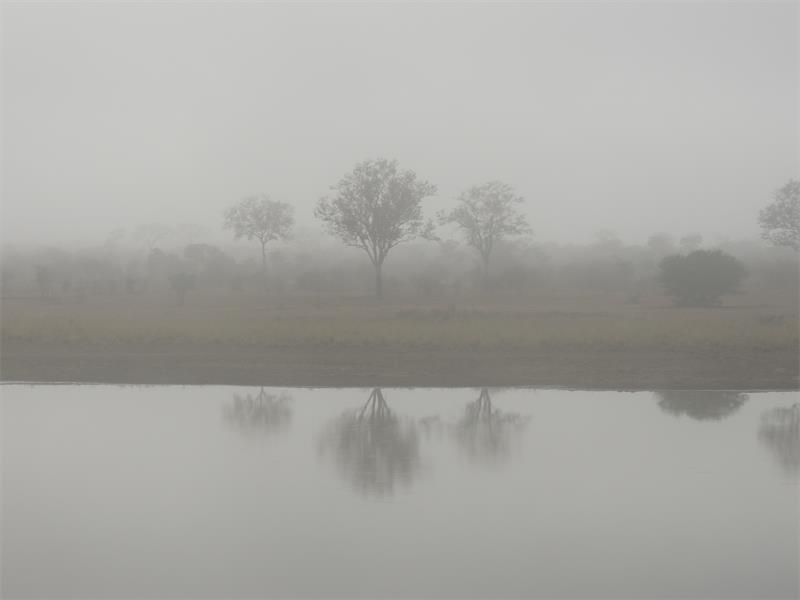
Then, as we were nearing camp, having given up on the Satara lions, we came across a couple of cars parked on the side of the road. Far in the distance, almost hidden by the long grass, were a couple of tawny forms. The lions were doing what lions did best – sleeping away the daylight hours. We left them to it and returned to our bird-filled campsite for an afternoon of quality camp-chair birding. When we left Satara the following morning, a thick mist had draped itself across the African savannah. It wasn’t rain but it was a little much-needed moisture for the poor parched earth.

HAVE YOUR SAY
Like our Facebook page, follow us on Twitter and Instagram
For news straight to your phone, add us on BBM 58F3D7A7 or WhatsApp 082 421 6033