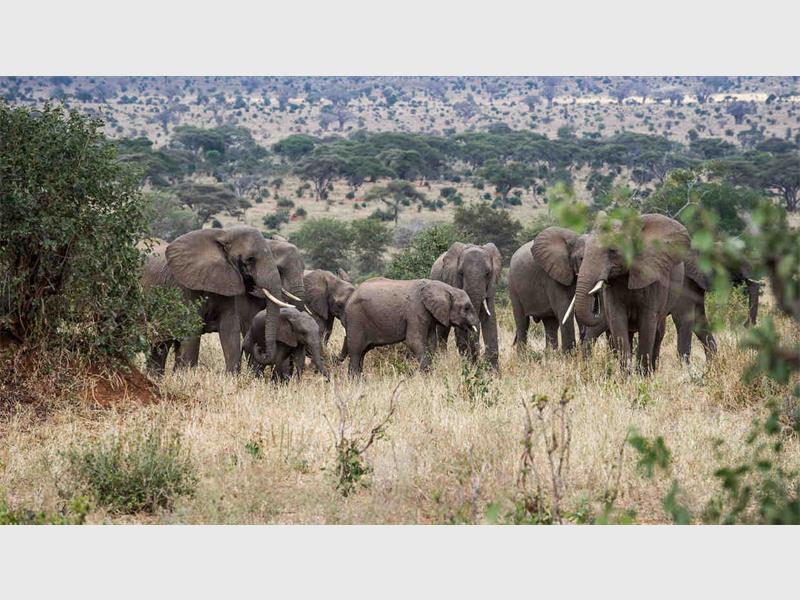
THE American charity, Elephant Voices, reports that because of decades of ivory poaching more and more African elephants are being born tuskless.
The report, which comes after more than 30 years of field research on African elephants, says that ruthless poaching has affected the gene pool in elephants and that in some areas up to 98 percent of elephant cows are being born without tusks, compared to 2 to 6 percent in the past.
It points out that this is not necessarily good news as the elephant’s tusks are vital tools in the search for food.*
How very interesting, and should set the cat among the pigeons in the conservation and scientific fields.
Another report, this one released by the Worldwide Fund for Nature and the Zoological Society of London, says that by 2020, just four years away, about 65 percent of the world’s vertebrate species – that’s fish, birds, amphibians, reptiles and mammals – could be wiped out.
The report, released in the British capital, says the reason for this is very clear – a rapidly exploding human population is quite simply eating, crowding and poisoning vertebrates out of existence.
The human population has more than doubled since 1960 and now stands at 7.4 billion.
The threat is to global biodiversity, which is essential to the health of forests, rivers and oceans, and the removal of so many species will mean the eventual collapse of those eco-systems.**
Moving on, the United States has banned the importation of canned lion trophies from South Africa.
The US Fish and Wildlife Services said that the ban has been imposed because South Africa was unable to demonstrate the conservation value of canned lion hunting.
Lions have been declared an endangered species by the United States which means the regulation of lion trophies, live lions, lion parts and derivatives.
There are about 2,300 wild lions in South Africa, plus a further 800 in managed, smaller game reserves.
There are also about 6,000 captive bred lions, which would fetch up to R375,000 each if shot by a so-called hunter, while a lion skeleton fetches up to R30,000 if sold to a Chinese dealer in Durban or Johannesburg.
That skeleton would be worth up to R300,000 once it is boiled down and bottled to be sold over the counter in Asia.***
Much more positive news is that the creation in Antarctica of the biggest marine reserve in the world has been announced.
This follows Russia’s withdrawal of its long-standing opposition to the proposal.
The Conservation of Antarctic Marine Living Resources association says the reserve will cover 1.55 million square kilometres in the Ross Sea, an area the size of Britain, France and Germany combined.
Most of it will be a no fishing zone, guaranteeing the protection of penguins, seals, whales and all other marine life.****
This must surely help with the recent call by marine scientists for the protection of more of the world’s high seas, which are generally under environment threat.
*Save the Elephants News Service, **&****Daily Maverick, ***Department of Environmental Affairs.