Invasives and natives: Of spikes and dragons
Avoid planting potentially invasive emerging weeds like agaves.
ALTHOUGH not officially recognised as alien invasives under the Conservation of Agriculture Act (Cara), various agave/sisal species are causing concern.
Both Agave americana and Agave sisalana are on the list of so-called emerging weeds in the Wildlife and Environmental Society of South Africa (Wessa) handbook of invasive alien plants in KwaZulu-Natal.
Wessa points out that some 80 percent of our troublesome invasives that are already causing havoc in our natural areas were introduced into South Africa as pretty garden plants.
The listed emerging weeds are mostly attractive plants that flourish in many gardens but have an alarming tendency to hop over the garden wall and spread into our natural areas. Through its ‘Stop the Spread’ campaign Wessa is encouraging gardeners not to use plants that have the potential to become invasives but to look for safe alternatives. First prize, of course, would be to plant lovely indigenous species that benefit wildlife as well as look great.
Because of their striking shape members of the agave family are widely used as form plants, providing focal points in rockeries and garden beds. However, South Africa has a wonderful range of magnificent aloes that would serve this purpose just as well.
It would be quite easy to find aloe species that would thrive in your area and would be happy living in your garden.
Best of all, they will provide you with a glorious splash of warm, bright colour during the cold winter months and their nourishing nectar would be appreciated by many birds and insects.

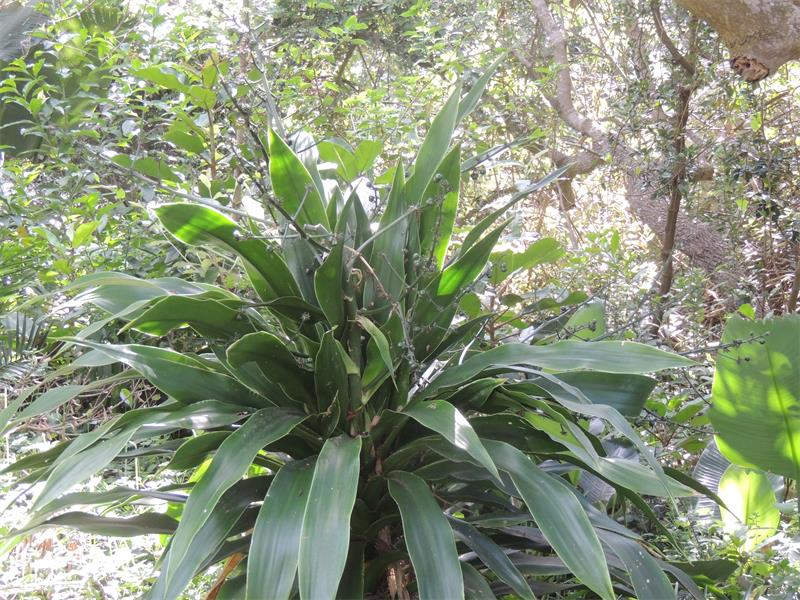
One of my favourite indigenous form plants in my KwaZulu-Natal coastal garden is the eye-catching large-leaf dragon tree (Dracaena aletriforms), which is such a stunning feature of our natural coastal bush. It would be an interesting replacement for your agave plants.
This small tree or shrub thrives in deep shade but would be quite happy in splotchy shade under garden trees and it doesn’t mind going a bit thirsty occasionally. However it hates the cold and doesn’t cope well with frost.
With its evergreen, strappy leaves it makes an eye-catching focal point and the axils of these leaves provide cosy homes for field mice and robins. In spring this plant shoots up a fountain of small white flowers that perfume the night – and attract a number of moths and other night insects.
It is also most attractive when its flowers die off and turn into masses of bright orange berries. Mice, monkeys and forest birds feast on this fruit, according to Charles and Julia Botha’s ‘Bring Nature back to your Garden’. The larva of the bush nightfighter butterfly likes to munch on its leaves.
The dragon tree is single-stemmed and doesn’t take up too much space or grow too tall. It would love to live in your garden if you have a shady nook that needs to be filled. In fact, any subtropical coastal garden should have at least a couple of these rewarding plants.
Large-leafed dragon trees are very easy to grow from seeds but wash off the fleshy orange coating before you plant them. You could also grow a dragon tree or two from cuttings. You will be well repaid for your efforts.
HAVE YOUR SAY
Like our Facebook page, follow us on Twitter and Instagram
For news straight to your phone, add us on BBM 58F3D7A7 or WhatsApp 082 421 6033