GETTING ourselves to Orapa in the first place looked like being quite an undertaking, but the Anglo-American Corporation promised us the services of one of South Africa’s top removals companies, so I would only have to worry about what had to go in our daffodil-yellow bakkie.
This included the three of us, two tranquilised dogs and the deep-freeze, which was full of food and would have to be plugged into an electricity supply if we made an overnight stop. I didn’t trust the removals company with that job.
We hoped it wouldn’t be necessary to stop on the way but, just in case, I made enquiries about hotels in Francistown.
“Yes,” said the man in the travel agency. “There are two. There’s the Grand – which isn’t – and the Tati, which is.” We decided to drive straight through.
It was my first experience of professional packers. An Indian foreman with a clipboard full of pre-printed inventories and seven packers invaded when I was in the middle of breakfast. I had been told that they would pack everything for me and they certainly did.
They were so quick and efficient that they even packed my half-finished breakfast when I wasn’t looking!
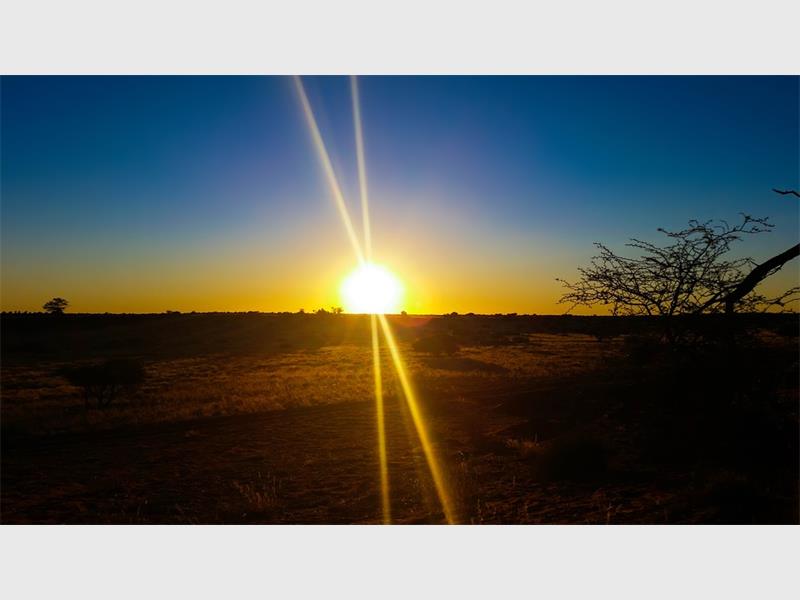
For us, the great joy of Orapa was the wildness of the surroundings. We were allocated a house on the top of the hill, the last house but one in town. Beyond our next-door neighbour’s garden lay the farm and beyond that, virgin bush. A mixture of mopane scrub, grass plains and desert. A whole new world to explore.
The Kalahari is called a desert because its low annual rainfall fits the technical definition of a desert, but it is a far cry from the rolling sand dunes of the Namib, most people’s conception of what a desert should look like.
The central Kalahari has underground water and, while the grass on the plains may get very sparse in the dry season, deep-rooted trees – mostly mopane and acacia – survive the worst of droughts.
This was the country immediately surrounding Orapa and stretching away to the east, west and south. To the north lay the Makgadikgadi – vast salt pans which were once the world’s largest inland sea, almost the size of Wales.
To the west of the Makgadikgadi flowed the Botete River, sluggishly, intermittently, sometimes not at all, from the Okavango Delta almost to the pans themselves.
HAVE YOUR SAY
Like our Facebook page, follow us on Twitter and Instagram
For news straight to your phone, add us on BBM 58F3D7A7 or WhatsApp 082 421 6033