ACCORDING to my uncle who once lived in the Northern Cape town of Kuruman, the people there call the common vinca or Madagascar periwinkle (Catharanthus roseus, previously vinca rosa) the ‘begrafplaas blommetjie’.
Afrikaans for ‘graveyard flower’, it is a good name for these tough little survivors, about the only plants that will grow in some of those desolate, bleak and stoney graveyards found in the middle of nowhere in the arid Northern Cape.
Unfortunately its toughness and ability to flourish anywhere has earned it a spot on the emerging weeds list in the Wildlife and Enviromental Society of South Africa (Wessa) handbook on Invasive Alien Plants in KwaZulu-Natal.
If you have ever tried to rid your garden of this pink and white menace you would probably agree with its listing. The periwinkle is pretty persistent and pops up everywhere, particularly when you disturb the soil.
Digging a new garden bed is an invitation for the pretty pest to move in.
Clumps of it certainly add colour to a garden bed and, because of this, many gardeners might be reluctant to replace it with indigenous species as there is a well-established but mistaken belief that native plants lack colour.

Generally, the indigenous garden palette might be a little subdued, the colours of the blooms more subtle that some of the more garish non-native nursery offerings today, but when it comes to colour, wildlife gardeners are in fact spoilt for choice. With careful planning they can have colourful displays throughout the year.
One of my favourite sources of indigenous colour is the Polygala genus.
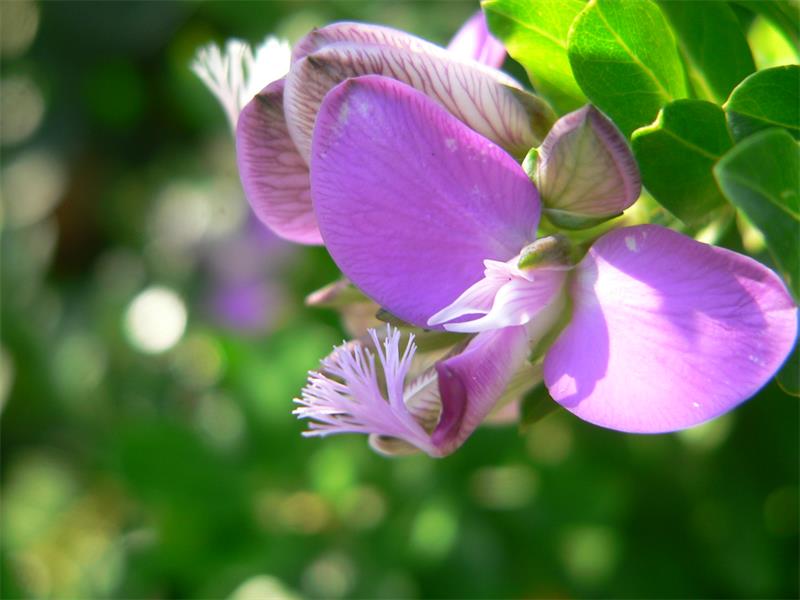
The September bush as the Polygala myrtifolia is commonly know, is a pioneer plants and like the vinca, is a pretty tough customer. This shrub thrives in my coastal garden, even in the less sheltered spots where it has to contend with the salt-laden winds. It happily flowers in September and, in fact, for most of the rest of the year.
The pink blooms are lovely and contrast well with its bright green leaves.
These shrubs seed themselves easily, too, so once you have a couple of them established in your garden you are assured of a steady supply of ‘babies’. They can get a bit leggy and untidy, but the occasional gentle pruning will keep them in shape.
If you haven’t space for a Polygala myrtifolia in your garden, you might like to try out a smaller version of this attractive plant called Polygala fruticosa, or the heartshaped Polygala.
Only about knee high, it is a gorgeous little shrublet but unfortunately it doesn’t seem to like my garden.
I have had more successful with the tall and willowy Polygala virgata or purple broom. With its slender build it is easy to find it a spot in a mixed flower bed where it will flower brightly and add a bit of height to the floral display. It also seeds itself well.
Another reason to replace your vincas with polygalas is that they are pollinated by carpenter bees so by planting any of these three species in your green haven you will be inviting in these charming little creatures – and making it a more wildlife-friendly space.
HAVE YOUR SAY
Like our Facebook page, follow us on Twitter and Instagram
For news straight to your phone, add us on BBM 58F3D7A7 or WhatsApp 082 421 6033