IN KwaZulu-Natal it is amazing how quickly the castor-oil plant can discover a potential new home.
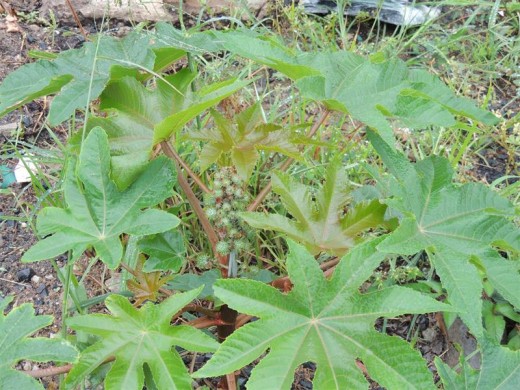
Clear a patch of land of its natural vegetation and in a very short time hundreds of seedlings of this opportunistic pioneer plant will be sprouting all over the bare earth. Like many other invasives it loves cleared road verges where it is found in abundance in our province.
YOU MIGHT ALSO BE INTERESTED IN: Invaders left to grow wild
Known as Ricinus communis in botanical circles, it is Cara Category Two alien invasive. This means it is a plant with commercial or utility value that may only be grown with a permit under controlled circumstances in a demarcated area.
Therefore if it is colonising a dug-over corner of your garden you are legally obliged to remove it.
Fortunately this is easily done if you catch it early as you can simply uproot the seedlings. Otherwise cut off the stem below ground, replace the soil and plant out the disturbed area with some gorgeous indigenous ground covers.
YOU MIGHT ALSO BE INTERESTED IN: Alien plant offenders could face R5-million fines
The Wildlife and Environmental Society of South Africa (Wessa) handbook, ‘Invasive Alien Plants in KwaZulu-Natal’, has some interesting facts about this pest, which comes from Central Africa and India.
YOU MIGHT ALSO BE INTERESTED IN: 10 Worst alien invasive plants
Its origins in South Africa are unclear but it is believed to have found its way into our country with Stone-Age man some 3 000 years ago. At one stage, before the advent of artificial lubricants, it was grown commercially for its oil .
As its name suggests, its seed coats contain a potent poison called ricin that can be lethal to livestock, especially horses.
Strangely, although it is such a part of KwaZulu-Natal’s landscape all commercial castor oil in South Africa is now imported so this foreign pest is not even good for medicinal uses, unlike many of our indigenous plants.
Everyone interested in natural medicines has probably heard of the healing properties of Aloe vera, not a native to South Africa, but we have an equivalent.
The juice of South Africa’s own Aloe ferox also has wonderful healing properties. It is now used in a wide range of health and skin care products made in south Africa.
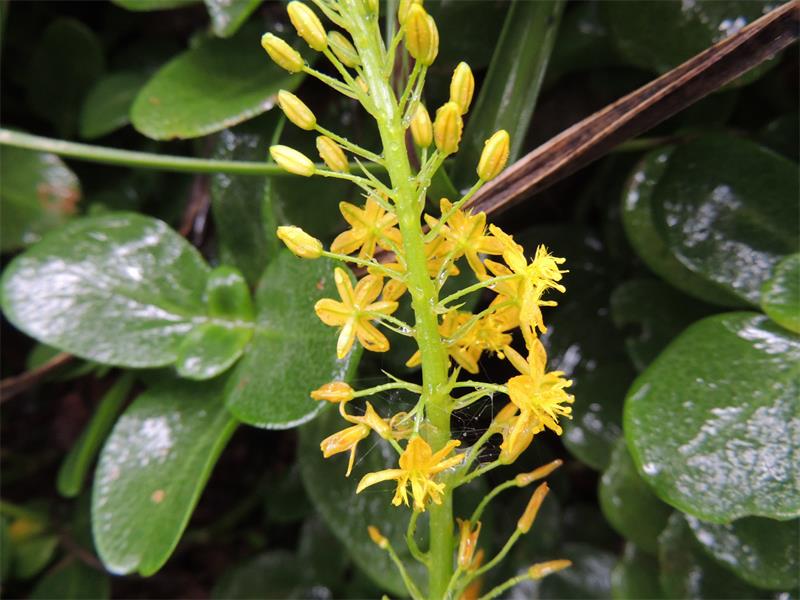
Other useful plants are members of the Bulbine genus. Their clear sap soothes stings, cuts and burns and is widely used as a traditional medicine.
These hardy succulent plants, with their racemes of bright, usually yellow, star-like flowers, look great in mixed beds or as edging plants and sun-loving Bulbine frutescens has found its way into most KwaZulu-Natal coastal gardens.
The lovely bright green, fat-leafed Bulbine natalensis, which looks rather like a thornless aloe, is a great garden subject, too. It seems to like a little shade.
According to Elsa Pooley’s field guide to the Wild Flowers of KwaZulu-Natal and the Eastern Region, there are about 55 Bulbine species in the world, most of which occur in Africa and Australia. Of these, 41 can be found growing naturally in South Africa.
Of course bulbines and aloes are just two of thousands of plants that have medical applications and our flower-filled grasslands, with their rich biodiversity, would be like living, growing pharmacies if we only knew how to access the medicines they offer.
Considering just how endangered are our grasslands, it is quite possible that some humble, unknown little flower with the potential of providing a cure for cancer, HIV or other dread diseases, is quietly becoming extinct before we can discover it.
If you are interested in the medicinal properties of plants The South African National Biodiversity Institute (Sanbi) has published a wonderful little book called the ‘Medicinal and Charm Plants of Pondoland’.
YOU MIGHT ALSO BE INTERESTED IN: Pondoland Centre – why all the fuss?
The authors of this fascinating and beautifully illustrated publications are Sinegugu Zukulu, Tony Dold, Domitilla Raimondo and the late Tony Abbott, a highly respected, world renowned botanist who lived and worked in Port Edward.
HAVE YOUR SAY
Like our Facebook page, follow us on Twitter and Instagram
For news straight to your phone, add us on BBM 58F3D7A7 or WhatsApp 082 421 6033